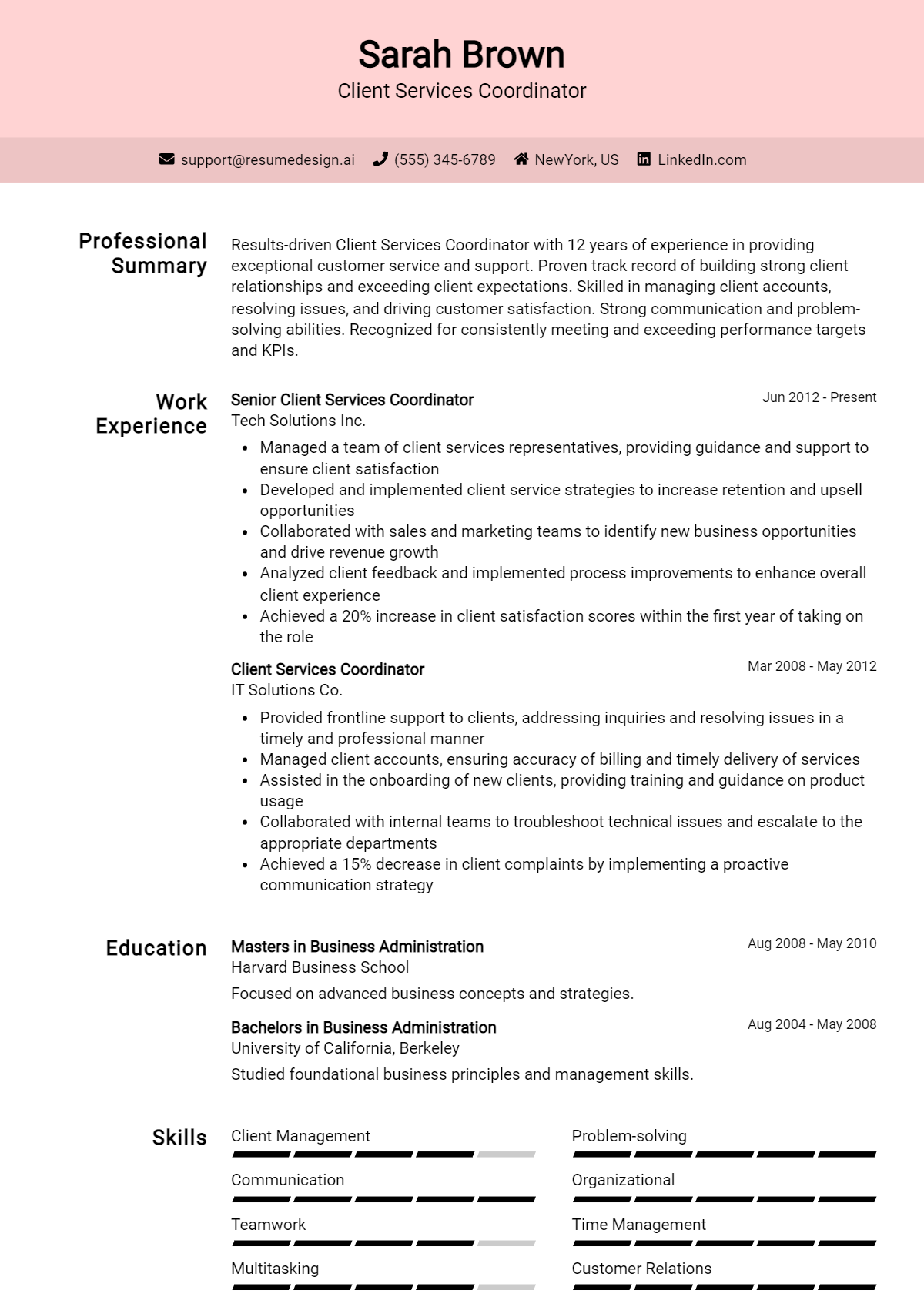
As a Client Services Coordinator, you will play a vital role in fostering positive relationships between clients and the company. In this position, effective communication and organizational skills are essential, as you will be responsible for managing client inquiries, coordinating services, and ensuring that client needs are met promptly. To help you prepare for your interview, we've compiled a list of common questions that you may encounter, along with insightful answers that will showcase your qualifications and suitability for the role.
Here is a list of common job interview questions for the Client Services Coordinator position, with examples of the best answers. These questions cover your work history and experience, what you have to offer the employer, and your goals for the future. By preparing thoughtful responses to these inquiries, you can demonstrate your ability to excel in delivering exceptional client service and contribute positively to the team.
1. Can you describe your experience with client communication?
I have over three years of experience coordinating with clients through various channels like email, phone, and in-person meetings. I ensure clarity in communication and actively listen to clients' needs to provide optimal solutions, which has led to increased client satisfaction.
Example:
In my last role, I managed client inquiries via email and phone, ensuring prompt responses. I consistently received positive feedback, highlighting my ability to explain complex information clearly and concisely, which strengthened our client relationships.
2. How do you prioritize tasks when managing multiple clients?
I prioritize tasks by assessing deadlines and the urgency of each client's needs. I utilize project management tools to keep track of tasks and set reminders, ensuring that I meet all client expectations without compromising the quality of service.
Example:
In a previous role, I juggled multiple clients by categorizing tasks by urgency. I implemented a tracking system that allowed me to manage deadlines effectively, resulting in timely responses and enhanced client satisfaction.
3. How do you handle difficult clients or situations?
I approach difficult clients with empathy and understanding. I listen to their concerns without interruption, validate their feelings, and work collaboratively to find a resolution. This approach has often turned challenging situations into opportunities for strengthening relationships.
Example:
Once, a client was upset about a delay. I actively listened to their concerns, apologized for the inconvenience, and provided a solution. By following up, I regained their trust and strengthened our partnership.
4. What tools or software are you familiar with for client management?
I am proficient in CRM software like Salesforce and HubSpot, as well as project management tools such as Asana and Trello. These tools help me track client interactions, manage projects efficiently, and analyze data for better decision-making.
Example:
In my last position, I used Salesforce to manage client data and track interactions. This streamlined our communication and allowed me to generate reports that improved our service delivery.
5. Describe a time you went above and beyond for a client.
I once coordinated a last-minute project for a client that required extensive research and collaboration. I worked late hours and liaised with multiple departments to ensure timely delivery, resulting in a product that exceeded their expectations and strengthened our partnership.
Example:
A client needed a last-minute presentation. I coordinated with our design team, worked late, and delivered an outstanding presentation. The client was thrilled and praised our dedication, which secured their ongoing business.
6. How do you ensure client satisfaction?
I ensure client satisfaction by maintaining open lines of communication, regularly checking in, and soliciting feedback. I take action on the feedback received to improve our services and demonstrate that I value their input and experience.
Example:
I regularly scheduled follow-up calls with clients to gather feedback on our services. This proactive approach allowed me to address concerns quickly and adapt our services, resulting in high satisfaction rates.
7. What strategies do you use for onboarding new clients?
I develop a structured onboarding process that includes welcome kits, introductory meetings, and setting clear expectations. This ensures new clients feel valued and informed, leading to a smoother transition and a stronger working relationship.
Example:
In my previous role, I created a comprehensive onboarding checklist for new clients that included welcome calls, FAQs, and resource materials. This helped clients acclimate quickly and minimized confusion.
8. How do you keep yourself organized in a fast-paced environment?
I prioritize organization through effective time management techniques, such as creating daily to-do lists and using digital calendars. This helps me stay on top of deadlines and ensures I can handle the demands of a fast-paced environment efficiently.
Example:
I utilize digital tools like Google Calendar and task management apps to organize my workload. This allows me to allocate time effectively and remain focused, even during peak periods.
9. How do you prioritize tasks when managing multiple client accounts?
I prioritize tasks by assessing urgency and impact, utilizing tools like task lists and calendars. I communicate with clients to understand their needs, ensuring I meet deadlines while maintaining quality. This approach minimizes stress and helps me stay organized.
Example:
I determine priorities based on deadlines and client needs. I use project management software to track tasks, ensuring I allocate appropriate time for each account while keeping clients informed about progress and timelines.
10. Can you describe a time you dealt with a challenging client?
I once managed a client who was dissatisfied with our service. I listened actively to their concerns, empathized, and proposed a tailored solution. This open communication led to a resolution that strengthened our relationship and improved service delivery.
Example:
A client was upset due to a delayed response. I arranged a meeting to understand their issues and provided a clear timeline for resolution. They appreciated my proactive approach, which helped restore their trust in our services.
11. What strategies do you use to ensure excellent customer service?
I ensure excellent customer service by actively listening to clients, promptly addressing their concerns, and following up regularly. I also advocate for client needs within the team, fostering a client-focused culture that promotes satisfaction and loyalty.
Example:
I prioritize communication and responsiveness, regularly checking in with clients. I also implement feedback systems to gather client insights, which helps us adapt our services to better meet their expectations and enhance overall satisfaction.
12. How do you handle tight deadlines and pressure?
I handle tight deadlines by staying organized and maintaining clear communication with my team and clients. I break tasks into manageable steps and focus on one priority at a time, ensuring quality work even under pressure.
Example:
During a recent project, we faced a tight deadline. I created a detailed timeline, delegated tasks efficiently, and kept everyone updated, which helped us meet the deadline without compromising on quality or client satisfaction.
13. Describe your experience with customer relationship management (CRM) tools.
I have extensive experience using CRM tools like Salesforce and HubSpot. I utilize these platforms to track client interactions, manage data, and analyze trends, which helps me deliver personalized service and improve client relationships effectively.
Example:
In my previous role, I used Salesforce to monitor client communications and follow up on leads. This systematic approach enabled me to enhance client engagement and ensure timely responses to inquiries.
14. What is your approach to resolving conflicts within a team?
I approach conflicts by promoting open dialogue and encouraging team members to share their perspectives. I facilitate discussions to understand underlying issues and work collaboratively towards a resolution that benefits everyone and maintains team cohesion.
Example:
When conflicts arise, I organize a meeting for all parties involved. I encourage each member to express their views, fostering an environment where solutions can be collaboratively developed, leading to stronger teamwork and better outcomes.
15. How do you keep up with industry trends and changes?
I stay updated on industry trends by subscribing to relevant newsletters, attending webinars, and participating in professional networks. This continuous learning enables me to provide informed recommendations and adapt our services to evolving client needs.
Example:
I regularly read industry publications and engage in online forums. Additionally, I attend conferences to network with peers and gain insights, ensuring that our services remain competitive and aligned with market expectations.
16. How do you ensure that client feedback is incorporated into service improvements?
I ensure client feedback is incorporated by setting up structured feedback channels, analyzing responses, and collaborating with my team to implement changes. I then communicate these improvements back to clients, demonstrating that their input is valued.
Example:
I conduct regular client surveys and hold review meetings to gather feedback. I compile this information and present it to our team, enabling us to make targeted improvements that enhance our service offerings.
17. How do you prioritize tasks when managing multiple client accounts?
I prioritize tasks by assessing urgency and impact on client satisfaction. Using a task management tool, I create a list that allows me to focus on high-priority items first, ensuring timely responses and effective support for all clients.
Example:
I utilize a project management tool to categorize tasks based on urgency and impact. This helps me efficiently allocate my time to critical accounts while ensuring all clients receive timely updates and support.
18. Can you provide an example of a time you turned a dissatisfied client into a satisfied one?
Once, a client was unhappy due to a delayed response. I promptly scheduled a call, listened to their concerns, and offered a solution. By providing regular updates, I regained their trust and improved the overall relationship.
Example:
A client expressed frustration over a delayed project. I addressed their concerns directly, proposed a revised timeline, and kept them updated throughout the process. This open communication turned their dissatisfaction into appreciation.
19. How do you handle difficult conversations with clients?
I approach difficult conversations with empathy and a solution-oriented mindset. I listen actively to the client's concerns, validate their feelings, and provide clear options for resolution, ensuring they feel heard and supported throughout the process.
Example:
In tough conversations, I focus on listening and understanding the client’s perspective. I acknowledge their feelings and offer constructive solutions, ensuring they feel valued and that we are working together toward a resolution.
20. What tools or software do you use to manage client relationships?
I regularly use CRM software, such as Salesforce, for tracking interactions and managing client data. Additionally, I utilize communication tools like Slack and email for efficient communication and collaboration with both clients and internal teams.
Example:
I leverage Salesforce for CRM management, allowing me to track client interactions. For communication, I use Slack to ensure real-time updates and collaboration with my team, enhancing overall client service delivery.
21. Describe a time when you had to collaborate with a team to solve a client issue.
A client faced a technical issue that required input from multiple departments. I coordinated a meeting, gathered insights from each team, and synthesized a comprehensive solution, successfully resolving the issue and enhancing client satisfaction.
Example:
When a client had a technical problem, I organized a cross-departmental meeting. By collaborating with the tech and support teams, we quickly developed a solution that resolved the issue and improved our service delivery.
22. How do you stay organized while managing client requests?
I implement a combination of digital tools and time management techniques, like a shared calendar and task lists. This helps me track deadlines, prioritize tasks effectively, and ensure timely follow-ups on client requests.
Example:
I utilize digital task management tools to keep track of client requests and deadlines. Regularly reviewing my calendar helps me prioritize tasks and maintain organization, ensuring no client request goes unnoticed.
23. What strategies do you use for effective client communication?
I focus on clarity and consistency in client communication. I tailor my approach based on the client's preferences, ensuring all messages are concise and relevant, and I always follow up to confirm understanding and satisfaction.
Example:
I adapt my communication style to each client's needs, using concise emails and regular check-ins. This ensures they feel informed and comfortable reaching out with any questions or concerns.
24. How do you measure success in client services?
I measure success through client feedback, retention rates, and the resolution of issues within set timelines. Regularly analyzing these metrics helps me identify areas for improvement and implement necessary changes to enhance service quality.
Example:
Success is gauged through client satisfaction surveys, retention rates, and timely issue resolution. By closely monitoring these metrics, I can continually refine our approach and improve client relationships.
25. How do you prioritize tasks when managing multiple client accounts?
I use a combination of urgency and importance to prioritize tasks. I maintain a detailed calendar and to-do list, allowing me to allocate time effectively. Regular check-ins with clients also help me understand their needs and adjust priorities accordingly.
Example:
I prioritize tasks by assessing deadlines and client needs. For example, I focus on urgent requests first while scheduling regular follow-ups to ensure no client feels neglected, balancing immediate demands with long-term projects effectively.
26. Can you describe a time when you turned a dissatisfied client into a satisfied one?
I once encountered a client unhappy with a delayed service. I actively listened to their concerns, apologized, and offered a solution that included a discount and expedited service. This approach restored their trust, and they continued to use our services.
Example:
When a client was frustrated over a missed deadline, I listened to their feedback, acknowledged the mistake, and provided a complimentary service. This proactive response transformed their dissatisfaction into appreciation, strengthening our relationship moving forward.
27. What tools or software are you familiar with for managing client relationships?
I am proficient in CRM software like Salesforce and HubSpot, which help track client interactions and manage follow-ups. Additionally, I use project management tools like Trello to coordinate team efforts and ensure timely delivery of client requests.
Example:
I regularly use Salesforce for client management and communication tracking, along with Trello for project organization. These tools have streamlined my workflow, enabling me to maintain relationships and ensure timely service delivery efficiently.
28. How do you handle conflicting priorities from different clients?
I assess each client's needs and deadlines, communicating transparently about timelines. If necessary, I negotiate priorities with clients and seek to find a balanced solution that meets their expectations while ensuring a fair distribution of my resources.
Example:
When faced with conflicting client demands, I prioritize based on urgency and overall impact. I communicate with each client to manage expectations, sometimes negotiating timelines to ensure all parties feel valued and acknowledged.
29. Describe a situation where you had to collaborate with other departments to serve a client.
In my previous role, I needed technical support to address a client's issue. I coordinated with the IT department, ensuring they understood the client's needs. This collaboration resulted in a prompt resolution, enhancing the client's satisfaction with our service.
Example:
I collaborated with the marketing team to create a tailored campaign for a key client. By aligning our efforts, we developed a strategy that met their needs and significantly boosted their campaign's success, resulting in positive feedback.
30. How do you ensure clear communication with clients?
I establish clear communication by setting expectations from the start, using concise language, and providing regular updates. I also encourage feedback to ensure clients feel heard and valued, which helps build strong relationships.
Example:
To ensure clear communication, I summarize key points during meetings and send follow-up emails. I also encourage clients to ask questions, fostering an open dialogue that keeps everyone on the same page and enhances trust.
31. What strategies do you use to manage client expectations?
I manage client expectations by setting realistic timelines and providing regular updates on progress. I strive to be transparent about potential challenges and involve clients in the decision-making process, which builds trust and understanding.
Example:
I set clear expectations during initial discussions and provide frequent updates. If any delays arise, I communicate promptly to discuss alternatives, ensuring clients remain informed and feel valued throughout the process.
32. How do you collect and utilize client feedback?
I collect client feedback through surveys and direct communication. I analyze this feedback to identify areas for improvement in our services, using insights to enhance client experiences and develop solutions that cater to their evolving needs.
Example:
I regularly send out surveys after project completion to gather client feedback. I then review the results with my team to identify improvement areas, ensuring we adapt our services to better meet client expectations.
33. How do you prioritize your tasks when managing multiple client accounts?
I use a combination of task management tools and a priority matrix to assess urgency and importance. This helps me allocate my time effectively, ensuring that critical issues are addressed promptly while keeping regular communication with all clients.
Example:
I prioritize tasks by using a digital planner. I categorize tasks as urgent or important, allowing me to focus on high-impact activities first while ensuring all clients receive timely updates and support.
34. Can you describe a time when you turned around a dissatisfied client?
I once handled a situation where a client was unhappy with our service. I listened to their concerns, provided a tailored solution, and followed up to ensure satisfaction. This proactive approach not only retained their business but also strengthened our relationship.
Example:
A client was upset due to a delayed shipment. I apologized, expedited their order, and offered a discount. They appreciated the swift resolution, and we continued to work together successfully afterwards.
35. How do you ensure effective communication with clients?
I maintain effective communication through regular check-ins, updates, and feedback sessions. I adapt my communication style to fit individual client preferences, ensuring clarity and fostering a collaborative relationship that keeps clients informed and engaged.
Example:
I schedule bi-weekly calls with clients to discuss progress. Additionally, I send out monthly newsletters to keep them informed about updates and company news, enhancing transparency and trust.
36. What strategies do you use to manage client expectations?
I set clear, realistic goals from the outset and communicate any potential challenges. By providing regular updates and being transparent about progress, I ensure clients have a realistic understanding of timelines and deliverables, fostering trust.
Example:
At project initiation, I outline deliverables and timelines clearly. If issues arise, I promptly inform clients and adjust expectations, ensuring they are always in the loop and satisfied with the process.
37. How do you handle conflicts between your clients and your team?
I approach conflicts by facilitating open communication between both parties. I listen to all concerns, mediate discussions, and work collaboratively to find a resolution. This approach helps maintain harmony and ensures that client needs are met while supporting my team.
Example:
When a client disagreed with a team member's approach, I organized a meeting where both sides could express their viewpoints. After discussing all concerns, we reached a compromise that satisfied everyone involved.
38. What tools or software do you find most effective for client management?
I find CRM systems like Salesforce and communication tools like Slack invaluable for managing client relationships. These tools streamline communication, track interactions, and help manage client data efficiently, allowing for personalized service.
Example:
I primarily use HubSpot for tracking client interactions and project updates. It helps me manage relationships seamlessly and provides insights into clients' needs and preferences.
39. How do you stay updated with industry trends that affect your clients?
I regularly read industry publications, attend webinars, and participate in professional networking events. Staying informed about market trends ensures that I can provide clients with relevant insights and recommendations that enhance their business strategies.
Example:
I subscribe to industry newsletters and follow key influencers on social media. This helps me stay ahead of trends and share valuable insights with my clients during our discussions.
40. How do you measure the success of your client services?
I measure success through client satisfaction surveys, retention rates, and feedback from clients. Additionally, I track the achievement of service level agreements (SLAs) and analyze the impact of our services on client outcomes to ensure we meet their needs.
Example:
I implement quarterly surveys to gauge client satisfaction and analyze retention rates. By reviewing this data, I can identify areas for improvement and celebrate successes with my team.
41. How do you prioritize tasks when managing multiple clients?
I utilize a combination of urgency and importance to prioritize tasks. I assess deadlines, client needs, and potential impact on service delivery, ensuring that I remain organized and proactive. This approach helps me address critical issues while maintaining overall workflow efficiency.
Example:
I create a daily task list, categorizing items based on urgency. For instance, if a client has a pressing request, I prioritize that while ensuring ongoing projects remain on track, allowing me to manage both immediate and long-term needs effectively.
42. Can you describe a time when you turned a dissatisfied client into a satisfied one?
Once, a client was unhappy with a delayed service. I immediately reached out to understand their concerns, offered a solution, and followed up regularly until resolution. My proactive communication and empathy restored their trust, resulting in positive feedback and continued partnership.
Example:
A client was frustrated with a late delivery. I listened to their issue, provided an expedited solution, and kept them informed throughout the process. Ultimately, they appreciated my attentiveness and even referred us to others, showcasing the value of effective communication.
43. How do you ensure effective communication with clients?
I prioritize clear and concise communication by setting regular check-ins, employing various channels (email, calls, meetings), and tailoring my approach to each client's preferences. This ensures they feel informed and valued, fostering a strong client relationship and minimizing misunderstandings.
Example:
I schedule weekly updates via email and offer monthly calls for deeper discussions. This approach allows clients to voice concerns while I provide timely updates, ensuring they remain informed and engaged throughout our collaboration.
44. What strategies do you use to manage client expectations?
I set realistic timelines from the start, continually communicate progress, and address potential issues proactively. By being transparent about capabilities and constraints, I help clients understand what to expect, which fosters trust and reduces potential dissatisfaction.
Example:
When onboarding a new client, I outline our process and expected timelines clearly. I frequently update them on progress, which helps manage their expectations and allows for adjustments if needed, creating a more harmonious working relationship.
45. How do you handle a situation where you don’t know the answer to a client’s question?
I remain calm and honest, assuring the client I will find the answer. I take their question seriously and follow up promptly with accurate information. This approach not only resolves their issue but also builds trust through transparency and reliability.
Example:
If a client asks a technical question I can’t answer, I say, “That’s a great question. Let me consult with my team and get back to you shortly.” I then follow up with precise information, demonstrating my commitment to their needs.
46. What role does feedback play in your client service approach?
Feedback is crucial; it guides improvements and helps tailor services to client needs. I actively solicit input after each project or interaction and use it to enhance processes and communication strategies, ensuring our services evolve in alignment with client expectations.
Example:
After project completion, I send a brief survey to clients. Their responses inform our future strategies and help refine our services, ultimately improving client satisfaction and retention rates by showing that their opinions truly matter to us.
How Do I Prepare For A Client Services Coordinator Job Interview?
Preparing for a job interview is essential to making a positive impression on the hiring manager and showcasing your qualifications for the Client Services Coordinator role. By taking the time to prepare, you can increase your confidence and effectiveness during the interview process.
- Research the company and its values to understand its mission and how your skills align with its goals.
- Practice answering common interview questions, such as your strengths and weaknesses, and why you are interested in this position.
- Prepare examples that demonstrate your skills and experience relevant to the Client Services Coordinator role, such as handling client inquiries or resolving conflicts.
- Familiarize yourself with the tools and software commonly used in client services to show your technical proficiency.
- Dress professionally and appropriately for the interview to reflect your understanding of workplace culture.
- Prepare thoughtful questions to ask the interviewer about the team dynamics and expectations for the role.
- Follow up with a thank-you email after the interview to express your appreciation for the opportunity and reiterate your interest in the position.
Frequently Asked Questions (FAQ) for Client Services Coordinator Job Interview
Preparing for an interview can significantly enhance a candidate's confidence and performance. Familiarizing yourself with common questions can help you articulate your thoughts clearly and demonstrate your readiness for the role of Client Services Coordinator.
What should I bring to a Client Services Coordinator interview?
When attending an interview for a Client Services Coordinator position, it's essential to bring several key items. Prepare a few copies of your resume to share with the interviewers, a list of references, and a notebook with questions you may want to ask. Additionally, having a pen on hand shows your preparedness and professionalism. If applicable, consider bringing a portfolio that showcases relevant work or projects that highlight your skills in client service.
How should I prepare for technical questions in a Client Services Coordinator interview?
To effectively prepare for technical questions, review the job description thoroughly and identify the specific skills and tools mentioned. Research common software or systems used in client services, such as CRM platforms, and practice articulating how you’ve used them in previous roles or projects. Additionally, familiarize yourself with industry terminology and best practices, as this knowledge will help you answer questions confidently and demonstrate your expertise.
How can I best present my skills if I have little experience?
If you have limited experience, focus on transferable skills that are relevant to the Client Services Coordinator role. Highlight your communication skills, organizational abilities, and any customer service experience you may have gained through internships, volunteer work, or part-time jobs. Prepare to discuss specific examples of how you've successfully handled client interactions or resolved issues, even if these experiences are from non-professional settings.
What should I wear to a Client Services Coordinator interview?
Choosing the right outfit for an interview is crucial for making a good first impression. Opt for professional attire that reflects the company's culture; business casual is often appropriate for client services roles. For men, this might mean dress pants and a collared shirt, while women might choose a blouse with slacks or a conservative dress. Ensure your clothing is clean, pressed, and comfortable, so you can focus on the interview rather than adjusting your outfit.
How should I follow up after the interview?
Following up after your interview is an important step in the job application process. Send a thank-you email within 24 hours to express your gratitude for the opportunity and to reiterate your interest in the position. Personalize your message by referencing specific topics discussed during the interview, which shows your attentiveness and enthusiasm. This follow-up not only reinforces your interest but also keeps you top-of-mind with the hiring team as they make their decision.
Conclusion
In this interview guide, we have covered the essential aspects of preparing for a Client Services Coordinator role, emphasizing the significance of thorough preparation, consistent practice, and effectively showcasing relevant skills. Candidates should recognize that being well-prepared for both technical and behavioral questions can significantly enhance their chances of success in the interview process.
As you prepare, remember to leverage the tips and examples provided throughout this guide. By doing so, you can approach your interviews with confidence and clarity. Embrace this opportunity to shine and demonstrate your potential to contribute positively to any team.
For further assistance, check out these helpful resources: resume templates, resume builder, interview preparation tips, and cover letter templates.