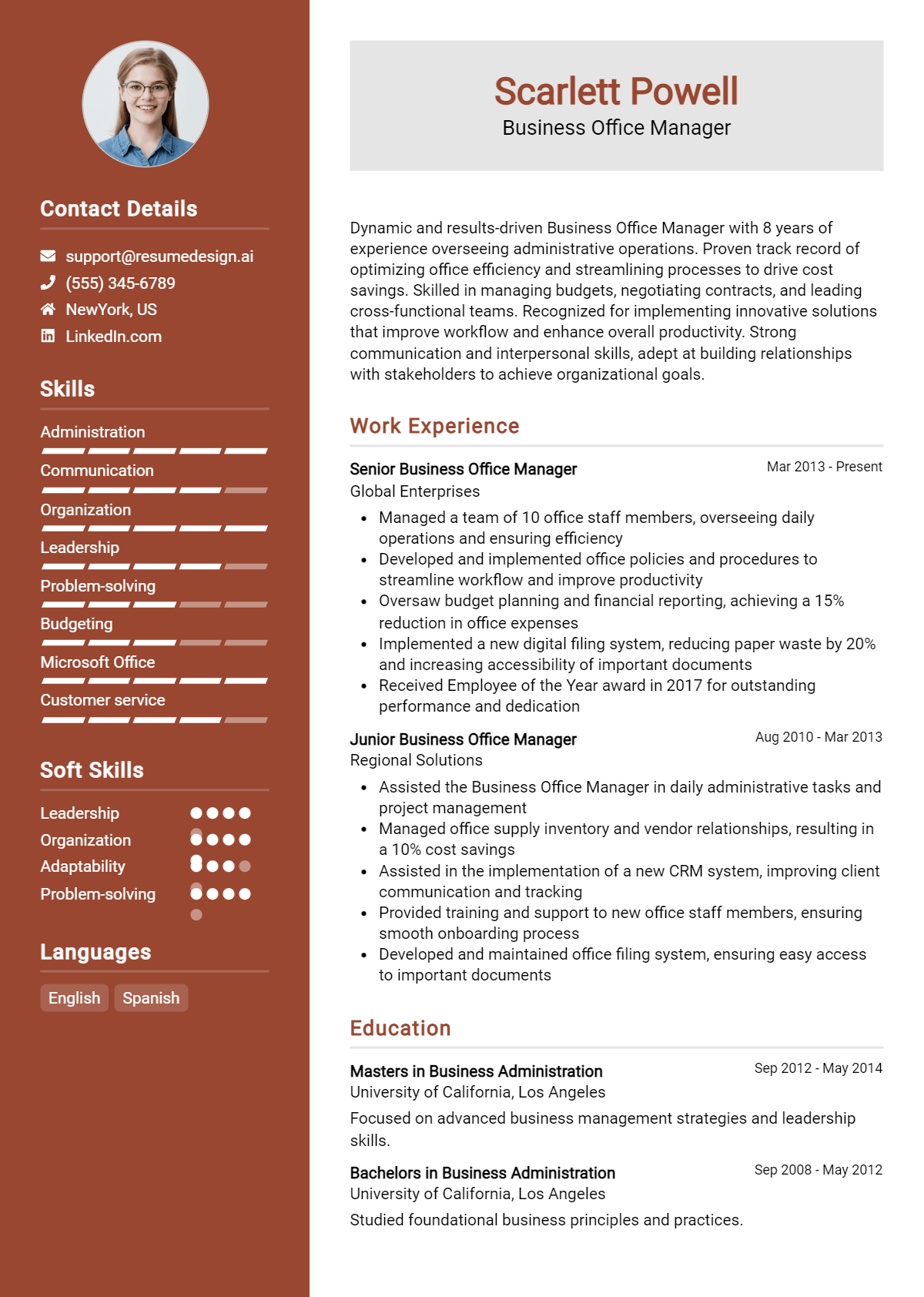
When preparing for an interview as a Business Office Manager, it's essential to anticipate the questions that may arise and to have thoughtful answers prepared. This role requires a blend of organizational skills, leadership capabilities, and a solid understanding of office operations, making it crucial to convey your expertise and fit for the position during the interview process.
Here is a list of common job interview questions for a Business Office Manager, along with examples of the best answers. These questions cover your work history and experience, what you have to offer the employer, and your goals for the future. By preparing your responses to these inquiries, you can effectively showcase your qualifications and demonstrate how you can contribute to the success of the organization.
1. Can you describe your experience with budgeting and financial reporting?
I have over five years of experience managing budgets and financial reports for a mid-sized organization. I regularly analyze financial data to ensure accuracy and compliance, and I collaborate with department heads to develop budget forecasts that align with our strategic goals.
Example:
In my previous role, I successfully managed a $2 million budget, ensuring all departments adhered to financial guidelines while providing regular reports to senior management for informed decision-making.
2. How do you prioritize tasks in a busy office environment?
I prioritize tasks by assessing deadlines, importance, and impact on the team’s goals. I utilize project management tools to keep track of ongoing projects and regularly communicate with my team to adjust priorities as needed, ensuring efficient workflow and timely completion.
Example:
In my last position, I implemented a weekly planning session that helped the team identify urgent tasks and allocate resources effectively, resulting in a 20% increase in productivity.
3. Describe a time when you had to resolve a conflict within your team.
In my previous role, two team members had differing opinions on a project approach. I facilitated a meeting where both could express their views, allowing us to find common ground and develop a hybrid solution that leveraged both perspectives, improving team collaboration.
Example:
By actively listening and encouraging open communication, we resolved the conflict, leading to a stronger team dynamic and a successful project completion ahead of schedule.
4. What strategies do you use to ensure compliance with regulations and policies?
I stay updated on relevant regulations and company policies by participating in training and industry seminars. I conduct regular audits of our processes and provide ongoing training to staff to ensure everyone understands compliance requirements, fostering a culture of accountability.
Example:
In my last role, I established a quarterly review process that helped us maintain compliance with industry standards and reduced violations by 30% within a year.
5. How do you handle tight deadlines and high-pressure situations?
I remain calm and focused during high-pressure situations by breaking tasks into manageable steps and prioritizing effectively. I communicate with my team to ensure everyone is aligned and offer support where needed, which helps us meet deadlines without compromising quality.
Example:
During a last-minute project, I organized daily check-ins to monitor progress, which helped us complete the project on time and maintain high standards.
6. Can you provide an example of how you improved an office process?
In my previous role, I noticed that invoice processing was taking too long. I implemented a digital tracking system that streamlined approvals and reduced processing time by 50%. This improvement enhanced our cash flow management and vendor relationships significantly.
Example:
The new system not only saved time but also minimized errors, leading to more accurate financial reporting.
7. What role does technology play in your management style?
Technology is integral to my management style. I leverage software solutions for project management, communication, and data analysis, which enhances efficiency and transparency. I also encourage my team to adopt new tools that can streamline their work and improve collaboration.
Example:
By introducing a cloud-based platform for document sharing, our team improved collaboration, reducing project turnaround times significantly.
8. How do you ensure effective communication within your team?
I promote open communication by scheduling regular team meetings and using collaborative tools for ongoing discussions. I encourage feedback and ensure everyone feels comfortable voicing their ideas, which fosters a positive team environment and improves overall performance.
Example:
By implementing a weekly check-in, our team increased engagement, leading to innovative solutions and a more cohesive work atmosphere.
9. How do you prioritize tasks in a busy office environment?
I use a combination of urgency and importance to prioritize tasks. I assess deadlines and the impact of each task on overall operations, ensuring that critical issues are addressed first while balancing long-term projects. This structured approach keeps the office running smoothly.
Example:
I start each day by listing tasks and categorizing them by urgency and importance, ensuring that high-impact tasks are completed first while allowing time for less urgent responsibilities. This method keeps my team focused and productive.
10. Can you describe your experience with budgeting and financial reporting?
I have extensive experience in preparing and managing budgets, as well as generating financial reports. I regularly analyze financial data to identify trends and make informed decisions, ensuring the office remains within budget while achieving financial goals.
Example:
In my previous role, I managed a budget of $500,000, producing monthly reports that highlighted variances and areas for cost savings. This proactive approach allowed for better financial planning and resource allocation.
11. How do you handle conflicts within your team?
I address conflicts by facilitating open communication between team members. I encourage them to express their concerns and work collaboratively towards a resolution. My goal is to maintain a positive work environment and ensure all voices are heard.
Example:
When a conflict arose between two staff members, I organized a mediation session where both could share their perspectives. This led to a mutual understanding and a commitment to work together more effectively moving forward.
12. What strategies do you use to improve office efficiency?
I implement process improvements by analyzing workflows and identifying bottlenecks. I also leverage technology to automate repetitive tasks and ensure that staff are trained in best practices, which significantly enhances overall office efficiency.
Example:
In my last position, I introduced a project management tool that streamlined communication and task assignments, resulting in a 25% increase in team productivity and significantly reducing project completion time.
13. How do you ensure compliance with company policies and regulations?
I stay updated on relevant laws and regulations while regularly reviewing company policies. I conduct training sessions for staff to ensure understanding and compliance, and I implement checks to maintain adherence to these guidelines in daily operations.
Example:
After identifying gaps in compliance training, I developed a quarterly training program that educated staff on policy changes, which improved adherence and minimized compliance-related issues.
14. What experience do you have with office management software?
I am proficient in various office management software, including Microsoft Office Suite, QuickBooks, and project management tools like Asana. My experience enables me to streamline operations and enhance communication across teams.
Example:
In my previous role, I utilized QuickBooks for financial management and Asana for project tracking, which allowed for greater transparency and accountability within the team, ultimately improving our workflow.
15. How do you manage vendor relationships?
I prioritize building strong relationships with vendors through regular communication and feedback. I also ensure that expectations are clear and that both parties meet their commitments, leading to successful, long-term partnerships.
Example:
I held quarterly review meetings with key vendors to assess performance and discuss future needs, which fostered trust and collaboration, resulting in better service and pricing for our office.
16. How do you stay organized in your role?
I use digital tools and a systematic approach to keep my tasks organized. I maintain a calendar for deadlines and meetings and use project management software to track ongoing projects, ensuring nothing falls through the cracks.
Example:
I rely on a combination of Google Calendar for scheduling and Trello for task management. This dual approach helps me stay organized and on top of my responsibilities, ensuring timely completion of projects.
17. How do you prioritize tasks when managing multiple projects?
I prioritize tasks by assessing deadlines, project importance, and resource availability. I use tools like Gantt charts and project management software to visualize timelines and dependencies, ensuring I address urgent tasks while maintaining overall project progress.
Example:
For instance, I often categorize tasks by urgency and impact, focusing on high-priority items first. Using a project management tool helps me track progress and adjust priorities as needed.
18. Can you describe your experience with budget management?
I have extensive experience in budget management, including preparing budgets, monitoring expenses, and forecasting financial needs. I ensure all departments adhere to budgetary constraints while identifying cost-saving opportunities without compromising service quality.
Example:
In my previous role, I successfully reduced operational costs by 15% by analyzing spending patterns and negotiating better terms with suppliers while maintaining service levels.
19. How do you handle conflicts within your team?
I address conflicts by facilitating open communication among team members. I encourage them to express their concerns and work together to find mutually beneficial solutions, fostering an environment of collaboration and respect.
Example:
For instance, when two team members clashed over project responsibilities, I organized a mediation session to clarify roles and promote understanding, which strengthened their working relationship.
20. What strategies do you use to improve office efficiency?
I implement efficiency strategies by analyzing workflows and identifying bottlenecks. I also encourage employee feedback and invest in training to enhance skills and improve processes, fostering a culture of continuous improvement.
Example:
For example, I streamlined our document management system, which reduced retrieval times by 30%, significantly enhancing overall office productivity.
21. Describe a time when you had to implement a new policy.
I once implemented a new remote work policy to adapt to changing circumstances. I communicated the reasons and benefits clearly, solicited employee feedback, and provided training to ensure a smooth transition, resulting in increased morale and productivity.
Example:
During the transition, I organized workshops to address concerns and ensure everyone felt supported, leading to a successful rollout and positive reception.
22. How do you keep up with industry trends and changes?
I stay updated on industry trends through professional networks, attending conferences, and subscribing to relevant publications. This ongoing education allows me to adopt best practices that can improve our office operations and strategy.
Example:
For example, I attended a recent conference on digital transformation, which inspired me to integrate new technologies into our operations, enhancing efficiency.
23. What role does technology play in your management style?
Technology is integral to my management style. I leverage software tools for project management, communication, and data analysis, which enhances collaboration and informed decision-making, ultimately driving team success.
Example:
For instance, I use collaborative platforms like Slack and Trello to streamline communication and track project progress, fostering transparency and accountability.
24. How do you measure the success of your office management strategies?
I measure success through key performance indicators such as team productivity, budget adherence, and employee satisfaction surveys. Regular assessments allow me to identify areas for improvement and adapt strategies accordingly.
Example:
For instance, I implemented quarterly reviews to analyze these metrics, using insights gained to refine our approaches and enhance overall performance.
25. How do you prioritize tasks when managing multiple projects?
I prioritize tasks by assessing deadlines, project impact, and resource availability. I utilize project management tools to keep track of progress and ensure clear communication with my team. This approach allows me to focus on high-impact tasks while maintaining overall productivity.
Example:
I assess deadlines and project impact, using tools like Trello to track progress. This ensures I focus on high-priority tasks while keeping the team informed for optimal productivity.
26. Describe a time when you had to deal with a difficult employee. What was the outcome?
I once managed an employee who consistently missed deadlines. I scheduled a private meeting to discuss their challenges and offered support. Together, we created a structured timeline, which improved their performance and fostered a better working relationship.
Example:
I addressed a deadline issue with an employee by holding a private meeting. We identified challenges and created a timeline, resulting in improved performance and a stronger relationship.
27. How do you ensure compliance with financial regulations?
I stay updated on industry regulations by attending workshops and subscribing to relevant publications. I implement internal audits and provide training to staff to ensure compliance. Regular reviews and adjustments to our processes help maintain adherence to financial regulations.
Example:
I subscribe to financial publications and attend workshops for updates. We conduct internal audits and provide staff training to ensure compliance, regularly reviewing processes for adherence.
28. Can you discuss your experience with budgeting and forecasting?
I have extensive experience in developing budgets and forecasts. I analyze historical data, consult with department heads, and adjust for any anticipated changes. This collaborative approach ensures realistic budgeting and helps the organization prepare for future financial needs.
Example:
I analyze data and consult department heads to develop realistic budgets and forecasts, ensuring our organization is prepared for future financial needs.
29. What strategies do you use to improve office efficiency?
I focus on streamlining processes through technology and training. Implementing automated workflows reduces manual tasks, while regular team training enhances skills. Additionally, I encourage feedback to identify areas for improvement, fostering a culture of continuous efficiency.
Example:
I streamline processes through technology and team training, implementing automation to reduce manual tasks while fostering a culture of continuous improvement through regular feedback.
30. How do you handle confidential information?
I prioritize confidentiality by adhering to strict data protection policies. I limit access to sensitive information and conduct regular training for staff on privacy practices. This ensures that everyone understands the importance of maintaining confidentiality in all aspects of our operations.
Example:
I follow strict data protection policies, limiting access to sensitive information and conducting regular staff training to emphasize the importance of confidentiality.
31. Describe your experience with vendor management.
I have managed vendor relationships by establishing clear communication and performance metrics. Regular evaluations help ensure vendors meet our standards. I negotiate contracts to secure favorable terms, fostering partnerships that benefit both the organization and the vendors.
Example:
I establish clear communication and performance metrics with vendors, regularly evaluating their services and negotiating contracts to secure mutually beneficial terms.
32. How do you address underperformance in your team?
I address underperformance by first identifying the root cause through open dialogue. I provide constructive feedback and set clear expectations. Together, we create a development plan that includes resources and support, ensuring employees have the tools needed to improve their performance.
Example:
I identify the root cause of underperformance through dialogue, provide feedback, and create a development plan with clear expectations and resources to support improvement.
33. How do you prioritize tasks in a busy office environment?
I assess urgency and importance, creating a daily to-do list that highlights critical tasks. I also remain flexible to accommodate unexpected issues while ensuring team collaboration for efficiency.
Example:
I prioritize tasks by using a matrix to categorize them by urgency and importance, allowing me to focus on high-impact activities while delegating or scheduling less critical ones for later.
34. Can you describe a time you improved office procedures?
At my previous job, I streamlined the invoicing process by implementing automated software, reducing processing time by 40%. This allowed for timely payments and improved cash flow.
Example:
I identified bottlenecks in our invoicing process and introduced new software, which led to a 30% reduction in errors and faster payment cycles, significantly improving operational efficiency.
35. How do you handle conflicts within your team?
I approach conflicts with open communication, encouraging team members to express their concerns. I facilitate discussions to find common ground, promoting a collaborative solution that respects all viewpoints.
Example:
When conflicts arise, I hold a meeting with the involved parties to discuss their perspectives. This transparency often resolves misunderstandings and fosters a more cooperative team environment.
36. What strategies do you employ for effective budget management?
I maintain a meticulous budget tracking system, regularly reviewing expenses against forecasts. By analyzing spending patterns, I identify areas for cost reduction and ensure funds are allocated efficiently.
Example:
I utilize monthly financial reports to track budget adherence and adjust allocations as necessary. This proactive approach helps me to manage resources effectively and avoid overspending.
37. How do you ensure compliance with policies and regulations?
I stay informed about industry regulations and internal policies through continuous education. I conduct regular training sessions and audits to ensure that all team members are compliant and understand their responsibilities.
Example:
I establish a compliance checklist and provide training workshops, ensuring all staff are aware of policies. Regular audits also help in identifying areas requiring improvement.
38. Describe your experience with vendor management.
I have successfully managed vendor relationships by negotiating contracts, assessing performance, and ensuring timely payments. Building strong partnerships has resulted in better service delivery and cost savings.
Example:
In my last role, I maintained close communication with key vendors, which allowed for better negotiation terms and timely deliveries, leading to a 20% cost reduction over the year.
39. How do you support team development and growth?
I promote a culture of continuous learning by encouraging professional development through training opportunities and mentorship. Regular feedback sessions help identify individual strengths and areas for growth.
Example:
I implement a quarterly review system where team members set individual goals. I also provide access to training resources, fostering both personal and professional growth within the team.
40. What role does technology play in your office management approach?
Technology is critical in streamlining operations. I leverage software for project management, communication, and data analysis to enhance productivity and ensure efficient collaboration among team members.
Example:
I utilize project management tools to track tasks and deadlines, ensuring transparency and accountability. This technology adoption has significantly improved our workflow and team communication.
How Do I Prepare For A Business Office Manager Job Interview?
Preparing for a job interview is crucial for making a positive impression on the hiring manager. A well-thought-out preparation can help you showcase your skills, experience, and enthusiasm for the role of Business Office Manager. Here are some key tips to help you get ready:
- Research the company and its values to understand its culture and mission.
- Practice answering common interview questions related to business management and office administration.
- Prepare examples that demonstrate your skills and experience specific to the Business Office Manager role.
- Review the job description carefully and align your qualifications with the required skills.
- Dress professionally and appropriately for the company’s work environment.
- Bring multiple copies of your resume and any necessary documents to the interview.
- Prepare thoughtful questions to ask the interviewer about the company and position.
Frequently Asked Questions (FAQ) for Business Office Manager Job Interview
Preparing for an interview is crucial, especially for a role as multifaceted as a Business Office Manager. Anticipating common questions can help you present yourself confidently and effectively. Below are some frequently asked questions that can guide your preparation for the interview process.
What should I bring to a Business Office Manager interview?
When attending a Business Office Manager interview, it’s essential to come prepared. Bring multiple copies of your resume, a list of references, and any documents that showcase your previous work, such as performance reviews or project summaries. Additionally, have a notepad and pen ready for taking notes, and consider bringing a portfolio that highlights your accomplishments and relevant skills to demonstrate your qualifications effectively.
How should I prepare for technical questions in a Business Office Manager interview?
To prepare for technical questions, review the job description thoroughly and identify the key skills and software tools mentioned. Brush up on your knowledge of financial management, office systems, and relevant regulations. Practice answering questions that require you to explain your experience with budgeting, payroll systems, or office technology. Additionally, consider conducting mock interviews with a friend or mentor to gain confidence in articulating your expertise.
How can I best present my skills if I have little experience?
If you have limited experience, focus on transferable skills that are relevant to the Business Office Manager role, such as organization, communication, and problem-solving abilities. Highlight any internships, volunteer work, or projects that demonstrate your capacity to manage office tasks or lead initiatives. Emphasize your willingness to learn and adapt, and share examples of how you have successfully applied these skills in previous roles, even if they were in different contexts.
What should I wear to a Business Office Manager interview?
Dressing appropriately for the interview is key to making a positive first impression. Aim for professional attire, such as a business suit or smart dress, that reflects the company culture. If you're unsure, it's better to err on the side of formality. Pay attention to grooming and ensure that your outfit is clean and well-fitted. Remember, dressing professionally conveys your seriousness about the position and respect for the interview process.
How should I follow up after the interview?
Following up after an interview is a vital step that showcases your enthusiasm for the position. Send a thank-you email within 24 hours of the interview, expressing gratitude for the opportunity to interview and reiterating your interest in the role. Mention specific points discussed during the interview to personalize your message. This follow-up not only keeps you on the interviewer’s radar but also reinforces your professional demeanor and communication skills.
Conclusion
In conclusion, this interview guide for the Business Office Manager role has covered essential aspects that candidates should focus on, including the significance of thorough preparation, consistent practice, and the demonstration of pertinent skills. Understanding the nuances of both technical and behavioral questions can greatly enhance a candidate's chances of success in the interview process.
By taking the time to prepare and rehearse answers to likely questions, candidates can build confidence and present themselves as capable professionals. We encourage you to leverage the tips and examples provided in this guide to approach your interviews with assurance and poise.
For further assistance, check out these helpful resources: resume templates, resume builder, interview preparation tips, and cover letter templates.