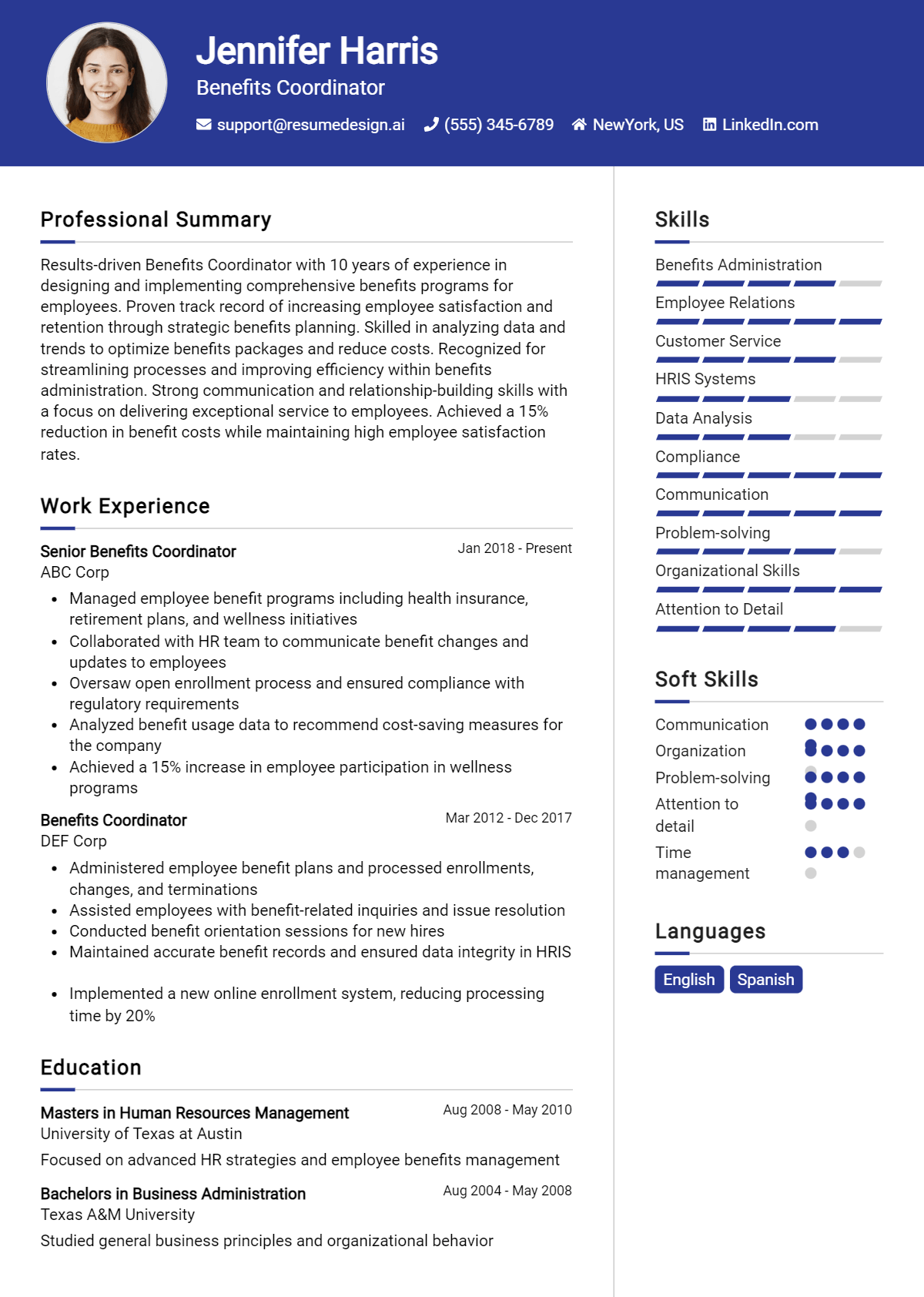
When preparing for a job interview as a Benefits Coordinator, it's essential to familiarize yourself with the types of questions you may encounter. This role requires a deep understanding of employee benefits, compliance regulations, and effective communication skills. Interviewers will likely focus on your experience and knowledge in managing employee benefits programs, problem-solving abilities, and your approach to addressing employee inquiries or issues.
Here is a list of common job interview questions for a Benefits Coordinator position, along with examples of the best answers. These questions cover your work history and experience, what you have to offer the employer, and your goals for the future, ensuring that you can effectively showcase your qualifications and alignment with the company's needs.
1. Can you describe your experience with employee benefits administration?
I have over five years of experience managing employee benefits, including health insurance, retirement plans, and wellness programs. I ensure compliance with regulations and facilitate open enrollment, providing clear communication to employees about their options and addressing any questions they may have.
Example:
In my previous role, I streamlined the benefits enrollment process, reducing the time taken by 30%. I also conducted informational sessions to help employees understand their benefits, leading to increased participation in our wellness programs.
2. How do you stay updated on changes in benefits regulations?
I regularly attend industry webinars and subscribe to relevant newsletters to keep informed about changes in benefits regulations. Additionally, I participate in professional organizations, which provide valuable resources and networking opportunities with other benefits professionals.
Example:
By attending annual HR conferences, I stay current on legislative updates. I also follow regulatory bodies on social media for real-time information, ensuring compliance and accurate communication with employees regarding their benefits.
3. How do you handle employee inquiries about benefits?
I prioritize clear communication and active listening when addressing employee inquiries. I strive to provide accurate information and follow up promptly if I need to research a more complex issue, ensuring the employee feels supported and informed throughout the process.
Example:
In my previous job, I implemented a ticketing system for inquiries, which improved response times by 40%. I also created a comprehensive FAQ resource for employees to access common questions independently.
4. Can you explain your experience with benefit plan design?
I have collaborated with vendors to design benefits plans that align with employee needs and company goals. My experience includes evaluating plan effectiveness and making recommendations based on employee feedback and market trends to ensure competitive offerings.
Example:
I led a project to redesign our health benefits package, incorporating employee feedback. This resulted in a more comprehensive plan that improved employee satisfaction and retention rates significantly over the following year.
5. What strategies do you use to promote employee benefits awareness?
I use a multi-channel approach to promote benefits awareness, including workshops, newsletters, and interactive sessions. I also leverage digital tools to create engaging content and ensure employees know how to access and utilize their benefits effectively.
Example:
Last year, I organized a benefits fair, allowing employees to meet with vendors directly. This event increased engagement and understanding of our offerings, leading to a 20% rise in enrollment in supplemental health plans.
6. How do you ensure compliance with federal and state benefits laws?
I maintain compliance by regularly reviewing policies, attending training sessions, and consulting legal resources. I also conduct annual audits of our benefits programs to ensure they meet all regulatory requirements and adjust processes as necessary.
Example:
For instance, I initiated a compliance audit last year that identified gaps in our reporting processes. We updated our practices, which helped avoid potential fines and ensured our benefits offerings remained compliant.
7. What software or tools have you used for benefits administration?
I have experience using various HRIS systems, such as Workday and ADP, for benefits administration. I'm proficient in data management, reporting, and utilizing these tools to streamline enrollment processes and track employee participation in benefits programs.
Example:
In my last position, I implemented a new HR software that automated many manual processes, reducing administrative workload by 25% and allowing me to focus more on employee engagement and support.
8. How do you handle conflicts related to benefits disputes?
I approach conflicts with empathy and a problem-solving mindset, seeking to understand the employee's perspective. I gather all relevant information and work collaboratively with the employee and other departments to reach a fair resolution while ensuring transparency throughout the process.
Example:
In one instance, an employee was unhappy with their benefits coverage. I facilitated a meeting to clarify the policy details and worked with our insurance provider to adjust their plan, resulting in a positive outcome for the employee.
9. How do you ensure compliance with federal and state benefits regulations?
I maintain up-to-date knowledge of relevant laws by attending workshops and subscribing to industry newsletters. I also regularly collaborate with legal advisors to review our policies, ensuring we remain compliant and mitigate risks associated with benefits administration.
Example:
I stay informed by participating in webinars and reviewing legal updates. I also schedule regular meetings with our legal team to review our benefits offerings, ensuring compliance with all federal and state regulations.
10. Can you describe your experience with employee benefits enrollment systems?
I have extensive experience using various enrollment systems, including Workday and ADP. I lead training sessions for employees to navigate these systems effectively, ensuring a smooth enrollment process and minimizing errors. My focus is always on enhancing user experience.
Example:
I have worked with systems like Workday for five years, where I conducted training sessions for employees. I focus on simplifying the enrollment process to ensure employees feel comfortable using the system and can easily access their benefits.
11. How do you handle employee inquiries about benefits?
I approach employee inquiries with empathy and clarity. I listen carefully to their concerns, provide detailed information, and ensure they feel supported. I also follow up to confirm that their questions were addressed satisfactorily.
Example:
When employees ask about benefits, I first listen to their concerns. I provide clear, concise answers and ensure they have all necessary resources. I always follow up to confirm they feel satisfied with the information provided.
12. What strategies do you employ to communicate benefits changes to employees?
I utilize a multi-channel approach for communication, including emails, newsletters, and informational sessions. Visual aids and FAQs are also provided to help employees understand changes clearly. Feedback is encouraged to improve future communications.
Example:
I send out detailed emails and conduct in-person sessions when there are benefits changes. I also create FAQs and visual materials to help employees understand the updates better and encourage them to ask questions for clarification.
13. Describe a time when you had to resolve a benefits-related issue.
In a previous role, an employee faced discrepancies in their healthcare coverage. I investigated by reviewing records, communicated with the insurance provider, and resolved the issue promptly, ensuring the employee felt heard and supported throughout the process.
Example:
An employee reported a mistake in their healthcare benefits. I promptly reviewed their records, contacted the provider, and resolved the issue within a week, ensuring the employee was satisfied with the resolution and felt supported during the process.
14. How do you assess the effectiveness of the benefits programs offered?
I conduct regular surveys and feedback sessions with employees to gauge satisfaction. Additionally, I analyze participation rates and claims data to identify areas for improvement, ensuring our benefits programs align with employee needs and industry standards.
Example:
I implement annual employee surveys to assess satisfaction with our benefits. I also track enrollment rates and analyze claims data, which helps identify trends and areas needing improvement, ensuring our programs remain competitive and relevant.
15. What experience do you have with wellness programs?
I have developed and managed wellness programs that promote physical and mental health, including fitness challenges and mental health workshops. I track participation and gather feedback to continuously improve these initiatives, ensuring they meet employee needs.
Example:
I have created wellness programs that include fitness challenges and educational workshops. I track engagement through surveys and participation rates to ensure the programs effectively promote employee health and well-being.
16. How do you stay updated on industry trends related to employee benefits?
I regularly attend industry conferences, participate in webinars, and subscribe to relevant publications. Networking with other benefits professionals also helps me stay informed about emerging trends and best practices in employee benefits management.
Example:
I attend annual benefits conferences and participate in online webinars to stay updated. I also subscribe to industry newsletters and engage with professional networks to learn about new trends and best practices in employee benefits.
17. How do you ensure compliance with federal and state benefits regulations?
I stay updated on changes in regulations through continuous education, attending webinars, and consulting resources like the Department of Labor. I also conduct regular audits to ensure our benefits programs comply with all legal requirements.
Example:
I regularly review legislation updates and attend industry conferences. Last year, I implemented a training session for our HR team to ensure everyone understood recent changes in benefits regulations, which improved compliance across the board.
18. Can you describe your experience with benefits administration software?
I have extensive experience using various benefits administration software, including ADP and Zenefits. I’m proficient in navigating these systems for enrollment, reporting, and managing employee queries efficiently, which streamlines processes and enhances employee satisfaction.
Example:
In my previous role, I managed the transition to a new benefits platform. I trained the staff on its features, which reduced processing time by 30% and improved employee access to their benefits information.
19. How do you handle employee inquiries about benefits?
I prioritize clear communication by actively listening to employee concerns and providing accurate information. I also create informational resources to address common questions, ensuring employees feel supported and informed about their benefits options.
Example:
When employees approach me with questions, I listen carefully and provide clear answers. I also developed a FAQ document to streamline common inquiries, which has helped reduce repetitive questions and provided employees with quick access to information.
20. Describe a time you improved an existing benefits program.
At my last job, I identified low participation in a wellness program. After gathering employee feedback, I revamped the program to include more engaging activities and incentives, resulting in a 50% increase in participation within six months.
Example:
I noticed our wellness program was underutilized, so I conducted a survey to understand employee interests. Based on their feedback, I introduced new activities like yoga sessions, leading to a significant increase in engagement and overall employee health.
21. How do you keep track of employee benefits eligibility?
I maintain organized records in our benefits administration software and conduct regular audits to ensure accuracy. I also set reminders for key eligibility dates, which helps prevent errors and ensures all employees receive their entitled benefits.
Example:
I use our software to track eligibility and set up alerts for important dates. During our annual enrollment period, I review records to confirm eligibility, ensuring that all employees are appropriately enrolled in their benefits.
22. What strategies do you use to educate employees about their benefits?
I employ a mix of strategies, including workshops, webinars, and printed materials. I tailor content to different employee demographics, ensuring everyone understands their benefits options and can make informed choices during enrollment periods.
Example:
I organized quarterly workshops and created engaging materials like infographics to explain benefits. This approach increased attendance and helped employees better understand their options, leading to more informed enrollment decisions.
23. How do you manage conflicts arising from benefits disputes?
I approach conflicts with empathy and a focus on resolution. By gathering all facts and communicating openly with the involved parties, I aim to find a fair solution. I also document all discussions to ensure transparency throughout the process.
Example:
When a dispute arose regarding a denied claim, I facilitated a meeting between the employee and the insurance provider. I ensured everyone understood the reasoning and worked towards a resolution, which restored trust and satisfaction.
24. What role does data analysis play in your decision-making as a Benefits Coordinator?
Data analysis is crucial for evaluating program effectiveness and employee needs. I analyze enrollment trends and claims data to make informed recommendations for improvements, ensuring our benefits offerings align with employee preferences and company goals.
Example:
I regularly analyze enrollment and claims data to identify trends. For example, I noticed a rise in mental health claims, which led to introducing additional resources and support, enhancing our benefits offerings effectively.
33. How do you ensure compliance with benefits regulations and laws?
I stay updated on relevant laws through continuous education, webinars, and industry publications. I also maintain close communication with legal counsel to ensure our benefits programs comply with federal and state regulations.
Example:
I regularly review legislation updates and attend compliance training sessions. I also collaborate with our legal team to audit our benefits offerings for compliance, ensuring we meet all requirements effectively.
34. Can you describe a time you resolved a complex benefits issue?
In a previous role, an employee faced discrepancies in their health insurance coverage. I investigated the issue, coordinated with the insurance provider, and clarified the policy details to resolve the situation and ensure the employee received their benefits.
Example:
I once handled a case where a new hire was mistakenly not enrolled in health benefits. I contacted the provider, rectified the error, and ensured the employee had coverage retroactively, keeping them informed throughout the process.
35. How do you handle employee questions or concerns about their benefits?
I prioritize clear communication by actively listening to employees' concerns and providing thorough, accurate information. I also create resources such as FAQs and conduct workshops to proactively address common questions.
Example:
When employees approach me with questions, I take the time to listen and assess their needs. I then provide detailed explanations and follow up with written materials to ensure they fully understand their benefits.
36. What strategies do you use to promote employee engagement in benefits programs?
I implement engagement initiatives like informational sessions and personalized benefits statements. I also gather feedback through surveys to tailor our offerings to meet employee needs and preferences, ensuring they feel valued and informed.
Example:
I launched a biannual benefits fair where employees could learn about their options. I also created interactive online tools for them to explore benefits, increasing awareness and participation significantly.
37. How do you keep track of changing benefits trends and employee needs?
I regularly conduct market research and analyze employee feedback through surveys. Attending industry conferences and networking with peers also helps me stay informed about trends to adapt our offerings accordingly.
Example:
I subscribe to industry publications and participate in HR forums to stay current. Additionally, I analyze our annual employee surveys to identify areas for improvement in our benefits offerings.
38. Describe your experience with benefits administration software.
I have extensive experience with benefits administration software like ADP and Workday. I utilize these platforms for enrollment, reporting, and data management, which streamlines processes and enhances accuracy in tracking employee benefits.
Example:
In my last role, I managed employee benefits through Workday, ensuring accurate data entry and reporting. This experience helped me streamline enrollment processes and improve overall efficiency in managing benefits.
39. How do you handle sensitive information related to employee benefits?
I adhere to strict confidentiality protocols and ensure only authorized personnel access sensitive information. Additionally, I provide training to team members on data privacy and security best practices to maintain compliance.
Example:
I always ensure that sensitive documents are stored securely and shared only through encrypted channels. Regular training on data privacy is also conducted to safeguard employee information consistently.
40. What role does communication play in your work as a Benefits Coordinator?
Effective communication is crucial in my role. I strive to convey complex benefits information clearly and concisely to employees, ensuring they understand their options and can make informed decisions.
Example:
I create easy-to-understand materials and host Q&A sessions to facilitate open dialogue about benefits. This approach has significantly improved employee understanding and engagement in our benefits programs.
41. How do you ensure compliance with changing benefits regulations?
I stay updated on regulations by attending workshops, subscribing to industry newsletters, and participating in professional organizations. I also collaborate with legal counsel to ensure our policies align with current regulations, helping to mitigate risks associated with non-compliance.
Example:
I regularly review updates from the Department of Labor and attend annual compliance seminars. This proactive approach allows me to adjust our benefits offerings promptly and keep our employees informed, ensuring we remain compliant with all regulations.
42. Describe a time when you had to resolve a conflict regarding benefits.
In one instance, an employee was dissatisfied with their benefits allocation. I listened to their concerns, reviewed their eligibility, and explained the rationale behind our policies. Ultimately, we found a solution that met their needs while adhering to the guidelines.
Example:
I addressed a conflict when an employee felt they were unfairly excluded from a health plan. After discussing their situation, I discovered a misunderstanding. I clarified the eligibility requirements and offered alternative options, which resolved the issue effectively.
43. What strategies do you use to communicate benefits information effectively to employees?
I utilize multiple channels such as newsletters, webinars, and one-on-one meetings to ensure clarity. I also create user-friendly materials that simplify complex information, making it accessible and engaging for all employees, which enhances their understanding and participation.
Example:
I developed a series of interactive webinars and easy-to-read guides to explain our benefits. This multi-faceted approach helped employees better understand their options, leading to increased engagement and fewer questions about the benefits package.
44. How do you handle confidential employee information?
I adhere strictly to confidentiality protocols by limiting access to sensitive data and using secure systems for storage. Regular training on data protection laws ensures my team understands the importance of safeguarding employee information.
Example:
I ensure all employee records are stored in encrypted databases and only accessible to authorized personnel. I also conduct regular audits and training sessions to reinforce the importance of maintaining confidentiality in handling employee benefits information.
45. What is your approach to managing vendor relationships for benefits programs?
I prioritize clear communication and regular performance evaluations with vendors. Building strong relationships allows me to negotiate better terms and ensure that the services provided align with our employees' needs and organizational goals.
Example:
I maintain open lines of communication with our benefits vendors, conducting quarterly reviews. This collaborative approach allows us to address any issues promptly and negotiate improvements, ensuring our employees receive the best possible services.
46. How do you measure the success of benefits programs?
I analyze participation rates, employee feedback, and turnover rates to gauge program success. Additionally, I conduct surveys to assess employee satisfaction and identify areas for improvement, ensuring our benefits remain competitive and aligned with employee needs.
Example:
I measure success through regular employee surveys and participation metrics. By analyzing this data, I can identify trends and areas for improvement, ensuring our benefits programs effectively support our workforce and meet their evolving needs.
How Do I Prepare For A Benefits Coordinator Job Interview?
Preparing for a Benefits Coordinator job interview is crucial to making a positive impression on the hiring manager. A well-prepared candidate demonstrates their enthusiasm for the role and their understanding of the company's benefits processes. Here are some key preparation tips to help you succeed:
- Research the company and its values to align your answers with their mission and culture.
- Practice answering common interview questions specific to benefits administration, such as handling employee inquiries or explaining benefits packages.
- Prepare examples that demonstrate your skills and experience relevant to the Benefits Coordinator role, focusing on problem-solving and communication abilities.
- Review the latest trends and regulations in employee benefits to show your industry knowledge and commitment to professional development.
- Dress professionally and choose attire that reflects the company culture, ensuring you make a strong first impression.
- Prepare thoughtful questions to ask the interviewer about the team, challenges, and opportunities in the role to show your genuine interest.
- Practice good body language and communication skills to convey confidence and professionalism during the interview.
Frequently Asked Questions (FAQ) for Benefits Coordinator Job Interview
Preparing for a job interview can be a daunting task, especially when it comes to anticipating the questions that may arise. Understanding common queries that interviewers ask can help you feel more confident and articulate during the conversation. Below are some frequently asked questions specifically tailored for a Benefits Coordinator position, along with practical advice on how to approach each one.
What should I bring to a Benefits Coordinator interview?
When attending a Benefits Coordinator interview, it’s essential to come prepared. Bring several copies of your resume, a list of references, and any relevant certifications that highlight your qualifications for the role. Additionally, having a notebook and pen can be helpful for taking notes during the interview. If you have prepared a portfolio showcasing your previous work related to benefits administration or relevant projects, consider bringing that as well to demonstrate your experience and skills.
How should I prepare for technical questions in a Benefits Coordinator interview?
To prepare for technical questions, review the key concepts related to employee benefits, including health insurance, retirement plans, and compliance regulations. Familiarize yourself with the specific benefits programs offered by the company and be ready to discuss how you would administer and manage these programs. Practicing common technical questions with a friend or mentor can also help you articulate your responses clearly and confidently.
How can I best present my skills if I have little experience?
If you have limited experience in the field, focus on transferable skills from previous roles, such as customer service, organization, and communication. Highlight any relevant coursework, internships, or volunteer experiences that demonstrate your understanding of benefits coordination. Emphasize your willingness to learn and adapt, and express your enthusiasm for the role. Sharing examples of how you’ve successfully handled similar tasks in other settings can also showcase your potential to excel in the position.
What should I wear to a Benefits Coordinator interview?
Dressing appropriately for an interview is crucial, as it reflects your professionalism and respect for the position. For a Benefits Coordinator interview, business professional attire is recommended. This typically includes a tailored suit or dress, polished shoes, and minimal accessories. Ensure that your clothing is clean and pressed. It’s always better to err on the side of being slightly overdressed than underdressed, as this shows your commitment to making a positive impression.
How should I follow up after the interview?
Following up after the interview is a critical step in the process. Aim to send a thank-you email within 24 hours to express your gratitude for the opportunity to interview and reinforce your interest in the position. In your message, mention specific points from the interview that resonated with you, which can help keep you fresh in the interviewer’s mind. Additionally, if you were given a timeline for the next steps in the hiring process, politely inquire about that in your follow-up to demonstrate your eagerness and professionalism.
Conclusion
In this interview guide, we have covered the essential aspects of preparing for a Benefits Coordinator position, emphasizing the importance of thorough preparation and practice in showcasing your relevant skills. Understanding both technical and behavioral questions is crucial, as it not only enhances your confidence but significantly improves your chances of success in the interview process.
As you approach your interviews, remember to leverage the tips and examples provided in this guide. By doing so, you can present yourself as a well-rounded candidate ready to contribute effectively in a Benefits Coordinator role. Embrace this opportunity with confidence and determination!
For further assistance, check out these helpful resources: resume templates, resume builder, interview preparation tips, and cover letter templates.