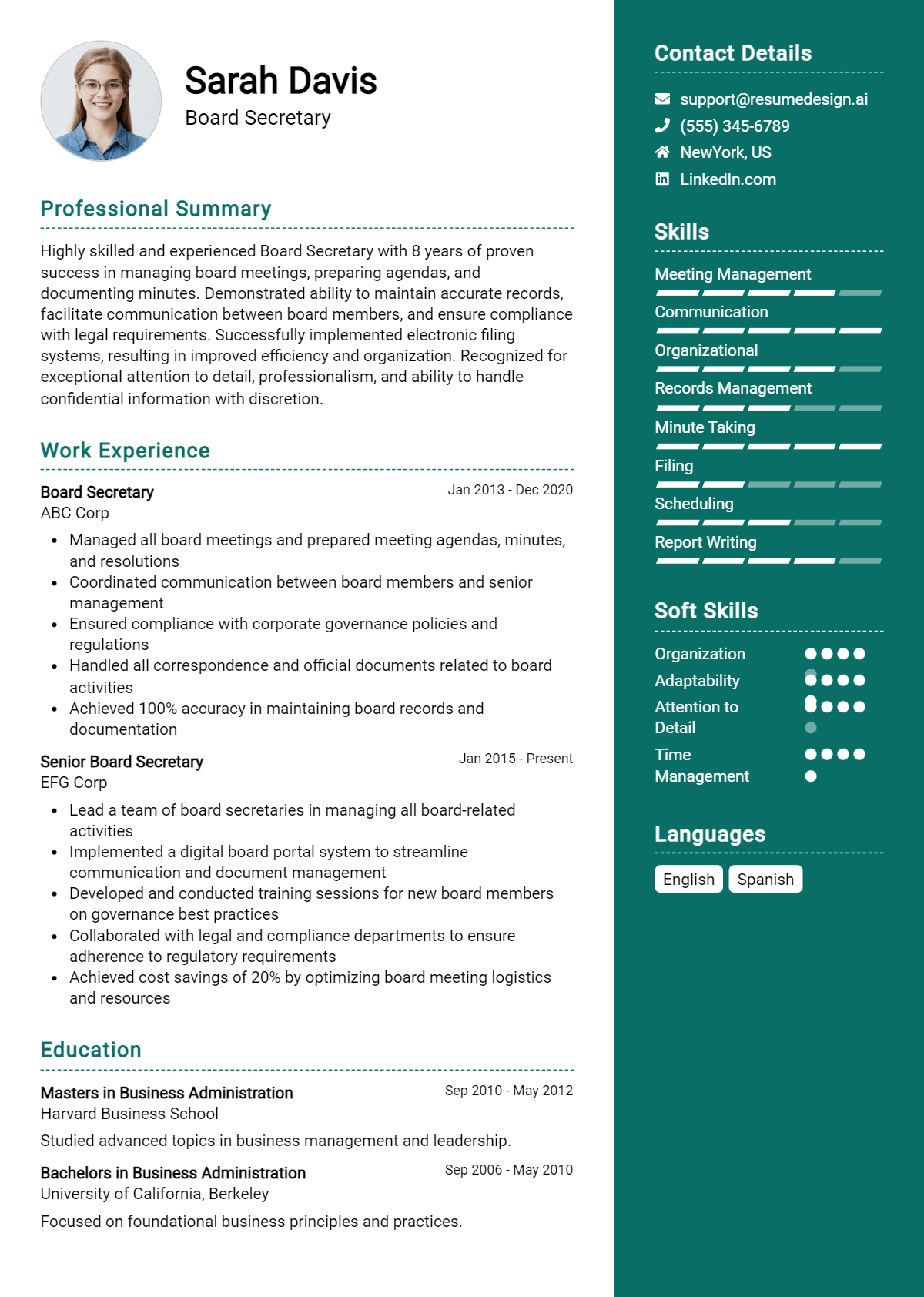
In the role of a Board Secretary, you will be responsible for ensuring the smooth operation of board meetings, maintaining crucial records, and facilitating communication between the board and stakeholders. As this position requires a blend of organizational skills, attention to detail, and knowledge of corporate governance, preparing for your interview is essential. Anticipating the types of questions you may face can help you articulate your qualifications and demonstrate your fit for the role.
Here is a list of common job interview questions for a Board Secretary position, along with examples of the best answers. These questions cover your work history and experience, what you have to offer the employer, and your goals for the future, allowing you to showcase your expertise in governance, compliance, and effective communication.
1. What do you consider the primary responsibilities of a Board Secretary?
As a Board Secretary, my primary responsibilities include organizing board meetings, ensuring compliance with legal requirements, maintaining accurate minutes, and facilitating communication between board members. These tasks are essential for effective governance and ensuring the board operates smoothly.
Example:
The primary responsibilities involve organizing meetings, ensuring compliance, and accurately documenting minutes, which fosters effective communication and governance. My attention to detail helps maintain the integrity of board activities.
2. How do you ensure accurate minutes are taken during board meetings?
I ensure accurate minutes by preparing an agenda in advance, recording the key points during the meeting, and summarizing discussions clearly. After the meeting, I review the minutes with the chairperson for accuracy before distributing them to board members.
Example:
I prepare an agenda beforehand, take detailed notes during the meeting, and summarize discussions for clarity. Post-meeting, I review the minutes with the chairperson to ensure accuracy before distribution.
3. Can you describe your experience with corporate governance?
I have extensive experience with corporate governance, having worked closely with the board to develop policies and ensure compliance with regulations. My role involved advising on best practices and facilitating training sessions to educate board members on their responsibilities.
Example:
I have worked with boards to develop governance policies and ensure regulatory compliance. I also facilitated training sessions to educate members on their roles, fostering a culture of accountability and transparency.
4. How do you handle conflicts of interest within the board?
I address conflicts of interest by ensuring all board members disclose any potential issues upfront. I then follow established protocols to manage these conflicts, including recusal from discussions and decisions where necessary to maintain the board's integrity.
Example:
I ensure board members disclose conflicts of interest promptly and follow protocols for managing them. This includes recusal from relevant discussions to uphold the board's integrity and transparency.
5. What strategies do you use to prepare for board meetings?
To prepare for board meetings, I create detailed agendas, gather necessary documents, and coordinate with the chairperson to align on key topics. Additionally, I ensure all members receive materials in advance for informed discussions.
Example:
I develop detailed agendas, gather relevant documents, and coordinate with the chairperson on key topics. I also ensure all materials are distributed in advance, enabling informed discussions during the meeting.
6. How do you maintain confidentiality within the board?
I maintain confidentiality by implementing strict document control measures, clearly communicating confidentiality expectations to board members, and ensuring that sensitive discussions are held in private. Trust is crucial in my role as Board Secretary.
Example:
I implement document control and communicate confidentiality expectations. Sensitive discussions are conducted privately to build trust and ensure that board matters remain confidential, essential for effective governance.
7. Describe a challenging situation you faced as a Board Secretary and how you resolved it.
I once faced a situation where conflicting agendas among board members caused tension. I facilitated a mediation session to address concerns, leading to a consensus on priorities. This experience strengthened my conflict resolution skills and improved board dynamics.
Example:
I handled tensions from conflicting agendas by facilitating a mediation session, addressing concerns directly. This approach helped reach a consensus on priorities, enhancing my conflict resolution skills and improving board relationships.
8. How do you keep up with changes in regulations affecting the board?
I stay informed about regulatory changes by subscribing to relevant industry newsletters, attending workshops, and participating in professional associations. This proactive approach helps me advise the board effectively and ensures compliance with evolving regulations.
Example:
I subscribe to industry newsletters, attend workshops, and engage with professional associations to stay updated on regulatory changes. This proactive approach allows me to advise the board and ensure compliance efficiently.
9. How do you ensure compliance with legal and regulatory requirements in your role as Board Secretary?
I maintain a comprehensive compliance checklist and regularly review legal updates. I also participate in training sessions and collaborate closely with legal advisors to ensure all board activities meet regulatory standards, which helps mitigate risks and uphold governance integrity.
Example:
I stay updated on relevant laws and regulations by attending seminars and consulting with legal experts. This proactive approach ensures that our board’s practices align with compliance requirements, protecting the organization from potential legal issues.
10. Can you describe your experience with preparing minutes for board meetings?
I have extensive experience in preparing detailed and accurate minutes that capture discussions and decisions made during board meetings. I focus on clarity and conciseness, ensuring all relevant information is documented for future reference and compliance purposes.
Example:
In my previous role, I implemented a structured format for minutes, which included key decisions, action items, and responsible parties. This approach improved clarity and allowed board members to quickly review past discussions and decisions.
11. How do you manage communication between the board and executive management?
I act as a liaison between the board and management by facilitating regular updates and ensuring clear communication channels. I organize briefings and reports that keep both parties informed, fostering collaboration and alignment on strategic objectives.
Example:
I schedule regular meetings and use collaborative tools to share updates. This ensures that board members receive timely information while also allowing management to understand board expectations, ultimately enhancing the organization’s strategic alignment.
12. What strategies do you employ to manage board member engagement?
I prioritize engagement by organizing interactive workshops and soliciting feedback on key issues. I also ensure that every board member has an opportunity to contribute during meetings, fostering an inclusive environment that values diverse perspectives.
Example:
I regularly assess board dynamics through surveys and one-on-one check-ins. This allows me to tailor meeting agendas to address member interests and concerns, enhancing overall engagement and participation.
13. How do you handle conflicts of interest within the board?
I address conflicts of interest by ensuring that all board members are aware of disclosure policies. I facilitate open discussions and maintain transparency, guiding members to recuse themselves from decisions where their interests may conflict.
Example:
In a previous role, I developed a conflict-of-interest policy that required annual disclosures. This proactive approach encouraged transparency and minimized potential issues before they arose during board discussions.
14. Describe a challenging situation you faced as a Board Secretary and how you overcame it.
I once managed a situation where board members disagreed on a strategic direction. I facilitated a structured dialogue, allowing each member to express their views. This helped us reach a consensus, ultimately strengthening team cohesion and strategic alignment.
Example:
During a critical meeting, I encouraged open communication and utilized a decision-making framework. This approach clarified each member’s perspective, which led to a collaborative solution that satisfied all parties involved.
15. How do you ensure that board meetings are effective and productive?
I prepare comprehensive agendas and ensure all materials are distributed in advance. I also set clear objectives for each meeting and encourage active participation, which helps maintain focus and drives productive discussions aligned with our strategic goals.
Example:
In my previous position, I implemented a time-management strategy for meetings. By allocating specific time slots for each agenda item, we maximized productivity and ensured all critical topics were addressed efficiently.
16. What role do you play in the onboarding of new board members?
I facilitate the onboarding process by providing new members with essential materials, including governance documents and meeting schedules. I also arrange introductory meetings with key stakeholders, enabling them to integrate smoothly and understand their roles and responsibilities.
Example:
I developed a comprehensive onboarding program that includes mentorship from an existing board member. This approach fosters relationships and helps newcomers acclimate to the board’s culture and expectations more quickly.
17. How do you ensure the confidentiality of board discussions and materials?
I implement strict document control procedures and access restrictions. Regular training on confidentiality policies and secure storage of sensitive materials are key strategies. I also use encrypted communications to protect sensitive discussions.
Example:
I enforce a policy where sensitive documents are only accessible to authorized personnel. Regular reminders about confidentiality during meetings help maintain awareness among board members.
18. Can you describe your experience with compliance and regulatory requirements?
I have extensive experience monitoring compliance with regulations affecting the organization. This includes staying updated on legislative changes and ensuring board materials align with legal standards. I facilitate training sessions to educate board members on compliance issues.
Example:
I regularly review regulatory updates and adjust our practices accordingly. Last year, I organized a compliance workshop that improved our board's understanding of necessary regulations.
19. How do you handle conflicts of interest within the board?
I address conflicts of interest by establishing clear policies and maintaining transparency. I encourage board members to disclose potential conflicts early and facilitate discussions to ensure decisions are made in the organization's best interest.
Example:
When a conflict arose, I guided the affected member to recuse themselves from the discussion, ensuring it was documented in the minutes for transparency and accountability.
20. What methods do you use to prepare for board meetings?
I create a detailed agenda, gather necessary documents, and ensure all materials are distributed in advance. I also coordinate with the chairperson to confirm key discussion points and facilitate any required pre-meetings.
Example:
I prepare an agenda a week in advance, alongside briefing notes for board members, ensuring everyone is well-informed prior to meetings for effective discussions.
21. How do you manage board member communications and relationships?
I maintain regular communication through updates and check-ins. I foster relationships by being approachable, addressing concerns promptly, and ensuring all members feel valued and heard within the board's structure.
Example:
I schedule monthly one-on-one calls with board members to discuss their concerns and feedback, enhancing trust and collaboration among the team.
22. Can you provide an example of how you have improved board processes?
I identified inefficiencies in our meeting preparation and implemented a digital platform for sharing documents. This streamlined access to information and enhanced collaboration, resulting in more productive meetings.
Example:
After implementing an online document-sharing system, meeting preparation time was cut by 30%, allowing more focus on strategic discussions during meetings.
23. How do you ensure accurate and timely meeting minutes?
I take detailed notes during meetings and prioritize drafting minutes immediately afterward. I review them with the chairperson for accuracy before distribution to ensure all key decisions and actions are captured correctly.
Example:
By drafting minutes within 24 hours of meetings and circulating them for review, I ensure they are accurate and distributed promptly, enhancing accountability.
24. How do you address board member concerns or grievances?
I create an open environment for addressing concerns by encouraging members to voice issues directly. I listen actively, document grievances, and work with the board to find constructive solutions while maintaining confidentiality.
Example:
When a member raised a concern, I scheduled a private meeting to discuss it, ensuring their issues were addressed and fostering a collaborative spirit within the board.
25. How do you ensure that board meetings run smoothly and efficiently?
I prepare detailed agendas, distribute materials in advance, and coordinate logistics. During meetings, I keep track of time and ensure all voices are heard, which fosters engagement and minimizes conflicts. This proactive approach enhances productivity and allows for effective decision-making.
Example:
By organizing pre-meeting briefings and setting clear timelines, I help facilitate smooth discussions. I also utilize technology for real-time document sharing, which enables board members to access necessary information promptly and contribute meaningfully.
26. Can you describe your experience with corporate governance?
I have extensive experience in corporate governance, ensuring compliance with legal and regulatory requirements. My role includes developing governance policies, conducting board evaluations, and supporting the board in understanding their fiduciary duties. This experience strengthens the organization's accountability and transparency.
Example:
In my previous role, I led a governance review that resulted in updated policies and improved board member training, enhancing our compliance framework and reinforcing ethical standards across the organization.
27. How do you handle conflicts of interest within the board?
I address conflicts of interest by implementing clear policies that require disclosure from board members. I facilitate discussions to assess the situation and suggest recusal if necessary, ensuring transparency and maintaining board integrity. This approach fosters trust and accountability among board members.
Example:
In a past scenario, I guided a board member through the disclosure process, ensuring their interests were documented and discussed, which allowed the board to navigate the situation transparently and maintain its credibility.
28. What strategies do you employ for effective communication with board members?
I prioritize open and honest communication by establishing regular updates through newsletters and meetings. Utilizing collaborative tools enhances engagement, while one-on-one check-ins address specific concerns. This two-way communication fosters trust and ensures all members feel valued and informed.
Example:
I implemented a digital platform for document sharing and feedback, which allowed board members to express their thoughts freely, leading to enhanced collaboration and quicker decision-making processes.
29. Describe a challenging situation you faced as a Board Secretary and how you resolved it.
I once managed a situation where board members disagreed on a critical funding decision. I facilitated a focused discussion, encouraging each member to voice their concerns. By summarizing key points, we reached a consensus that aligned with our strategic goals, turning a conflict into collaboration.
Example:
Through active listening and summarizing differing viewpoints, I was able to guide the board to a solution that respected all opinions while prioritizing the organization's best interests, resulting in a unanimous decision on the funding.
30. How do you stay updated on changes in laws and regulations affecting the board?
I subscribe to legal and governance newsletters, attend relevant workshops, and network with industry professionals. Additionally, I consult with legal advisors regularly to ensure our practices align with current laws, minimizing risks and enhancing the board's compliance efforts.
Example:
By participating in annual governance seminars and maintaining relationships with compliance experts, I ensure that our board remains informed of legislative changes, allowing us to adapt our policies swiftly and effectively.
31. What role do you play in the orientation of new board members?
I lead the orientation process for new board members, providing them with essential materials on governance practices, organizational history, and strategic goals. This comprehensive onboarding ensures they are well-prepared to contribute effectively and understand their roles and responsibilities.
Example:
During orientation, I present an overview of our governance structure and key policies, followed by a Q&A session, which helps new members integrate smoothly and fosters immediate engagement with their responsibilities.
32. How do you manage the documentation and record-keeping of board meetings?
I utilize a systematic approach for documenting board meetings, ensuring minutes are accurate and distributed promptly. I maintain organized records in a digital format for easy access, which enhances transparency and accountability while safeguarding important information for future reference.
Example:
After each meeting, I draft minutes within 48 hours, focusing on key decisions and action items, then share them electronically with board members for review, ensuring that all records are clear and accessible.
33. How do you ensure that board meeting minutes are accurate and comprehensive?
I employ a systematic approach by taking detailed notes during meetings and reviewing them with the chairperson afterward. This ensures clarity and accuracy. I also reference past minutes to maintain consistency and include all critical decisions and action items.
Example:
I draft the minutes immediately after each meeting, cross-checking them with my notes and the agenda, and then circulate them for review to confirm accuracy before final distribution.
34. Can you describe your experience with governance and compliance issues?
In my previous role, I managed compliance with corporate governance standards by conducting regular audits and updating policies. I collaborated with legal advisors to ensure board practices aligned with regulations, fostering transparency and accountability within the organization.
Example:
I implemented a compliance checklist that ensured our board adhered to all governance standards, and I organized training sessions for board members on their responsibilities.
35. What strategies do you use to prepare board members for meetings?
I prepare board members by providing them with a comprehensive agenda and relevant documents well in advance. Additionally, I offer briefings on key topics to ensure they are informed and can engage meaningfully during discussions.
Example:
I schedule one-on-one sessions ahead of meetings to discuss agenda items and clarify any concerns, ensuring all members are on the same page.
36. How do you handle conflicts of interest within the board?
I address conflicts of interest by implementing a clear policy and ensuring board members disclose any potential conflicts. I facilitate discussions to determine appropriate actions, ensuring transparency and adherence to ethical standards.
Example:
In a previous situation, I guided the board through a conflict discussion, ensuring the member recused themselves and documented the resolution process to uphold integrity.
37. Describe a time when you had to manage a difficult board member.
I once encountered a board member who was consistently disruptive. I arranged a private conversation to address their concerns and reframe their contributions positively. This approach improved their engagement and the overall board dynamics.
Example:
By listening to their frustrations and involving them in constructive dialogue, we transformed their disruptive behavior into valuable feedback for the board.
38. How do you ensure effective communication among board members?
I promote effective communication by utilizing various channels, such as email, shared documents, and regular updates. I also encourage open dialogue during meetings and facilitate follow-up discussions to ensure everyone is aligned.
Example:
I implemented a digital platform for document sharing and discussions, allowing board members to collaborate efficiently between meetings.
39. What role do you play in board evaluations?
I coordinate the board evaluation process by developing assessment tools and facilitating feedback sessions. This process helps identify strengths and areas for improvement, ensuring the board operates at its highest potential.
Example:
I recently led a comprehensive evaluation, gathering anonymous feedback, which resulted in actionable insights that enhanced board performance.
40. How do you stay updated on best practices for board governance?
I stay updated by attending workshops, subscribing to governance publications, and networking with other board secretaries. Continuous education is vital for adapting to evolving regulations and best practices in corporate governance.
Example:
I regularly participate in webinars and professional associations, ensuring I bring fresh insights and practices to my board.
41. How do you prioritize tasks when managing multiple board schedules?
I prioritize tasks by assessing deadlines and the impact of each item. I utilize project management tools to track progress and ensure timely communication with board members. This helps maintain transparency and ensures all tasks are completed efficiently.
Example:
I use a digital calendar to prioritize tasks. For example, I focus on scheduling meetings with tight deadlines first while also ensuring that the board members are informed of any changes promptly.
42. Can you describe your experience with preparing board meeting agendas?
I have extensive experience in preparing board meeting agendas by collaborating with executives to identify key discussion points. I ensure that the agenda aligns with strategic goals and includes necessary reports, fostering productive discussions during meetings.
Example:
In my previous role, I prepared agendas by consulting with the CEO and ensuring that all relevant topics were covered, leading to more focused and efficient meetings.
43. How do you ensure compliance with legal and regulatory requirements?
I ensure compliance by staying updated on relevant laws and regulations, and implementing necessary policies. Regular training sessions for board members also help maintain awareness and adherence to compliance standards.
Example:
I conduct annual compliance reviews and organize training workshops for board members to ensure everyone understands their legal responsibilities and the latest regulations.
44. What steps do you take to manage board member communications?
I manage communications by establishing clear protocols for sharing information. I utilize email newsletters and dedicated communication platforms to keep board members updated on important matters, fostering cohesive teamwork.
Example:
I send regular updates through a secure online portal, ensuring that all members have access to important documents and announcements in a timely manner.
45. Describe a challenging situation you faced as a Board Secretary and how you handled it.
Once, a board member expressed dissatisfaction with a meeting decision. I facilitated a follow-up discussion, allowing concerns to be aired and addressed. This approach not only resolved the issue but also improved board dynamics and trust.
Example:
I organized a special meeting to discuss the member's concerns, ensuring everyone felt heard, which led to a productive resolution and strengthened board relations.
46. How do you maintain confidentiality in your role?
I maintain confidentiality by implementing strict data handling procedures and limiting access to sensitive information. Regular training on confidentiality policies also ensures that all board members understand the importance of discretion.
Example:
I use secure platforms for document sharing and hold regular briefings to emphasize the significance of confidentiality among board members.
How Do I Prepare For A Board Secretary Job Interview?
Preparing for a board secretary job interview is crucial to making a positive impression on the hiring manager. A well-prepared candidate not only demonstrates professionalism but also shows genuine interest in the role and the organization. Here are some key preparation tips to help you succeed:
- Research the company and its values to understand its mission and culture.
- Review the job description thoroughly to align your skills with the requirements.
- Practice answering common interview questions related to board governance and administrative duties.
- Prepare examples that demonstrate your skills and experience relevant to the board secretary role.
- Familiarize yourself with current trends and issues in corporate governance.
- Dress professionally to reflect the seriousness of the position you are applying for.
- Prepare thoughtful questions to ask the interviewer about the board's operations and expectations.
Frequently Asked Questions (FAQ) for Board Secretary Job Interview
Preparing for a job interview is crucial, especially for a role as significant as a Board Secretary. Understanding common questions can help you articulate your skills and experience more effectively, ensuring you make a positive impression on the interview panel.
What should I bring to a Board Secretary interview?
When attending a Board Secretary interview, it's essential to come prepared with several key items. Bring multiple copies of your resume, a list of references, and a notebook with a pen for taking notes during the discussion. If you have any relevant certifications or documents showcasing your qualifications, include those as well. This preparation demonstrates professionalism and shows that you take the opportunity seriously.
How should I prepare for technical questions in a Board Secretary interview?
To prepare for technical questions, familiarize yourself with the specific duties and responsibilities of a Board Secretary, including knowledge of corporate governance, compliance, and record-keeping. Review the organization’s bylaws and any relevant legal frameworks. Consider practicing with a friend or mentor by conducting mock interviews that focus on these areas. This approach will help you feel more confident and articulate during the actual interview.
How can I best present my skills if I have little experience?
If you have limited experience, focus on transferable skills that are applicable to the Board Secretary role, such as organization, attention to detail, and communication abilities. Highlight relevant coursework, internships, or volunteer positions that showcase your skills in managing documentation and supporting a team. Additionally, convey your eagerness to learn and contribute, demonstrating how your unique perspective can benefit the organization.
What should I wear to a Board Secretary interview?
Dress professionally for your Board Secretary interview to convey respect for the position and the interviewers. Opt for business attire, such as a tailored suit or a conservative dress, that makes you feel confident and comfortable. Pay attention to grooming and ensure your clothing is clean and pressed. A polished appearance helps reinforce the impression that you are serious about the role.
How should I follow up after the interview?
Following up after an interview is an important step in the job application process. Send a thank-you email within 24 hours, expressing gratitude for the opportunity to interview and reiterating your interest in the position. In your message, you can also briefly mention a point from the interview that resonated with you. This gesture not only shows your appreciation but also keeps you on the interviewers' minds as they make their decisions.
Conclusion
In summary, this interview guide has highlighted the essential aspects of preparing for a Board Secretary position, emphasizing the significance of thorough preparation, practice, and showcasing relevant skills. Candidates should remember that mastering both technical and behavioral questions is crucial, as it significantly enhances their chances of success in the interview process.
As you embark on your interview journey, take advantage of the tips and examples provided in this guide. Approach your interviews with confidence, knowing that you are well-equipped to make a lasting impression.
For further assistance, check out these helpful resources: resume templates, resume builder, interview preparation tips, and cover letter templates.