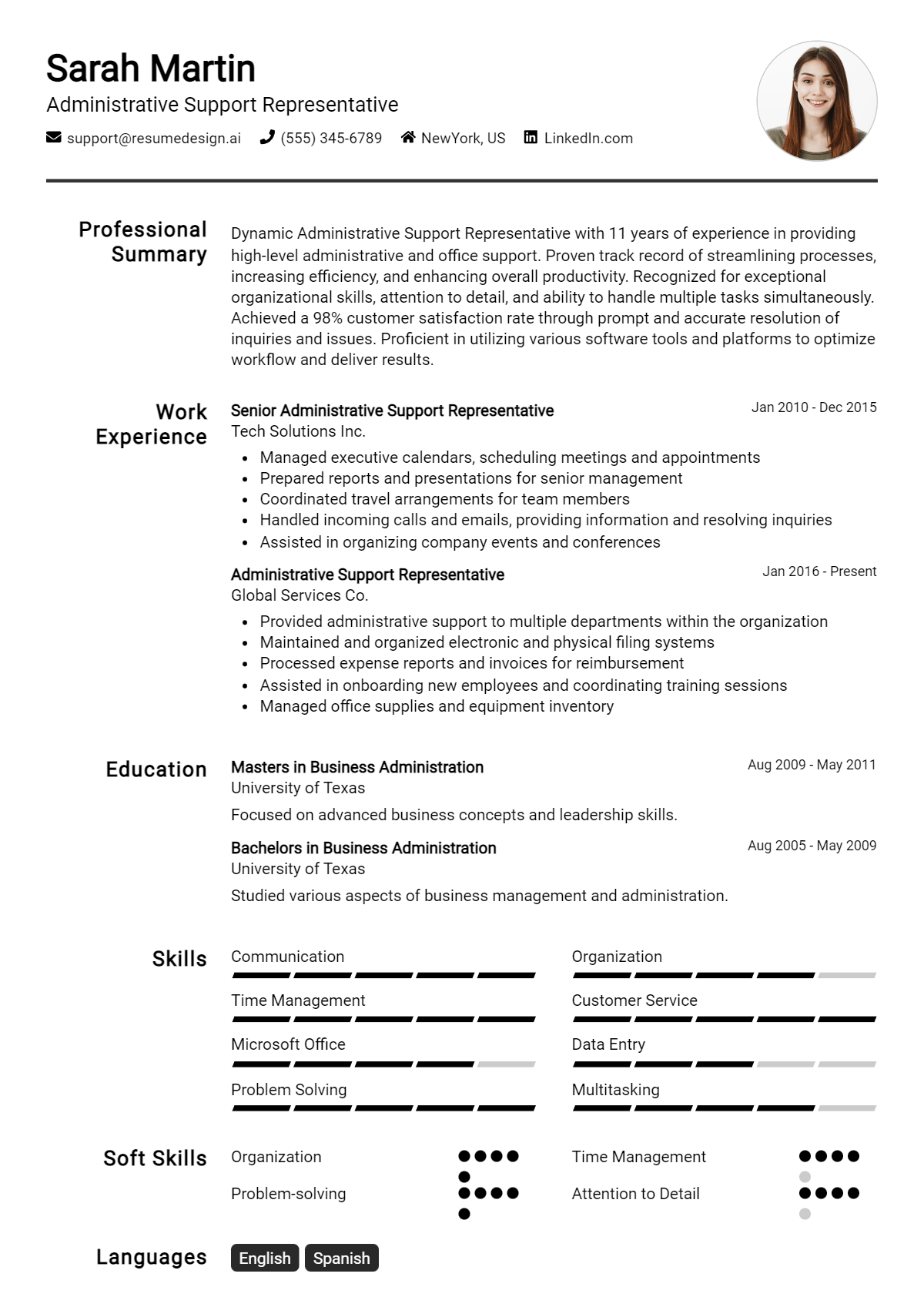
As an Administrative Support Representative, you play a crucial role in ensuring the smooth operation of an organization by managing various administrative tasks and providing excellent support to both colleagues and clients. Preparing for your interview is essential, as it will allow you to effectively communicate your skills, experiences, and how you can contribute to the company's success.
Here is a list of common job interview questions for the Administrative Support Representative role, along with examples of the best answers. These questions will cover your work history and experience, what you have to offer the employer, and your goals for the future, helping you to present yourself as the ideal candidate for the position.
1. Can you describe your experience with administrative tasks?
I have over five years of experience in administrative support, managing schedules, handling correspondence, and maintaining records. My organizational skills and attention to detail have enabled me to streamline processes, ensuring efficiency and accuracy in every task I undertake.
Example:
In my previous role, I managed a complex calendar for executives while coordinating travel and meetings, ensuring that all arrangements were seamless and efficient.
2. How do you prioritize your tasks when you have multiple deadlines?
I prioritize tasks based on urgency and importance, often using a to-do list or digital project management tool. I assess deadlines, communicate with colleagues to understand their needs, and adjust my priorities as necessary, ensuring that I meet all deadlines without compromising quality.
Example:
When facing multiple deadlines, I create a priority matrix which helps me visualize tasks, allowing me to tackle the most urgent ones first while keeping track of others.
3. How do you handle difficult clients or coworkers?
I approach difficult clients or coworkers with empathy and active listening, seeking to understand their concerns. I remain calm and professional, aiming to find common ground and resolve issues amicably, ensuring a positive outcome for all parties involved.
Example:
In a past situation, I listened to a client’s complaints, validated their feelings, and worked collaboratively to find a solution that met their needs while maintaining professionalism throughout the process.
4. What software or tools are you familiar with for administrative tasks?
I am proficient in Microsoft Office Suite, Google Workspace, and various project management tools like Trello and Asana. My experience with CRM systems has also enhanced my ability to manage contacts and track interactions effectively.
Example:
I've used Microsoft Excel for data organization and reporting, while Trello has helped me manage multiple projects efficiently, ensuring clear communication and task tracking.
5. Can you give an example of how you improved a process in your previous role?
In my last position, I noticed inefficiencies in our document filing system. I proposed a new digital filing structure that categorized documents by department and date, which reduced retrieval time by 30%, significantly improving overall productivity and access to information.
Example:
By implementing a standardized naming convention for files, I helped the team locate important documents quickly, which improved our workflow and reduced frustration.
6. How do you ensure confidentiality in your work?
I understand the importance of confidentiality and adhere strictly to company policies. I ensure sensitive information is only shared with authorized personnel and securely store documents, utilizing password protection and encryption when necessary to safeguard data.
Example:
In my previous job, I handled confidential HR documents and maintained strict access controls, ensuring that only relevant team members could view sensitive information.
7. Describe a time when you had to learn something quickly.
When I transitioned to a new software system, I dedicated time to online tutorials and hands-on practice. Within a week, I became proficient enough to train my colleagues, demonstrating my adaptability and commitment to continuous learning in a fast-paced environment.
Example:
I quickly learned a new project management tool, allowing me to lead a team meeting within days, ensuring that everyone was on the same page and maximizing productivity.
8. What motivates you in an administrative support role?
I am motivated by the opportunity to support my team and contribute to the organization’s success. The variety of tasks keeps me engaged, and I find satisfaction in solving problems and improving processes, knowing my work directly impacts overall efficiency.
Example:
I thrive on delivering exceptional support, whether managing schedules or solving issues, as it allows me to contribute positively to my team's goals and success.
9. How do you prioritize your tasks when you have multiple deadlines?
I prioritize tasks by assessing their urgency and importance. I create a daily to-do list, marking deadlines clearly, and allocate time blocks for each task. This structured approach ensures that I meet all deadlines without compromising the quality of my work.
Example:
I use a priority matrix to categorize tasks, focusing on high-impact activities first. For instance, if two projects are due, I tackle the one with the most complex requirements first to ensure thoroughness.
10. Can you describe a time when you had to handle a difficult client or colleague?
I encountered a challenging client who was frustrated with a service delay. I listened actively to their concerns, empathized, and assured them I would resolve the issue. I followed up with timely updates, which helped restore their trust and satisfaction.
Example:
One client was upset about a billing error. I calmly listened, apologized, and quickly rectified the mistake, ensuring clear communication throughout the process, which led to a positive outcome.
11. What software or tools are you proficient in that aid administrative tasks?
I am proficient in Microsoft Office Suite, Google Workspace, and project management tools like Trello and Asana. These tools help me create documents, manage schedules, and track project progress efficiently, enhancing productivity and collaboration.
Example:
I frequently use Excel for data analysis, Google Docs for collaboration, and Outlook for email management, which streamline my daily tasks and improve team communication.
12. How do you ensure confidentiality in your role?
I maintain confidentiality by adhering to company policies and legal regulations regarding sensitive information. I limit access to confidential data, use secure communication channels, and regularly participate in training on data protection practices.
Example:
In my previous role, I handled sensitive client information and ensured confidentiality by using encrypted emails and limiting document access to authorized personnel only.
13. Describe a situation where you improved a process. What was the outcome?
I identified inefficiencies in our document filing system, leading to delays. I proposed a digital filing solution that organized files by categories, which significantly reduced retrieval time and improved team productivity. The implementation resulted in faster processing of requests.
Example:
By transitioning our paper files to a cloud-based system, I decreased document retrieval time by 50%, allowing the team to focus on more critical tasks.
14. How do you handle repetitive tasks without losing motivation?
I maintain motivation for repetitive tasks by setting small goals and rewarding myself upon completion. I also find ways to streamline processes and look for opportunities to automate certain tasks, making them more efficient and less tedious.
Example:
To stay motivated during data entry, I break the work into smaller segments and take short breaks, which helps to maintain my focus and energy levels.
15. How do you stay organized in a fast-paced work environment?
I stay organized by using digital tools like calendars and task management apps. I prioritize tasks daily and set reminders for deadlines. This approach helps me manage my time effectively and ensures that I stay on top of all responsibilities.
Example:
I use a combination of Google Calendar for scheduling and Todoist for task management, which helps me visualize my workload and keep track of important deadlines.
16. What steps do you take to ensure effective communication with your team?
I ensure effective communication by actively listening, providing clear updates, and encouraging feedback. I use various communication platforms to suit team preferences and maintain regular check-ins to keep everyone aligned and informed on project statuses.
Example:
I hold weekly team meetings to discuss progress and challenges, and I encourage open communication via chat applications to foster collaboration and address issues promptly.
17. How do you prioritize your tasks when you have multiple deadlines?
I assess deadlines and the impact of each task. I create a task list, focusing on urgent and important items first, while also allowing time for unexpected issues. This structured approach ensures I meet deadlines efficiently.
Example:
I prioritize tasks by using a checklist and marking urgent items. For instance, when faced with multiple deadlines, I focus on high-impact tasks first while monitoring progress on others, ensuring timely completion.
18. Can you describe a time you resolved a conflict within a team?
I facilitated a discussion between two colleagues who disagreed on a project approach. By encouraging open communication and focusing on common goals, we reached a compromise that satisfied both parties, ultimately improving team collaboration and project outcomes.
Example:
In a previous role, I mediated a conflict by organizing a meeting where everyone could voice their concerns. This led to a collaborative solution, and the project was completed successfully while strengthening team dynamics.
19. What tools or software are you familiar with for administrative tasks?
I am experienced in Microsoft Office Suite, Google Workspace, and project management tools like Trello and Asana. These tools help me organize tasks, manage schedules, and enhance communication within teams efficiently.
Example:
I regularly use Microsoft Excel for data management and Google Calendar for scheduling. Additionally, I utilize Asana to track project progress, ensuring that all tasks are completed on time.
20. How do you handle repetitive tasks or routine work?
I approach routine tasks with a mindset of efficiency. I streamline processes by identifying areas for automation or improvement, which enhances productivity while ensuring accuracy and consistency in my work.
Example:
For repetitive tasks, I create templates and checklists to improve efficiency. This allows me to maintain high accuracy while freeing up time for more complex tasks that require my attention.
21. Describe a time when you had to learn a new skill quickly.
When my previous employer adopted a new CRM, I dedicated time to online tutorials and hands-on practice. Within a week, I became proficient, allowing me to assist my team effectively and support our transition to the new system.
Example:
I quickly learned a new scheduling software at my last job by attending training sessions and practicing daily. Within a short time, I was able to teach colleagues how to use it effectively.
22. How do you maintain confidentiality in your role?
I understand the importance of confidentiality and adhere to company policies. I ensure sensitive information is securely stored and only share it with authorized personnel, maintaining trust and compliance with regulations.
Example:
I always store confidential documents in secure locations and use encryption for digital files. I also remind colleagues about the importance of discretion when discussing sensitive matters.
23. How do you handle feedback or criticism about your work?
I view feedback as an opportunity for growth. I listen carefully, ask clarifying questions, and implement changes to improve my performance. Constructive criticism helps me refine my skills and better serve my team.
Example:
When receiving feedback, I take notes and reflect on the suggestions. For instance, after a review, I adjusted my reporting style, which improved clarity and effectiveness in communication.
24. What strategies do you use to stay organized in your work?
I use a combination of digital tools and physical planners to stay organized. I prioritize tasks daily, set reminders, and maintain a clean workspace, which helps me stay focused and efficient throughout the day.
Example:
I utilize a digital calendar for scheduling and a project management tool to track tasks. Additionally, I review my priorities each morning to ensure I stay on track and meet deadlines.
25. How do you prioritize your tasks when you have multiple deadlines?
I assess the urgency and importance of each task, using a priority matrix. I then create a structured to-do list and allocate specific time blocks to work on each task, ensuring I meet all deadlines without compromising quality. Example: I once had three overlapping deadlines. I prioritized based on urgency, completed the most critical task first, then focused on the others, ensuring timely submissions while maintaining work quality.
26. Describe a situation where you had to handle a difficult customer.
I calmly listened to the customer's concerns, acknowledged their feelings, and provided a solution. By staying empathetic and focused, I was able to turn a negative experience into a positive one, ultimately satisfying the customer and strengthening our relationship. Example: A customer was upset about a delayed order. I listened attentively, apologized for the inconvenience, and offered a discount on their next purchase, which they appreciated and helped restore their trust in our service.
27. Can you provide an example of how you improved a process in your previous job?
At my previous job, I noticed our filing system was inefficient. I proposed a digital solution, organizing files by categories that improved retrieval time by 30%. This streamlined our workflow and allowed the team to focus on more critical tasks. Example: I implemented a cloud-based filing system that categorized documents more effectively. This change reduced search times significantly, leading to greater productivity for my colleagues and smoother operations overall.
28. How do you handle confidential information?
I prioritize confidentiality by following company policies strictly. I limit access to sensitive information to authorized personnel only and ensure all documents are stored securely. Regular training helps me stay updated on best practices for data protection. Example: In my last job, I handled sensitive client data. I ensured it was encrypted and accessed only by those who needed it. I also participated in regular training sessions on confidentiality protocols, which reinforced my commitment to data security.
29. What software tools are you familiar with that are relevant to administrative support?
I am proficient in Microsoft Office Suite, especially Excel and Word, and have experience with project management tools like Trello and Asana. I also have basic knowledge of CRM software, which aids in effective communication and task management. Example: I regularly used Excel for data analysis and reporting, while Trello helped me manage tasks efficiently. I also learned to use CRM software to track customer interactions and maintain organized records, enhancing my administrative skills.
30. How do you ensure effective communication within a team?
I promote open dialogue and encourage team members to share their ideas. Regular check-ins and updates are essential. I also leverage communication tools like Slack or email to ensure everyone stays informed and aligned on project goals and deadlines. Example: I initiated weekly team meetings to discuss ongoing projects and encourage feedback. Using tools like Slack for quick updates helped everyone stay connected, which improved collaboration and ensured we met our objectives efficiently.
31. How do you stay organized in a fast-paced environment?
I utilize digital tools like calendars and task management apps to keep track of my responsibilities and deadlines. I also break larger tasks into smaller, manageable steps, which helps me stay focused and organized while adapting to changing priorities. Example: In a previous role with tight deadlines, I relied on Google Calendar for scheduling and Asana to track tasks. This approach kept me organized and allowed me to adapt quickly to new priorities without feeling overwhelmed.
32. What strategies do you use for effective time management?
I use the Pomodoro technique, breaking my work into focused intervals followed by short breaks. This enhances my concentration and productivity. Additionally, I set realistic deadlines for each task to maintain a healthy workflow and avoid burnout. Example: I typically work in 25-minute sessions followed by 5-minute breaks, which keeps me focused. I also plan my tasks weekly, ensuring I allocate enough time for each, allowing me to meet deadlines comfortably without sacrificing quality.
33. How do you prioritize tasks when you have multiple deadlines to meet?
I assess the urgency and importance of each task, often using a prioritization matrix to organize them effectively. I also communicate with my team to ensure alignment on deadlines, which helps me manage my workload efficiently.
Example:
I prioritize tasks by using a to-do list and marking deadlines. If I have conflicting deadlines, I communicate with my manager to determine which tasks are critical, ensuring that I focus on the most impactful work first.
34. Can you describe a time when you had to deal with a difficult colleague or client?
In a previous role, I encountered a client who was frustrated about a delay. I listened actively to their concerns, empathized, and provided a solution. This approach helped to de-escalate the situation and foster a positive relationship.
Example:
I once had a client upset about a late project. I calmly listened to their concerns and assured them I would address the issue. After providing a solution, the client appreciated my effort, and we maintained a good working relationship.
35. What software tools are you familiar with that aid administrative tasks?
I have experience with Microsoft Office Suite, Google Workspace, and project management tools like Trello and Asana. These tools enhance my efficiency in scheduling, document management, and collaboration with team members.
Example:
I’m proficient in Microsoft Office for documentation and presentations, and I use Google Workspace for collaboration. Additionally, I’m familiar with Asana for project tracking, which helps in keeping tasks organized and transparent within the team.
36. How do you ensure accuracy in your work, especially when dealing with data entry?
I ensure accuracy by double-checking my entries and using validation techniques. I also take breaks to maintain focus and minimize errors, and I keep a checklist for repetitive tasks to ensure consistency in my work.
Example:
To ensure accuracy in data entry, I double-check my work and use validation rules. I also take periodic breaks to maintain my focus, which helps reduce errors significantly, ensuring that my entries are correct and reliable.
37. Describe a situation where you had to learn a new skill quickly. How did you handle it?
When I transitioned to a new software, I dedicated time to online tutorials and practice sessions. I also sought help from colleagues who were experienced, which accelerated my learning curve and allowed me to adapt efficiently.
Example:
I had to learn a new CRM software quickly. I utilized online tutorials and asked a colleague for support. By practicing daily, I became proficient within a week, enabling me to manage client interactions effectively.
38. How do you handle confidential information in your role?
I handle confidential information with the utmost care by following company policies and best practices. I limit access to sensitive data and ensure that any physical or digital documentation is stored securely to prevent unauthorized access.
Example:
I strictly adhere to confidentiality policies, ensuring sensitive information is only accessible to authorized personnel. I store documents securely and use encrypted channels for digital communication to protect confidential data at all times.
39. What strategies do you use to maintain organization in a busy work environment?
I utilize digital tools like calendars and task management apps to keep track of my responsibilities. Additionally, I maintain a clean workspace and set aside time each day for organization to ensure I stay on top of my tasks.
Example:
I rely on digital calendars and task lists to keep organized. At the end of each day, I spend a few minutes reviewing my tasks and priorities for the next day, which helps me stay focused and efficient.
40. How do you adapt to changes in procedures or technology in the workplace?
I embrace change by staying open-minded and proactive. I take the initiative to learn new procedures and technologies through training and self-study, and I often share insights with my team to facilitate a smoother transition.
Example:
When our company adopted new software, I quickly engaged in training sessions and practiced using it daily. I also shared tips with colleagues, fostering a collaborative environment during the transition, which made the adaptation smoother for everyone.
41. How do you prioritize your tasks when you have multiple deadlines to meet?
I use a combination of task lists and deadlines to prioritize my work. I assess urgency and importance, ensuring critical tasks are completed first while maintaining a flexible approach for any unforeseen changes. This strategy helps me stay organized and efficient.
Example:
I prioritize tasks by evaluating deadlines and importance. For instance, when managing multiple projects, I categorize them by urgency, allowing me to focus on high-priority tasks while remaining adaptable to changing demands.
42. Can you describe a time when you had to handle a difficult customer or client?
In a previous role, a client was upset due to a billing error. I calmly listened to their concerns, assured them I would resolve it promptly, and followed up with a correction within 24 hours. This approach turned their frustration into appreciation.
Example:
Once, a client was frustrated over a billing issue. I listened attentively, resolved the error quickly, and followed up to ensure satisfaction. This proactive approach transformed their disappointment into gratitude and strengthened our relationship.
43. What software or tools are you proficient in that are relevant for this role?
I am proficient in Microsoft Office Suite, particularly Excel for data management and Word for documentation. Additionally, I have experience with project management tools like Trello and communication platforms like Slack, enhancing my productivity and team collaboration.
Example:
I excel in Microsoft Office, especially Excel for analyzing data and Word for creating reports. Furthermore, I have experience with Trello for task management and Slack for effective communication, which improves team collaboration and organization.
44. How do you ensure accuracy in your work, especially when handling data?
I double-check my work for errors and use tools like spreadsheets with built-in formulas for calculations. Additionally, I take my time to verify information before submission and periodically review past entries for consistency, ensuring high accuracy.
Example:
To ensure accuracy, I review my work multiple times and utilize spreadsheet formulas for calculations. I also cross-reference data with original sources to confirm correctness, which helps maintain a high level of precision in my tasks.
45. Describe a situation where you had to work as part of a team. How did you contribute?
During a project to streamline office processes, I collaborated with colleagues to identify inefficiencies. I facilitated meetings to gather input and helped implement new procedures based on team feedback, which improved our workflow and communication significantly.
Example:
I worked in a team to improve office procedures. I organized meetings to collect ideas and ensured everyone’s input was valued. This collaboration led to the successful implementation of new workflows that enhanced our overall efficiency.
46. What steps do you take to stay organized when managing multiple tasks?
I utilize digital tools like calendars and task management apps to track my assignments. I set reminders for deadlines and break larger projects into smaller, manageable tasks. This structured approach helps me stay on top of my responsibilities and reduces stress.
Example:
To stay organized, I use a digital calendar and task management apps. I break projects into smaller tasks with set deadlines and use reminders to keep myself accountable, ensuring I manage my workload efficiently and without overwhelming stress.
How Do I Prepare For A Administrative Support Representative Job Interview?
Preparing for an interview is crucial to making a positive impression on the hiring manager. A well-prepared candidate demonstrates professionalism, enthusiasm, and the potential to contribute effectively to the team. Here are some essential tips to help you get ready for your interview as an Administrative Support Representative:
- Research the company and its values to align your responses with their mission and goals.
- Practice answering common interview questions, such as those related to your organizational skills and handling difficult situations.
- Prepare examples that demonstrate your skills and experience relevant to the Administrative Support Representative role.
- Review the job description thoroughly to understand the key responsibilities and required qualifications.
- Gather any necessary documents, such as your resume, cover letter, and references, to bring to the interview.
- Dress appropriately for the interview to convey professionalism and confidence.
- Plan your route and arrive early to the interview to avoid any last-minute stress.
Frequently Asked Questions (FAQ) for Administrative Support Representative Job Interview
Preparing for a job interview can be daunting, especially for the role of an Administrative Support Representative, where both soft and technical skills are essential. Anticipating common questions can help alleviate anxiety and enable candidates to present themselves confidently and effectively. Below are some frequently asked questions that can guide your preparation for the interview process.
What should I bring to an Administrative Support Representative interview?
When preparing for your interview, it’s essential to bring several key items. Start with multiple copies of your resume, as you may meet with several interviewers. A professional portfolio containing your references, certificates, and any relevant work samples can also be beneficial. Additionally, having a notepad and pen to take notes shows your attentiveness and helps you remember important details discussed during the interview. Finally, ensure you have a list of questions prepared for your interviewers to demonstrate your interest in the role and the company.
How should I prepare for technical questions in an Administrative Support Representative interview?
Technical questions may focus on software proficiency, data entry skills, or understanding office equipment. To prepare, review the job description and make a list of the technical skills mentioned. Brush up on any software programs like Microsoft Office Suite or project management tools that are relevant to the position. If possible, practice common technical scenarios you might encounter, such as scheduling meetings using calendar software or managing spreadsheets. Familiarizing yourself with these tools will help you feel more confident during the interview.
How can I best present my skills if I have little experience?
If you have limited experience in administrative roles, focus on transferable skills from other positions. Highlight your organizational abilities, attention to detail, and effective communication skills, as these are vital for the role. Use specific examples from any previous jobs, volunteer work, or academic projects where you demonstrated these skills. Additionally, emphasize your willingness to learn and adapt, which can showcase your potential to grow within the position.
What should I wear to an Administrative Support Representative interview?
Your attire for the interview should reflect a professional image. Opt for business casual or formal attire, depending on the company's culture. A tailored shirt and slacks or a modest dress are generally safe choices. Make sure your clothing is clean, pressed, and fits well. Pay attention to grooming, as a polished appearance can boost your confidence and make a positive impression on your interviewers. If you're unsure about the company's dress code, it’s always better to err on the side of being slightly overdressed.
How should I follow up after the interview?
Following up after your interview is a crucial step in the process. Send a thank-you email within 24 hours to express your appreciation for the opportunity to interview. In your message, reiterate your enthusiasm for the position and briefly mention a key point from your conversation that reinforces your fit for the role. This not only shows your professionalism but also keeps you top of mind for the interviewers. If you haven’t heard back within the time frame they provided, it’s appropriate to send a polite follow-up email to inquire about the status of your application.
Conclusion
In this interview guide for the Administrative Support Representative role, we have covered essential aspects of preparation, including the significance of showcasing both technical and interpersonal skills. Being well-prepared and practicing responses to potential questions can significantly enhance a candidate’s chances of success in securing the position. It is crucial to be ready for both technical inquiries that assess your abilities and behavioral questions that reveal your problem-solving and communication skills.
We encourage you to take advantage of the tips and examples provided throughout this guide. By doing so, you will approach your interviews with confidence and a clear understanding of what employers are looking for in a candidate. Best of luck!
For further assistance, check out these helpful resources: resume templates, resume builder, interview preparation tips, and cover letter templates.