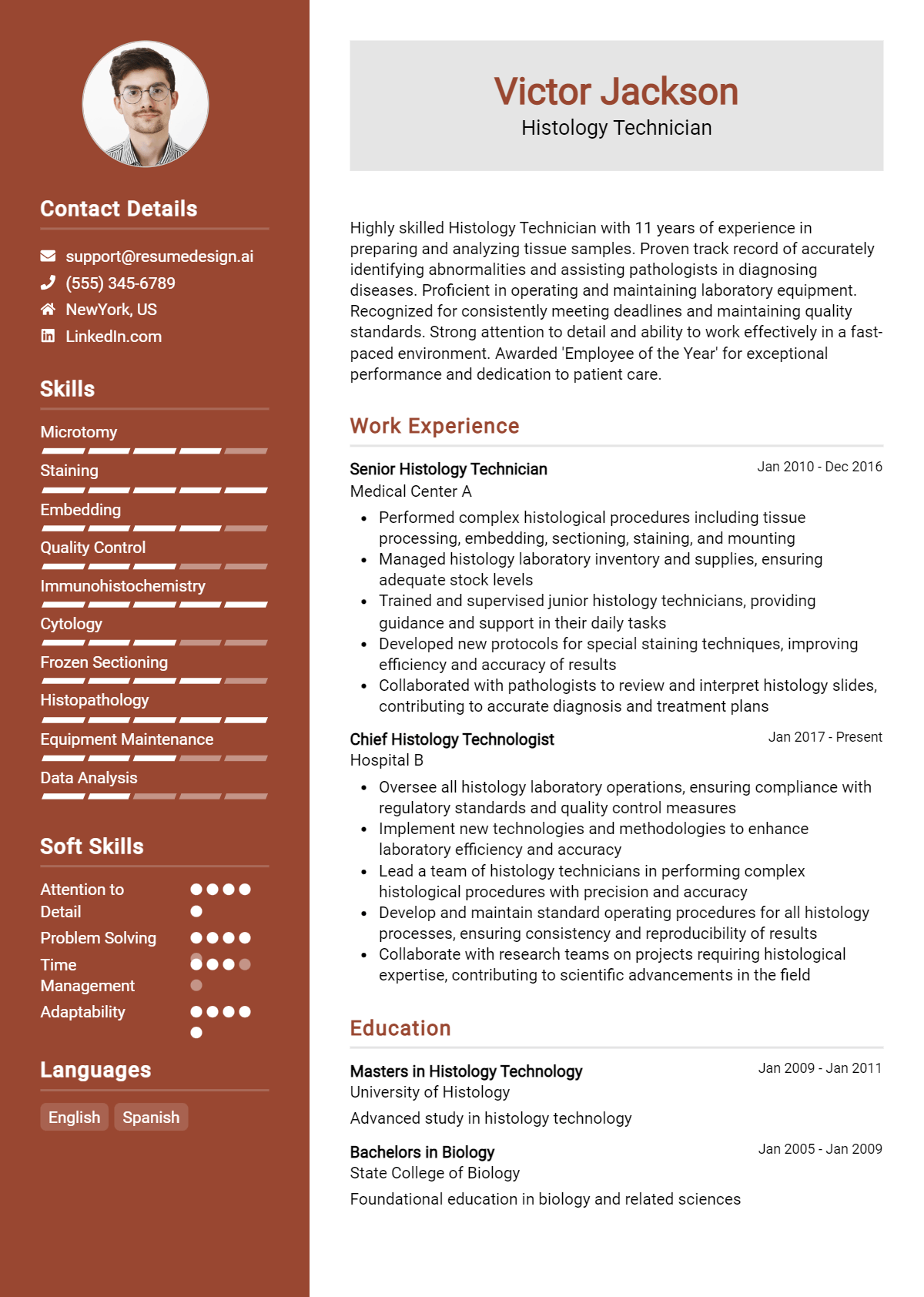
Preparing for a job interview as a Histology Technician requires a solid understanding of both the technical skills involved in the role and the ability to effectively communicate your qualifications to potential employers. This section will guide you through some of the most common interview questions specifically tailored for Histology Technicians, helping you to present your expertise confidently and clearly.
Here is a list of common job interview questions for Histology Technicians, along with examples of the best answers. These questions will encompass your work history and experience in histology, what you bring to the table as a candidate, and your professional aspirations within the field, all of which are crucial for demonstrating your fit for the role and your commitment to contributing to the success of the laboratory.
1. Can you explain the histology process and the importance of tissue preparation?
The histology process involves fixing, embedding, sectioning, and staining tissues to study their structure. Proper preparation is crucial for accurate diagnosis, as it ensures that cellular details are preserved and visible under a microscope, allowing pathologists to identify disease correctly.
Example:
The histology process includes tissue fixation, embedding in paraffin, sectioning, and staining. Each step is vital for preserving cellular details, which aids pathologists in making accurate diagnoses and understanding disease progression effectively.
2. What techniques do you use for tissue staining, and why are they important?
I utilize various staining techniques, such as Hematoxylin and Eosin (H&E) for general tissue observation and immunohistochemistry for specific protein identification. These techniques are essential as they enhance contrast and highlight specific cellular components, aiding in accurate diagnosis and research.
Example:
I often use H&E staining for general observations and immunohistochemistry to identify specific proteins. These techniques are crucial because they enhance tissue contrast and enable pathologists to make precise diagnoses based on cellular characteristics.
3. How do you ensure quality control in your work?
To ensure quality control, I adhere to standardized protocols, regularly calibrate equipment, and participate in proficiency testing. I also maintain meticulous records of all procedures and results, allowing for traceability and continuous improvement in histological techniques.
Example:
I follow strict protocols and regularly calibrate my equipment to prevent errors. I also keep detailed records of procedures and results, which aids in quality assurance and allows for easy identification of any issues in the histological process.
4. Describe a challenging case you’ve encountered and how you handled it.
I once encountered a poorly fixed tissue specimen that was difficult to section. I consulted with my supervisor and used alternative embedding techniques, which ultimately allowed us to obtain usable sections. This experience taught me the importance of flexibility and collaboration in problem-solving.
Example:
I faced a case with poorly fixed tissue, making sectioning challenging. I collaborated with my supervisor and employed alternative embedding techniques, which resulted in usable sections, highlighting the value of teamwork and adaptability in resolving issues.
5. What safety precautions do you take while working in the lab?
I prioritize safety by wearing appropriate personal protective equipment, such as gloves, goggles, and lab coats. I also ensure proper handling and disposal of hazardous materials, and I am familiar with emergency protocols, which helps maintain a safe working environment.
Example:
I always wear gloves, goggles, and lab coats to protect myself. I follow proper handling and disposal procedures for hazardous materials and stay updated on emergency protocols to ensure a safe laboratory environment for everyone.
6. How do you stay updated with advancements in histology?
I stay updated with advancements in histology by attending workshops, reading relevant journals, and participating in online forums. Networking with other professionals also helps me learn about new techniques and technologies that can enhance my skills and knowledge.
Example:
I regularly attend histology workshops and read pertinent journals, which keeps me informed about new techniques. Additionally, I engage in online forums and network with colleagues to share knowledge and best practices in the field.
7. Can you explain a time when you had to work under pressure?
During a particularly busy period, I had to process a large number of specimens quickly. I prioritized tasks efficiently and communicated with my team to ensure everything was completed on time without compromising quality. This experience strengthened my ability to remain calm and focused under pressure.
Example:
I once faced a surge in specimen processing demands. I prioritized tasks effectively and coordinated with my team to meet deadlines while maintaining quality. This experience enhanced my ability to perform under pressure without sacrificing accuracy.
8. What role do you believe a Histology Technician plays in patient care?
As a Histology Technician, my role is critical in patient care by providing accurate tissue samples for diagnosis. Our work directly influences treatment decisions and outcomes, making it essential to ensure high-quality preparations and timely results to support physicians in their clinical decisions.
<strong>Example:</strong>
<div class='interview-answer'>I believe Histology Technicians play a vital role in patient care by ensuring accurate tissue samples for diagnosis. Our meticulous work impacts treatment decisions, highlighting the
9. How do you ensure the accuracy of your histological preparations?
I follow strict protocols for sample handling, fixation, and embedding to maintain integrity. Regular calibration of equipment and periodic quality control checks help me catch errors early, ensuring reliable results that support accurate diagnostics.
Example:
I routinely verify sample labels and perform quality control on my staining techniques, leading to a 98% accuracy rate in my preparations.
10. Can you describe your experience with various staining techniques?
I have hands-on experience with H&E, immunohistochemistry, and special stains like PAS and Giemsa. My attention to detail ensures each stain is performed correctly, allowing for optimal visualization of tissue structures and accurate diagnosis.
Example:
In my previous role, I mastered immunohistochemical staining, successfully identifying markers in cancer tissues, which aided in targeted treatment plans.
11. How do you handle difficult specimens that are poorly preserved?
I assess the preservation level and adjust my techniques accordingly, such as optimizing fixation time and temperature. Collaboration with pathologists also helps determine the best approach for analyzing challenging specimens.
Example:
For a poorly preserved specimen, I adjusted my embedding technique and consulted with the pathologist for a tailored staining approach, resulting in usable diagnostic information.
12. What steps do you take to maintain a clean and organized workspace?
I adhere to a strict cleaning schedule and follow laboratory protocols to minimize contamination. Organizing tools and materials systematically ensures efficiency and promotes a safe working environment for myself and my colleagues.
Example:
I implement daily cleaning routines and maintain an organized workspace, enhancing workflow efficiency while reducing the risk of cross-contamination.
13. How do you stay updated with advancements in histology?
I attend workshops, seminars, and webinars, and I subscribe to relevant journals. Networking with peers also helps me stay informed about new techniques and technologies that can enhance my histology practice.
Example:
Recently, I attended a seminar on digital pathology, which inspired me to integrate new imaging technologies into my work, improving diagnostic capabilities.
14. Describe a time you encountered a problem in the lab and how you resolved it.
Once, I noticed inconsistent staining results. I conducted a root cause analysis, identified a temperature fluctuation in the water bath, and recalibrated it. This resolved the issue and improved the overall quality of my preparations.
Example:
After identifying a temperature issue, I recalibrated the water bath, which restored staining consistency and improved diagnostic accuracy.
15. How do you prioritize your tasks in a busy histology lab?
I assess the urgency of each task based on deadlines and patient needs. Utilizing a task list and maintaining communication with my team helps me prioritize effectively, ensuring timely completion of all histological preparations.
Example:
I prioritize tasks based on urgency, using a daily checklist to ensure timely turnaround of critical specimens while maintaining quality standards.
16. What role does teamwork play in a histology lab environment?
Teamwork is crucial in a histology lab. Collaborating with pathologists and other technicians enhances communication, ensures high-quality results, and fosters a supportive environment where we can share knowledge and improve practices together.
Example:
In my previous job, teamwork helped us troubleshoot issues effectively, resulting in improved lab efficiency and faster turnaround times for patient results.
17. Can you describe your experience with immunohistochemistry?
I have extensive experience in immunohistochemistry, including antigen retrieval, optimizing staining protocols, and interpreting results. I regularly collaborate with pathologists to ensure accuracy in diagnoses, which has strengthened my attention to detail and problem-solving skills under pressure.
Example:
In my previous role, I performed immunohistochemistry on various tissue samples, optimizing protocols that improved staining consistency by 20%. I collaborated closely with pathologists to ensure the accuracy of the results, enhancing our diagnostic capabilities.
18. How do you ensure the quality of your histological preparations?
To ensure quality, I adhere to standard operating procedures, regularly calibrate equipment, and participate in proficiency testing. I also maintain meticulous records of all processes and outcomes, enabling continuous improvement and compliance with laboratory standards.
Example:
I follow strict protocols for fixation and embedding, regularly check equipment calibrations, and participate in quality control audits. This approach has consistently resulted in high-quality histological preparations, contributing to reliable diagnostic outcomes.
19. Describe a challenging case you worked on and how you overcame it.
In one instance, I encountered a sample with poor fixation, resulting in suboptimal staining. I consulted with the pathologist, reprocessed the sample using a different fixation method, and achieved satisfactory results. This experience reinforced my adaptability and teamwork skills.
Example:
I faced a challenging case where tissue was poorly fixed. After discussing with the pathologist, I reprocessed using an alternative fixative. The adjustments resulted in improved staining quality, illustrating my problem-solving abilities and collaboration skills.
20. What safety protocols do you follow in the lab?
I prioritize safety by following all laboratory protocols, including the use of personal protective equipment, proper waste disposal, and adhering to chemical safety guidelines. Regular training sessions ensure that I stay updated on any changes to safety regulations.
Example:
I consistently wear PPE, including gloves and goggles, and ensure proper chemical handling and disposal. I participate in annual safety training, which keeps me informed about the latest safety protocols, ensuring a safe working environment.
21. How do you handle equipment malfunctions during critical processes?
When faced with equipment malfunctions, I follow troubleshooting protocols first, then escalate to a technician if unresolved. I document the incident and adjust workflows to minimize disruption. This proactive approach ensures continuity in laboratory operations.
Example:
In a previous role, when a microtome malfunctioned during a busy session, I quickly troubleshot the issue. After attempting to fix it, I notified maintenance while adjusting my workflow to minimize delays, ensuring patient samples were processed on time.
22. What is your experience with digital pathology?
I have experience utilizing digital pathology systems for image analysis and sharing. This technology has enhanced my ability to collaborate with pathologists and streamline workflow, allowing for more efficient diagnoses and improved patient outcomes.
Example:
At my last job, I used digital pathology software for image capture and analysis. This improved our diagnostic turnaround time by 15%, allowing for better collaboration with pathologists and more efficient case management.
23. How do you maintain organization in the lab?
I maintain organization by implementing a systematic approach to sample labeling, tracking, and storage. Regular audits and clear communication with team members help ensure that we stay organized, ultimately reducing errors and improving efficiency.
Example:
I use a color-coded labeling system for specimens and create a digital tracking log. Regular team meetings help keep everyone informed about sample locations, ensuring our workflow remains organized and efficient, reducing the risk of errors.
24. Can you give an example of how you stay current with histology techniques?
I stay current by attending workshops, subscribing to relevant journals, and participating in online forums. Continuous education has enabled me to adopt new techniques, enhancing my skills and ensuring the laboratory stays at the forefront of histological practices.
Example:
I attend annual histology conferences and subscribe to peer-reviewed journals. Recently, I learned a novel staining technique that improved our lab's efficiency, demonstrating my commitment to professional development and staying informed about advancements.
25. How do you ensure the accuracy and quality of your histological preparations?
I meticulously follow standard operating procedures, regularly calibrate equipment, and conduct routine quality control checks. I also participate in proficiency testing to stay updated on best practices and maintain precision in my work.
Example:
To ensure accuracy, I double-check my work, follow protocols carefully, and engage in continuous training. For instance, I recently implemented a double-check system for staining processes that significantly reduced errors.
26. Describe a challenging case you encountered in histology and how you resolved it.
I once faced an issue with inconsistent staining in a batch of tissue samples. I investigated the staining protocol, identified a temperature variance, and adjusted the process. This resolved the issue and improved overall staining quality.
Example:
In a challenging case, I found uneven staining in samples. I reviewed the protocol, identified a temperature issue, and adjusted it. The subsequent samples were consistent, ensuring accurate diagnostic results.
27. What experience do you have with immunohistochemistry?
I have extensive experience performing immunohistochemistry, including optimizing protocols for various antibodies and ensuring proper controls. I have successfully implemented new staining techniques to enhance visualization in challenging tissue types.
Example:
I have performed immunohistochemistry on various tissue types, optimizing antibody concentrations and protocols. This experience has enabled me to enhance visualization and ensure reliable results in diagnostic applications.
28. How do you handle hazardous materials in the laboratory?
I strictly adhere to safety protocols when handling hazardous materials, including wearing appropriate personal protective equipment and following waste disposal guidelines. Regular training keeps me updated on safety practices to minimize risks.
Example:
I prioritize safety by following all protocols for handling hazardous materials. This involves wearing PPE and attending regular safety training sessions to stay informed on best practices in the lab.
29. Can you explain the fixation process and its importance in histology?
Fixation preserves tissue morphology and prevents degradation. I use formalin primarily, as it maintains cellular structure while allowing for accurate evaluation of histopathological features, crucial for diagnosis.
Example:
Fixation is essential to preserve tissue integrity. I generally use formalin to maintain cell structure, ensuring that histopathological evaluations are reliable and accurate for diagnostic purposes.
30. How do you prioritize tasks in a busy laboratory environment?
I prioritize tasks based on urgency and deadlines, often creating a daily checklist. Communicating with my team ensures we remain aligned on priorities, which helps maintain workflow efficiency during peak times.
Example:
In a busy lab, I prioritize by urgency and deadlines, often using a checklist. Regular team communication helps us stay aligned and maintain workflow efficiency, especially during high-demand periods.
31. What steps do you take to stay current with histology advancements?
I regularly attend workshops, webinars, and conferences related to histology. Additionally, I subscribe to relevant journals to keep abreast of new techniques and technologies that can enhance my skills and laboratory practices.
Example:
To stay current, I attend workshops and subscribe to histology journals. This commitment to ongoing education ensures I remain knowledgeable about new techniques and advancements in the field.
32. Describe your experience with data management and laboratory information systems.
I have used various laboratory information systems to track samples, manage data, and ensure accurate reporting. My attention to detail and organizational skills help maintain data integrity and streamline workflow.
Example:
I have extensive experience with lab information systems, which I use to track samples and data. My organizational skills ensure data integrity and enhance overall laboratory efficiency.
33. Can you describe how you ensure the accuracy of your tissue sectioning?
I maintain accuracy in tissue sectioning by regularly calibrating my microtome and performing routine quality checks. I also ensure optimal embedding medium and temperature control, which are crucial for producing consistent and precise sections.
Example:
I always check the microtome settings before use and conduct a test cut on a sample. This approach helps me identify any issues and ensures the sections are consistently thin and high-quality.
34. What steps do you take when you encounter a problematic sample that is difficult to process?
When faced with a difficult sample, I first assess the issue, whether it’s fixation or processing-related. I then consult with colleagues for advice or modify the processing protocol, ensuring the sample is handled with care to achieve the best results.
Example:
For a particularly challenging sample, I adjusted the fixation time and consulted the histology guide for alternative processing methods, which ultimately improved the quality of the final sections.
35. How do you handle quality control in your histology lab?
I implement quality control by routinely reviewing our staining protocols and comparing results against established benchmarks. I also conduct regular training sessions for staff to ensure everyone adheres to best practices and can identify any inconsistencies.
Example:
I conduct monthly audits on staining processes and provide feedback, ensuring any deviations are corrected promptly. This proactive approach maintains high-quality standards across all samples.
36. Describe a time when you had to work under pressure. How did you manage it?
During a particularly busy period, we faced a large influx of samples. I prioritized tasks by urgency, communicated effectively with my team, and focused on maintaining quality despite the pressure, which helped us meet deadlines without compromising standards.
Example:
I organized a team meeting to delegate tasks efficiently, and we implemented a checklist system to track progress, which allowed us to handle the workload effectively while ensuring quality control.
37. What techniques do you use for embedding and why are they important?
I use paraffin embedding for most samples due to its excellent support for thin sectioning. Additionally, I ensure proper orientation and temperature management during the embedding process, which is critical for maintaining tissue morphology and achieving high-quality sections.
Example:
By carefully orienting samples in the embedding mold and ensuring consistent temperature control, I can produce sections that are not only high-quality but also representative of the original tissue architecture.
38. How do you ensure compliance with safety regulations in the lab?
I ensure compliance by staying informed about current safety regulations and conducting regular safety training sessions. Additionally, I enforce the use of personal protective equipment and maintain a clean, organized workspace to minimize hazards.
Example:
I lead quarterly safety workshops to review regulations and encourage open discussions about safety practices, which fosters a culture of compliance and awareness in the lab.
39. Can you explain the importance of staining techniques in histology?
Staining techniques are essential in histology as they enhance the visibility of cellular structures and tissue components. Each stain provides specific information, allowing pathologists to make accurate diagnoses and understand the underlying biology of the tissue.
Example:
For instance, using hematoxylin and eosin staining provides clear differentiation between cellular components, which is vital for pathologists to interpret the samples accurately and diagnose conditions effectively.
40. How do you stay updated with advancements in histology techniques?
I stay updated by attending workshops, subscribing to relevant journals, and participating in online forums. Networking with other professionals also helps me learn about new techniques and technologies that can improve our histology practices.
Example:
Recently, I attended a conference on digital pathology, which introduced me to advanced imaging techniques that I am now exploring for potential implementation in our lab.
41. Can you describe your experience with tissue processing techniques?
I have extensive experience with various tissue processing techniques, including fixation, dehydration, and embedding. I prioritize precision and attention to detail, which ensures optimal sample quality for microscopic examination. My training in different processing protocols enhances my adaptability in diverse laboratory settings.
Example:
I have worked with both automated and manual processing techniques, ensuring that samples are adequately fixed and dehydrated to prevent artifacts. This experience has allowed me to develop a keen eye for detail in tissue preparation.
42. How do you ensure quality control in your histological preparations?
I implement strict quality control measures, including regular calibration of equipment and performing routine checks on reagents. I also conduct periodic audits of my staining techniques to ensure consistency and accuracy, which is vital for reliable diagnostic results.
Example:
I maintain a checklist for quality control and routinely compare my results with established benchmarks to identify any discrepancies, ensuring my preparations meet laboratory standards.
43. What steps do you take when faced with a histology processing issue?
When encountering a processing issue, I first assess the problem's nature, whether it's related to reagent quality or processing equipment. I then consult with colleagues for insights and implement corrective measures while documenting the incident for future reference.
Example:
For example, if a sample exhibits poor staining, I would review the processing steps taken and adjust the protocol accordingly, ensuring we achieve the desired quality in future preparations.
44. How do you stay updated with advancements in histology techniques?
I stay updated by attending relevant workshops, and webinars, and subscribing to professional journals. Networking with fellow histology technicians also helps me learn about new techniques and best practices that can enhance my skills and the quality of my work.
Example:
By participating in annual histology conferences, I gain insights into the latest research and innovations, which I actively incorporate into my daily practice to improve outcomes.
45. Can you explain the importance of proper sample documentation?
Proper sample documentation is crucial for traceability and accountability in histology. It ensures that each sample can be accurately tracked throughout the processing stages, which is essential for quality control and for addressing any potential discrepancies in results.
Example:
I always follow standardized documentation protocols, which facilitates easy retrieval of information and provides a clear audit trail, ensuring compliance with laboratory regulations.
46. What techniques do you use for special staining methods?
I utilize various special staining methods, such as immunohistochemistry and trichrome staining, depending on the diagnostic needs. I pay close attention to the protocols to ensure optimal staining results, which are critical for accurate diagnosis and treatment planning.
Example:
For instance, I routinely perform Gomori's trichrome stain for connective tissue assessment, ensuring that I follow the precise timings and reagent concentrations for the best results.
How Do I Prepare For A Histology Technician Job Interview?
Preparing for a job interview as a Histology Technician is crucial to making a positive impression on the hiring manager. Being well-prepared not only boosts your confidence but also demonstrates your commitment to the role and your understanding of the field. Here are some key preparation tips to help you succeed:
- Research the company and its values to align your responses with their mission and culture.
- Practice answering common interview questions specific to histology and laboratory work.
- Prepare examples that demonstrate your skills and experience relevant to the Histology Technician role.
- Familiarize yourself with the latest histology techniques and technologies to showcase your knowledge.
- Dress professionally to convey a sense of seriousness about the position.
- Bring copies of your resume and any relevant certifications to the interview.
- Prepare thoughtful questions to ask the interviewer about the team and the work environment.
Frequently Asked Questions (FAQ) for Histology Technician Job Interview
Preparing for an interview can significantly increase your chances of success, especially for specialized roles like a Histology Technician. Familiarizing yourself with commonly asked questions can help you articulate your skills and experiences effectively while showcasing your enthusiasm for the position. Below are some frequently asked questions that you may encounter during your interview.
What should I bring to a Histology Technician interview?
When attending a Histology Technician interview, it is essential to bring several key items. Start with multiple copies of your resume and a list of references, as well as a notebook and pen for taking notes. Additionally, consider bringing a portfolio that includes any relevant certifications, transcripts, or samples of your work, if applicable. These materials not only demonstrate your preparedness but also provide tangible evidence of your qualifications and dedication to the field.
How should I prepare for technical questions in a Histology Technician interview?
To effectively prepare for technical questions, review fundamental histology concepts, laboratory techniques, and equipment you might use in the role. Familiarize yourself with common staining methods, specimen handling, and quality control procedures. It can be beneficial to practice answering questions with a friend or mentor, particularly focusing on how you would handle specific scenarios that may arise in the lab. Being confident and knowledgeable about the technical aspects of the job will help you impress your interviewers.
How can I best present my skills if I have little experience?
If you have limited experience in the field, focus on transferable skills and relevant coursework or internships. Emphasize your attention to detail, ability to follow protocols, and any hands-on experience you gained during your studies or volunteer work. Additionally, convey your eagerness to learn and grow in the role. Prepare examples that illustrate how your skills can contribute to the team's success, showcasing your commitment to the field and your proactive approach to professional development.
What should I wear to a Histology Technician interview?
For a Histology Technician interview, it is advisable to dress in business casual attire, which strikes a balance between professionalism and comfort. Opt for a neat, polished outfit, such as slacks or a skirt paired with a collared shirt or blouse. Avoid overly casual clothing, such as jeans or sneakers, as you want to make a positive impression. Ensure that your appearance is tidy and that you present yourself in a way that reflects your seriousness about the position.
How should I follow up after the interview?
Following up after the interview is a crucial step in demonstrating your interest in the position. Send a thank-you email to your interviewers within 24 hours, expressing gratitude for the opportunity to interview and reiterating your enthusiasm for the role. Mention specific aspects of the interview that you enjoyed or found insightful, which can help leave a lasting impression. If you do not hear back within the timeframe discussed during the interview, it is appropriate to send a polite follow-up email to inquire about the status of your application.
Conclusion
In summary, this interview guide for Histology Technician candidates emphasizes the significance of thorough preparation and practice. It is essential to demonstrate both technical knowledge and relevant skills, as well as to be ready to tackle behavioral questions that showcase your experience and adaptability in the field. By focusing on these aspects, candidates can significantly enhance their chances of success during the interview process.
Preparing for both technical and behavioral questions is crucial in presenting a well-rounded application. The insights provided in this guide serve as a valuable resource to navigate the interview landscape confidently.
We encourage you to leverage the tips and examples shared in this guide to approach your interviews with assurance and poise. Your dedication to preparation will undoubtedly set you apart as a strong candidate.
For further assistance, check out these helpful resources: resume templates, resume builder, interview preparation tips, and cover letter templates.