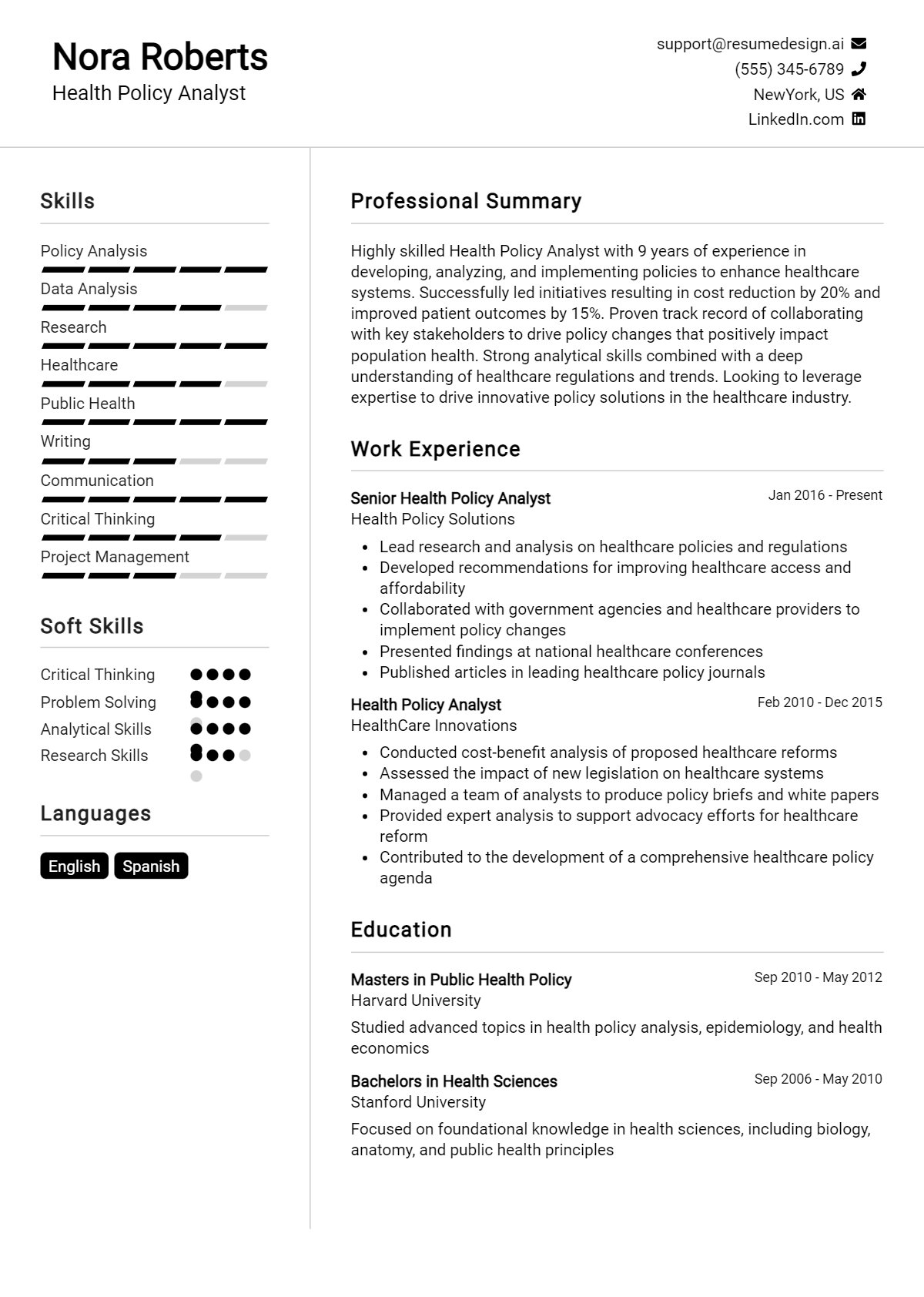
As a Health Policy Analyst, you play a crucial role in shaping healthcare policies that impact communities and populations. Preparing for an interview in this field requires a solid understanding of healthcare systems, policy analysis, and the ability to communicate complex ideas effectively. In this section, we will explore key interview questions that assess your expertise, problem-solving skills, and vision for future healthcare improvements.
Here is a list of common job interview questions for a Health Policy Analyst, along with examples of the best answers. These questions will delve into your work history and experience, highlighting what you can offer the employer and how your goals align with the organization's mission. Being equipped with thoughtful responses will help you demonstrate your qualifications and passion for advancing health policy.
1. What motivated you to pursue a career as a Health Policy Analyst?
I have always been passionate about improving healthcare access and outcomes. My background in public health and research experience motivated me to analyze and influence policies that can lead to systematic changes and better health for communities.
Example:
My passion for equitable healthcare drew me to this field. I have a master's in public health, and during my internship, I researched policies that improved access to care for underserved populations, reinforcing my commitment to this career.
2. Can you describe your experience with data analysis in health policy?
I have extensive experience analyzing health data, including Medicaid utilization and health outcomes. I utilize statistical software to interpret trends, which informs policy recommendations and implementation strategies aimed at improving public health systems.
Example:
During my previous role, I analyzed Medicaid data to identify service gaps, using SPSS to develop reports that influenced policy changes, ultimately improving healthcare access for low-income families in our region.
3. How do you keep up with changes in health policy?
I stay updated by following key health policy journals, attending relevant conferences, and participating in professional networks. Additionally, I subscribe to newsletters from organizations like the American Public Health Association to remain informed on the latest developments.
Example:
I regularly read publications like Health Affairs and attend webinars hosted by the National Health Policy Forum. Networking with professionals also provides insights into emerging trends and policy shifts that could impact my work.
4. Describe a time you had to communicate a complex policy issue to a non-expert audience.
I once presented findings on a new healthcare regulation to community stakeholders. I simplified the data into relatable stories, using visuals to illustrate key points, ensuring everyone grasped the implications for their community.
Example:
During a community forum, I presented a complex Medicaid reform. I used infographics and real-world examples to clarify the changes, which helped stakeholders understand how it would affect their access to healthcare.
5. What methodologies do you use for policy evaluation?
I employ both qualitative and quantitative methodologies, including surveys, focus groups, and statistical analyses. This mixed-method approach allows for a comprehensive understanding of policy impacts and outcomes, informing future recommendations.
Example:
In my last project, I combined surveys with qualitative interviews to evaluate a community health initiative, offering rich insights into participant experiences and measurable changes in health behaviors.
6. How do you prioritize competing health policy issues?
I prioritize issues based on their potential impact on public health outcomes, stakeholder input, and available resources. I also consider timelines and align them with strategic organizational goals to ensure effective policy implementation.
Example:
When faced with multiple issues, I assess each one's potential impact and urgency. For instance, I prioritized a mental health crisis response policy due to rising community needs, ensuring timely action.
7. Can you give an example of a successful policy change you've contributed to?
I contributed to a policy change that expanded telehealth services in rural areas. By analyzing data on access barriers and presenting findings to lawmakers, we secured funding to enhance telehealth infrastructure, improving access to care.
Example:
I worked with a coalition to advocate for telehealth services during the pandemic. Our data-driven proposal led to policy changes that expanded access, ultimately benefiting thousands of rural residents in my state.
8. How do you approach stakeholder engagement in policy development?
I prioritize inclusive stakeholder engagement by conducting interviews and hosting forums to gather diverse perspectives. This collaborative approach ensures that policies are well-informed and address the needs of the communities they affect.
Example:
In developing a new health initiative, I organized focus groups with community members, providers, and policymakers. This engagement helped us identify priorities and create a policy that met stakeholders' needs effectively.
9. How do you prioritize competing health policy issues?
I prioritize health policy issues by assessing their impact, feasibility, and alignment with organizational goals. I utilize data analysis and stakeholder input to gauge urgency, ensuring that the most critical issues receive attention first. This method ensures that resources are allocated efficiently.
Example:
For instance, during a recent project, I prioritized mental health initiatives over others due to rising statistics. I collaborated with stakeholders to develop a focused strategy that aligned with immediate community needs.
10. Can you describe your experience with data analysis in health policy?
I have extensive experience using statistical software to analyze health data, identifying trends, and evaluating policy effectiveness. My analytical skills allow me to derive actionable insights, which support evidence-based recommendations for policymakers and inform strategic decisions.
Example:
In my last role, I analyzed hospital readmission rates, which revealed gaps in post-discharge care. This analysis led to policy changes that improved follow-up services.
11. How do you stay updated on health policy changes?
I actively follow major health policy publications, attend relevant conferences, and participate in webinars. Networking with professionals in the field also helps me stay informed about emerging trends and legislative changes that could impact health policy.
Example:
For example, I recently joined a professional organization that shares timely updates on legislative changes, allowing me to adapt my analyses accordingly.
12. Describe a time you used research to influence a policy decision.
I conducted a comprehensive literature review on immunization rates, identifying key barriers in underserved communities. This research was pivotal in advocating for policy changes that increased funding for outreach programs, ultimately improving vaccination rates.
Example:
My findings were presented to the board, resulting in a successful proposal for increased community health initiatives.
13. How do you handle conflicting stakeholder interests in health policy?
I approach conflicting stakeholder interests by facilitating open dialogue, seeking common ground, and emphasizing the shared goal of improving public health. I utilize negotiation skills to align differing priorities and develop solutions that benefit all parties involved.
Example:
In a recent project, I mediated between healthcare providers and community advocates, leading to a collaborative approach that satisfied both parties.
14. What role does public opinion play in health policy analysis?
Public opinion is crucial in health policy analysis as it reflects community values and needs. By incorporating surveys and focus groups, I ensure that policies are responsive and gain public support, ultimately leading to successful implementation.
Example:
For instance, I used public feedback to refine a tobacco cessation program, enhancing its acceptance and effectiveness.
15. Can you explain how you evaluate policy effectiveness?
I evaluate policy effectiveness through predefined metrics and outcomes analysis. By comparing data pre- and post-implementation, I can assess the impact of policies, identify areas for improvement, and provide recommendations for future initiatives.
Example:
In a recent evaluation, I measured the reduction in emergency room visits following a new health program, demonstrating significant positive outcomes.
16. What challenges have you faced in health policy analysis?
One major challenge I faced was limited access to reliable data. To overcome this, I collaborated with various organizations to gather comprehensive datasets, ensuring that my analyses were grounded in accurate and relevant information.
Example:
This experience enhanced my problem-solving skills and underscored the importance of collaboration in health policy work.
17. Can you describe a time when you had to analyze complex data to inform a policy decision?
In my previous role, I analyzed patient outcome data to guide a healthcare initiative. By identifying trends in readmission rates, I presented actionable recommendations to stakeholders, leading to a 15% reduction in readmissions over six months.
Example:
I reviewed data on chronic disease management, uncovering significant disparities. My analysis led to targeted interventions that improved care access, demonstrating how data can drive impactful policy changes within the healthcare system.
18. How do you prioritize competing projects or tasks in your role?
I prioritize by assessing project impact, deadlines, and stakeholder needs. Using a matrix, I categorize tasks as urgent or important, allowing me to focus on high-impact projects first. This method ensures efficient use of resources and timely delivery of policy proposals.
Example:
I once managed multiple policy papers simultaneously. By implementing a prioritization framework, I ensured that the most critical paper, related to funding, was completed on time, which ultimately secured necessary resources for the department.
19. Describe your experience with stakeholder engagement in health policy.
I have engaged with diverse stakeholders, including healthcare providers and patient advocacy groups, to gather input on policy formation. By facilitating workshops and surveys, I ensured that all voices were heard, which strengthened the policy's relevance and acceptance.
Example:
In a recent project, I organized a series of focus groups with stakeholders. Their feedback directly influenced our policy recommendations, resulting in a more comprehensive approach that addressed community health needs effectively.
20. What strategies do you use to stay updated on health policy trends?
I regularly read health policy journals, attend conferences, and participate in webinars. Networking with professionals in the field also helps me gain insights into emerging trends and best practices, ensuring my analyses are current and informed.
Example:
I subscribe to several health policy newsletters and follow thought leaders on social media. This habit keeps me informed about legislative changes and innovative practices, enabling me to adapt my work to the evolving landscape.
21. Can you explain a time when your communication skills were crucial to a project’s success?
During a collaborative project, I effectively communicated complex policy concepts to non-experts. By simplifying the language and using visuals, I ensured everyone understood the implications, which led to broader support and successful implementation of the policy.
Example:
I presented a policy proposal to a group of stakeholders with varying expertise. By tailoring my presentation to their backgrounds, I gained their support and facilitated a productive discussion that ultimately led to the proposal’s approval.
22. How do you approach evaluating the impact of a health policy after implementation?
I utilize both qualitative and quantitative methods to evaluate policy impact. By gathering data pre- and post-implementation, along with stakeholder feedback, I assess the policy's effectiveness and identify areas for improvement, ensuring continuous enhancement.
Example:
After implementing a new health program, I analyzed patient data and conducted surveys. The results showed improved outcomes, confirming the policy's success and providing insights for future initiatives.
23. What role do ethics play in your analysis of health policies?
Ethics are fundamental in health policy analysis. I evaluate policies through an ethical lens, ensuring they promote equity, access, and patient rights. This approach guides my recommendations, fostering trust and accountability within the healthcare system.
Example:
In assessing a policy, I identified potential biases affecting marginalized groups. I advocated for equitable adjustments, ensuring the policy upheld ethical standards and addressed disparities in healthcare access.
24. How do you handle disagreements with colleagues over policy recommendations?
I approach disagreements constructively by fostering open dialogue. I listen to differing viewpoints, discuss evidence, and seek common ground. This collaborative approach often leads to stronger recommendations and enhances team dynamics.
Example:
When a colleague disagreed with my data interpretation, we held a discussion to review the evidence together. This led to a refined recommendation that incorporated both perspectives, ultimately benefiting the policy outcome.
25. Can you explain the importance of data analysis in health policy?
Data analysis is crucial in health policy as it informs decision-making, identifies trends, and evaluates the effectiveness of policies. My experience in statistical software allows me to analyze complex datasets, ensuring evidence-based recommendations for policy improvement.
Example:
Data analysis helps identify health disparities and measure policy impacts. For instance, I utilized statistical tools to analyze vaccination rates, which informed targeted outreach programs enhancing community health outcomes.
26. How do you stay updated with the latest health policy trends?
I regularly read health policy journals, attend relevant conferences, and participate in professional organizations. Networking with other analysts and policymakers also provides insights into emerging trends and challenges, allowing me to adapt my research and recommendations accordingly.
Example:
I subscribe to leading journals and engage in webinars. Recently, I attended a conference where experts discussed telehealth policy changes, which directly informed my ongoing research on access to care.
27. Describe a challenging project you worked on in health policy.
I faced challenges while evaluating a statewide health initiative aimed at reducing obesity. Coordinating with multiple stakeholders and analyzing diverse data sets taught me the importance of collaboration and adaptability, ultimately leading to actionable recommendations for policy adjustments.
Example:
I managed a project assessing a statewide obesity initiative. The complexity of data integration and stakeholder opinions required strong collaboration skills, and we successfully proposed policy adjustments that improved program effectiveness.
28. What strategies do you use to communicate complex policy information?
I simplify complex information using data visualization and clear language. Tailoring my communication style to the audience is essential, whether presenting to policymakers or the public, ensuring that key messages are effectively conveyed and understood.
Example:
I use infographics and summary reports to distill complex data into digestible formats. For instance, I created a visual presentation for stakeholders, highlighting critical findings from a health equity study, which facilitated understanding and discussions.
29. How do you approach stakeholder engagement in policy development?
Engaging stakeholders involves active listening and fostering open communication. I prioritize building relationships through regular meetings and feedback loops, ensuring all voices are heard, which enhances the policy development process and increases buy-in.
Example:
I organized focus groups with community members to gather input on proposed health policies. This engagement led to vital insights that shaped the final recommendations, demonstrating the value of stakeholder collaboration.
30. How do you measure the success of a health policy?
Success measurement involves establishing clear metrics aligned with policy objectives. I utilize both quantitative data, such as health outcomes, and qualitative feedback from stakeholders to assess effectiveness, ensuring that policies meet their intended goals.
Example:
I developed a framework to evaluate a smoking cessation program, measuring success through reduced smoking rates and participant satisfaction surveys, which provided a comprehensive view of effectiveness.
31. Can you discuss a time when you had to advocate for a policy change?
I advocated for expanding mental health services by presenting data on local needs to policymakers. By highlighting the potential benefits and cost savings, I successfully gained support for policy changes that improved access to mental health care in our community.
Example:
I presented evidence on the rising demand for mental health services to local leaders, emphasizing potential community benefits. This effort led to the approval of funding for new programs, showcasing effective advocacy.
32. What role does collaboration play in health policy analysis?
Collaboration is vital in health policy analysis as it brings diverse perspectives together. Working with stakeholders, researchers, and community groups enriches the analysis, leading to more comprehensive and effective policy solutions that address the needs of various populations.
Example:
In my last project, I collaborated with public health officials and community organizations to gather insights on policy impacts, resulting in a more robust analysis that informed our recommendations.
33. Can you describe a time when you had to analyze complex health data?
In my previous role, I analyzed patient outcome data to identify trends in chronic disease management. I utilized statistical software to interpret the data, which led to improved treatment protocols and a 15% increase in patient satisfaction scores.
Example:
I analyzed a dataset on diabetes management, revealing gaps in care that prompted new educational initiatives, resulting in a 20% improvement in patient compliance.
34. How do you approach stakeholder engagement in health policy development?
Effective stakeholder engagement begins with identifying key players and understanding their interests. I conduct regular meetings and forums, ensuring open communication, which fosters collaboration and aligns policy goals with community needs.
Example:
I organized stakeholder workshops, allowing community members to voice concerns, which helped shape a policy that addressed local healthcare access issues.
35. What methodologies do you employ for evaluating health policies?
I utilize both qualitative and quantitative methodologies, including surveys and focus groups, alongside statistical analysis. This mixed-methods approach ensures a comprehensive evaluation of policy impacts on various populations.
Example:
I conducted a mixed-methods evaluation of a smoking cessation policy, combining survey data with interviews to assess its effectiveness across different demographics.
36. How do you stay informed about the latest health policy trends?
I stay updated by subscribing to health policy journals, attending conferences, and participating in professional networks. This commitment allows me to integrate emerging trends into my analytical work and policy recommendations.
Example:
I regularly read publications like Health Affairs and attend annual health policy conferences to ensure my analyses reflect current trends and challenges.
37. Describe a challenging project you've worked on and how you managed it.
I led a project assessing the impact of a new healthcare reform. Faced with tight deadlines and conflicting data, I implemented a project management tool to streamline tasks, enabling us to deliver comprehensive findings on time.
Example:
Despite data inconsistencies, I coordinated with my team to identify reliable sources, resulting in a timely and successful policy impact report.
38. How do you prioritize competing health policy issues?
Prioritization is based on factors like public health impact, stakeholder input, and available resources. I use a matrix to evaluate each issue's urgency and importance, ensuring that critical concerns are addressed promptly.
Example:
I prioritized mental health policies over others after data indicated a rising crisis, aligning with community health needs and available funding.
39. What role does ethics play in your work as a Health Policy Analyst?
Ethics are paramount in health policy analysis. I ensure transparency, equity, and respect for all populations in my evaluations, advocating for policies that address disparities and promote social justice in healthcare.
Example:
I advocated for equitable access in policy recommendations, ensuring that vulnerable populations were considered in healthcare initiatives.
40. How do you measure the success of implemented health policies?
Success is measured by evaluating key performance indicators, community feedback, and health outcomes. I conduct follow-up studies and surveys to gather data, ensuring continuous improvement and accountability in health policy implementations.
Example:
After implementing a new vaccination policy, I analyzed immunization rates and conducted community surveys to gauge public satisfaction and areas for improvement.
41. How do you prioritize your tasks when working on multiple health policy projects?
I assess project deadlines, stakeholder impact, and resource availability. By creating a detailed timeline and regularly updating it, I ensure that urgent tasks are addressed first while maintaining quality across all projects.
Example:
I prioritize tasks by evaluating urgency and stakeholder needs, using project management tools to create timelines. This helps me focus on high-impact projects first while keeping track of deadlines for all assignments.
42. Can you describe a challenging health policy issue you’ve encountered?
I once faced a challenge in addressing disparities in healthcare access. I conducted a thorough analysis and collaborated with community stakeholders, ultimately proposing targeted policy recommendations that successfully improved access for underserved populations.
Example:
I encountered significant disparities in healthcare access. By analyzing data and collaborating with community leaders, I developed policy recommendations that increased access to services for marginalized groups, which was ultimately implemented successfully.
43. How do you stay updated with the latest health policy trends and regulations?
I subscribe to leading health policy journals, attend conferences, and participate in webinars. Additionally, I engage in professional networks to share insights and stay informed about emerging trends and regulatory changes.
Example:
I stay updated by subscribing to health policy journals, attending relevant conferences, and actively participating in professional networks. This continuous learning ensures I am aware of trends and regulations affecting health policy.
44. Describe a time when you had to present complex data to a non-technical audience.
During a community meeting, I presented health outcomes data. I simplified the information using visuals and relatable examples, ensuring the audience understood the implications. Feedback showed that they felt informed and engaged with the topic.
Example:
I presented complex health data to a community board by using simple charts and relatable examples, which helped the audience grasp key points. Their positive feedback confirmed they understood the data's implications and were engaged.
45. What role does stakeholder engagement play in health policy development?
Stakeholder engagement is crucial as it ensures that policies are informed by diverse perspectives. It builds trust, enhances the relevance of policy solutions, and facilitates smoother implementation by addressing concerns upfront.
Example:
Stakeholder engagement is vital for effective health policy. It incorporates diverse viewpoints, builds trust, and addresses concerns, leading to more relevant solutions and smoother implementation, ultimately improving health outcomes.
46. How do you evaluate the effectiveness of health policies after implementation?
I utilize quantitative and qualitative data to measure outcomes against the policy's objectives. Surveys, focus groups, and health metrics help assess effectiveness, leading to adjustments that optimize impact and address any unintended consequences.
Example:
To evaluate policy effectiveness, I analyze quantitative data and gather qualitative feedback through surveys and focus groups. This comprehensive approach allows for necessary adjustments to enhance the policy's impact and address unforeseen issues.
How Do I Prepare For A Health Policy Analyst Job Interview?
Preparing for a job interview is crucial to making a positive impression on the hiring manager. Being well-prepared not only boosts your confidence but also demonstrates your commitment to the role and your understanding of the health policy landscape. Here are some key tips to help you prepare effectively:
- Research the company and its values to understand its mission and vision in the realm of health policy.
- Familiarize yourself with current health policy issues and trends to engage in informed discussions during the interview.
- Practice answering common interview questions related to health policy analysis, such as your approach to data interpretation and policy evaluation.
- Prepare examples that demonstrate your skills and experience relevant to the Health Policy Analyst role, highlighting specific projects or achievements.
- Understand the role's specific requirements and think of questions you can ask to demonstrate your interest and knowledge of the position.
- Review your resume and be ready to discuss any aspect of your background that the interviewer may inquire about.
- Consider conducting mock interviews with a friend or mentor to build confidence and receive constructive feedback.
Frequently Asked Questions (FAQ) for Health Policy Analyst Job Interview
Preparing for a job interview is crucial, especially for a specialized role like a Health Policy Analyst. Familiarizing yourself with commonly asked questions can help you present your qualifications confidently and demonstrate your understanding of the healthcare landscape. Below are some frequently asked questions to guide your preparation.
What should I bring to a Health Policy Analyst interview?
When attending a Health Policy Analyst interview, it's essential to come prepared with several key items. Bring multiple copies of your resume, a list of references, and any relevant work samples or publications that showcase your analytical skills. Additionally, a notepad and pen can be helpful for taking notes during the interview. Having a professional portfolio to present your work can also leave a positive impression.
How should I prepare for technical questions in a Health Policy Analyst interview?
To effectively prepare for technical questions, start by reviewing key health policy concepts, data analysis techniques, and relevant legislation. Familiarize yourself with current issues in health policy, such as healthcare access, costs, and quality metrics. Practice articulating your thought process when analyzing data or developing policy recommendations, as interviewers often seek insight into your analytical reasoning and problem-solving skills.
How can I best present my skills if I have little experience?
If you have limited experience, focus on your transferable skills and relevant coursework or projects. Highlight your analytical abilities, research experience, and any internships or volunteer work that demonstrate your interest in health policy. Be prepared to discuss your passion for the field and your eagerness to learn and grow within the role, showcasing your commitment to contributing positively to the organization.
What should I wear to a Health Policy Analyst interview?
Your attire for a Health Policy Analyst interview should be professional and polished. Opt for business formal clothing, such as a tailored suit or a professional dress. Choose neutral colors and avoid overly casual attire. Remember that first impressions matter, and dressing appropriately can help convey your seriousness and professionalism regarding the position.
How should I follow up after the interview?
Following up after the interview is a crucial step in the process. Send a thank-you email within 24 hours to express your gratitude for the opportunity to interview and reiterate your interest in the position. Mention specific topics discussed during the interview to personalize your message. This not only shows your appreciation but also keeps you fresh in the interviewer's mind as they make their decision.
Conclusion
In summary, this interview guide for the Health Policy Analyst role has covered essential aspects to help you succeed in your interview. Emphasis has been placed on the importance of preparation, practice, and showcasing your relevant skills effectively. By being well-prepared and familiar with both technical and behavioral questions, you can significantly enhance your chances of making a positive impression on your interviewers.
Remember, thorough preparation can set you apart from other candidates. Take advantage of the tips and examples provided in this guide to approach your interviews with confidence and poise. Your hard work and dedication will undoubtedly shine through during the interview process.
For further assistance, check out these helpful resources: resume templates, resume builder, interview preparation tips, and cover letter templates.