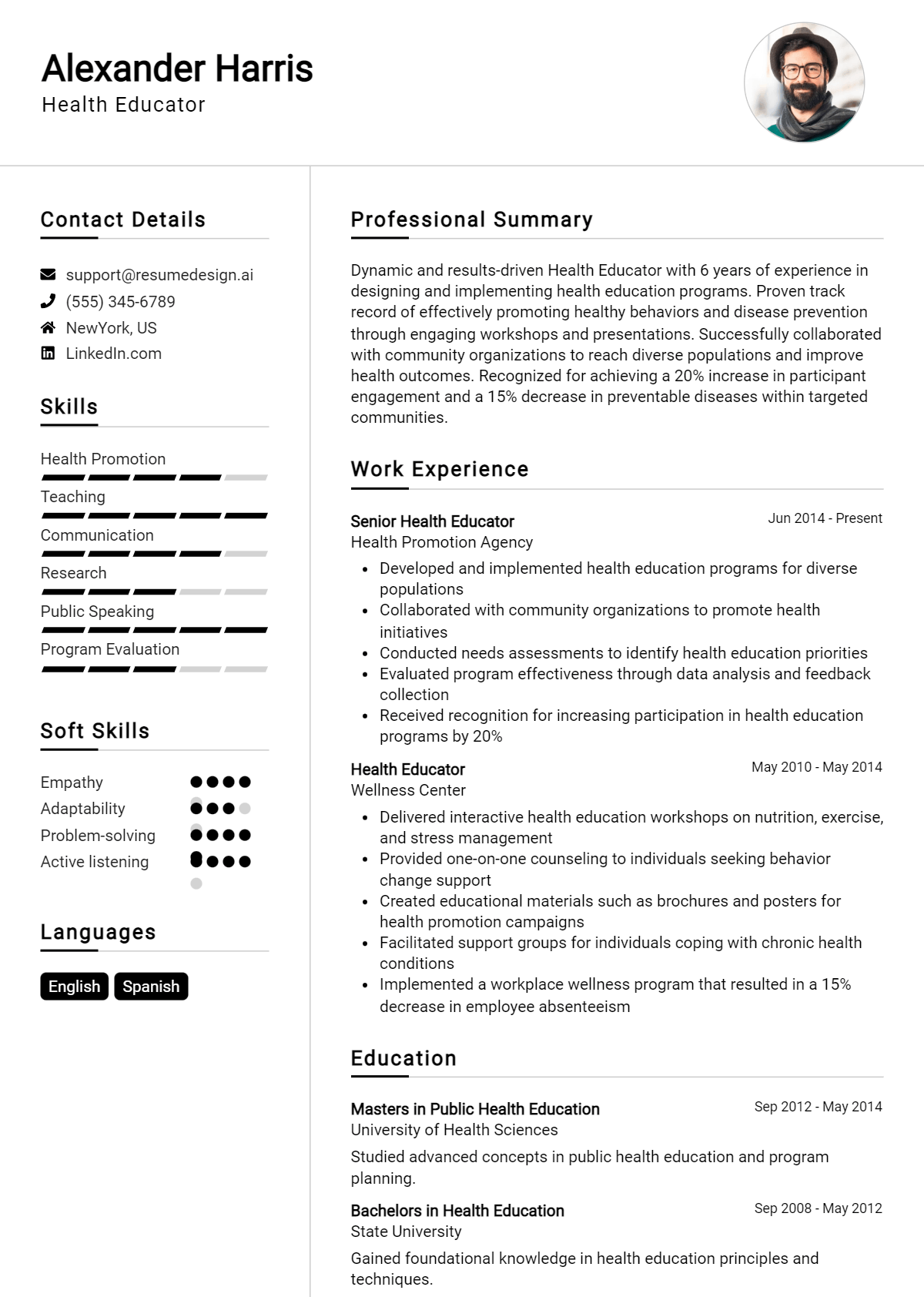
As you prepare for a position as a Health Educator, it's essential to anticipate the types of questions that may arise during your job interview. This role requires not only a strong understanding of health-related topics but also the ability to communicate effectively with diverse audiences. Familiarizing yourself with common interview questions will help you articulate your qualifications and demonstrate your passion for promoting health and wellness in the community.
Here is a list of common job interview questions, with examples of the best answers tailored for a Health Educator role. These questions cover your work history and experience, what you have to offer the employer, and your goals for the future, allowing you to showcase your skills in health promotion and education effectively.
1. What inspired you to become a Health Educator?
My passion for promoting health and wellness was sparked during my time volunteering at a local clinic. I witnessed the impact of education on patients' lives and realized that I wanted to empower individuals to make informed decisions about their health. Example: I was inspired to become a Health Educator after volunteering at a health clinic, where I saw firsthand how education can improve health outcomes and empower individuals to take charge of their well-being.
2. How do you assess the health education needs of a community?
I utilize surveys, focus groups, and community health assessments to identify the specific needs of the population. By engaging with community members, I can tailor programs that address their unique challenges and promote better health outcomes. Example: I assess community needs through surveys and focus groups, allowing me to gather valuable insights that inform the development of targeted health education programs.
3. Describe a successful health education program you developed.
I designed a nutrition workshop series that taught participants about healthy eating habits. By incorporating interactive activities and cooking demonstrations, we increased attendance by 40% and received positive feedback, leading to a follow-up series on meal planning. Example: I developed a successful nutrition workshop series that engaged participants through cooking demos and interactive lessons, resulting in a 40% increase in attendance and positive feedback from the community.
4. How do you stay updated on health education trends and research?
I regularly attend professional development workshops, webinars, and conferences. Additionally, I subscribe to relevant journals and follow reputable health organizations to ensure I am informed about the latest research and effective practices in health education. Example: I stay updated on health trends by attending workshops, subscribing to health journals, and following reputable organizations, ensuring I incorporate the latest research into my programs.
5. Can you give an example of how you handle difficult participants in a workshop?
I approach difficult participants with empathy and active listening, seeking to understand their concerns. By addressing their issues privately, I can often redirect the conversation positively and ensure a productive environment for everyone. Example: When faced with difficult participants, I listen actively and address their concerns privately, which helps maintain a positive atmosphere and encourages constructive participation in the workshop.
6. What strategies do you use to evaluate the effectiveness of your programs?
I employ pre- and post-program surveys to measure knowledge gained, along with participant feedback forms. Additionally, I analyze attendance rates and follow-up interviews to assess long-term behavior change and program impact on community health. Example: I evaluate program effectiveness using pre- and post-surveys, participant feedback, and attendance rates, allowing me to measure knowledge gained and behavioral changes over time.
7. How do you tailor your educational materials for diverse populations?
I consider cultural, linguistic, and literacy differences when developing materials. Collaborating with community leaders ensures the content is relevant and accessible, which enhances understanding and engagement among diverse audiences. Example: To tailor educational materials, I collaborate with community leaders and consider cultural and linguistic differences, ensuring content is relevant and accessible for diverse populations.
8. What role does technology play in your health education efforts?
Technology is integral to my work, allowing me to reach wider audiences through webinars and online resources. I also utilize social media to share health tips and engage the community, making information more accessible and interactive. Example: I leverage technology by conducting webinars and using social media to share health tips, which enhances accessibility and engagement in my health education efforts.
9. How do you assess the health education needs of a community?
I conduct surveys, focus groups, and community assessments to identify health concerns. Collaborating with local organizations enhances understanding of specific needs, ensuring tailored educational programs. This data-driven approach promotes effective health interventions aligned with community priorities.
Example:
I assess community health needs by distributing surveys and organizing focus groups. Collaborating with local health organizations allows me to gather insights on prevalent issues, enabling the design of targeted educational programs that address specific community concerns.
10. Can you explain a successful health program you developed?
I developed a smoking cessation program that included workshops and one-on-one counseling. By partnering with local clinics and gathering participant feedback, we achieved a 30% quit rate within six months, showcasing the program's effectiveness and community support.
Example:
I created a smoking cessation program that involved group workshops and individual counseling. Collaborating with local health clinics helped us achieve a 30% success rate in participants quitting within six months, demonstrating the program's impact on the community.
11. How do you stay updated on the latest health education trends?
I regularly attend professional development workshops, subscribe to health journals, and participate in webinars. Networking with other health educators also provides valuable insights into emerging trends, ensuring my knowledge remains current and applicable in my role.
Example:
To stay updated, I attend workshops and conferences, read reputable health journals, and join online forums. Engaging with other professionals in the field allows me to share knowledge and stay informed about the latest health education trends.
12. How do you evaluate the effectiveness of your health education programs?
I use pre-and post-program surveys, participant feedback, and health outcome metrics to evaluate effectiveness. Analyzing this data helps me identify areas for improvement, ensuring that future programs are more impactful and better aligned with community needs.
Example:
I evaluate program effectiveness by administering pre-and post-surveys to participants and tracking health outcomes. Analyzing this data allows me to identify strengths and areas needing improvement, ensuring continuous enhancement of future health education initiatives.
13. Describe a time you faced a challenge in health education and how you overcame it.
During a nutrition workshop, low attendance was a challenge. I reached out to community leaders for support and adjusted the timing to accommodate more participants. As a result, attendance increased by 50%, demonstrating the importance of community engagement in health education.
Example:
I faced low attendance during a nutrition workshop. To address this, I consulted with community leaders and adjusted the schedule. This proactive approach resulted in a 50% increase in attendance, highlighting the importance of stakeholder engagement in health education.
14. How do you tailor your educational materials for different audiences?
I assess the demographics and literacy levels of my audience before creating materials. Incorporating visuals and relatable examples ensures comprehension. Engaging stakeholders in the development process also enhances relevance, ensuring materials resonate with specific community needs.
Example:
To tailor materials, I analyze the audience's demographics and literacy levels. I use visuals and relatable examples, and I involve community members in the development process to ensure the materials are relevant and impactful for the target audience.
15. What role does technology play in your health education efforts?
Technology is integral to my efforts, from utilizing social media for outreach to creating online resources. I also use data management systems for tracking program impacts, allowing me to adapt strategies effectively and reach a wider audience.
Example:
I leverage technology by using social media for outreach and creating online resources. Additionally, I utilize data management systems to track program effectiveness, allowing for continuous refinement of strategies to better serve the community.
16. How do you promote health equity in your educational initiatives?
I prioritize inclusivity by assessing barriers to access and tailoring programs to meet diverse community needs. Collaborating with marginalized groups ensures their voices are heard, promoting health equity and creating programs that empower all individuals to achieve better health outcomes.
Example:
To promote health equity, I assess barriers faced by marginalized communities and tailor programs accordingly. Collaborating with these groups ensures their needs are addressed, leading to more inclusive health education initiatives that empower everyone to improve their health outcomes.
17. How do you assess the educational needs of a community?
I conduct surveys, focus groups, and community assessments to identify gaps in health knowledge. Collaborating with local organizations helps gather comprehensive data, allowing me to tailor programs effectively to meet specific community needs.
Example:
I once organized a community health fair to evaluate needs, gathering feedback through structured surveys, which revealed high interest in nutrition education. This informed our subsequent programs, ensuring they were aligned with community priorities.
18. Can you describe a time you had to adapt your educational materials for a specific audience?
I once developed a diabetes management workshop for seniors. I simplified the language, used larger fonts, and included more visuals to ensure comprehension. Feedback indicated that participants found the materials accessible and engaging.
Example:
During a workshop for low-literacy adults, I replaced technical jargon with everyday language and incorporated hands-on activities. This approach not only improved understanding but also encouraged active participation and retention of information.
19. How do you measure the effectiveness of your health education programs?
I use pre- and post-program surveys to assess knowledge gained, along with participant feedback to evaluate satisfaction. Tracking behavior changes over time through follow-up evaluations provides further insight into long-term impact.
Example:
After a smoking cessation program, I distributed surveys to participants three months later to track quit rates. The data showed a 40% success rate, affirming the program's effectiveness and guiding future improvements.
20. What techniques do you use to engage your audience during presentations?
I employ interactive activities, such as group discussions and role-playing scenarios, to foster engagement. Utilizing multimedia resources also helps capture attention and reinforces key messages effectively.
Example:
In a recent teen health workshop, I initiated a Q&A session and used polls to involve participants actively. This approach created a dynamic learning environment and encouraged open discussion about sensitive topics.
21. Describe how you handle cultural differences when providing health education.
I prioritize cultural competence by researching community values and beliefs. Involving community leaders in program development ensures respect for cultural nuances and enhances the relevance of the information provided.
Example:
While working with a diverse community, I collaborated with local cultural organizations to adapt materials. This inclusivity fostered trust, resulting in higher attendance and engagement during health workshops.
22. How do you stay current with health education trends and best practices?
I regularly attend webinars, workshops, and conferences focused on health education. Additionally, I follow relevant journals and engage with professional networks to exchange ideas and learn about innovative strategies in the field.
Example:
Recently, I participated in a national health education conference where I learned about digital health tools. I implemented these insights into my programs, enhancing accessibility and engagement among participants.
23. How do you build relationships with community partners?
I prioritize open communication and collaboration by attending community meetings and networking events. Establishing trust through shared goals and mutual respect has proven effective in forging lasting partnerships that enhance program outreach.
Example:
I initiated a partnership with a local clinic to host joint health workshops. By aligning our missions and regularly communicating, we successfully expanded our reach and improved community health outcomes.
24. What strategies do you use to promote health literacy in your community?
I focus on simplifying health information and providing practical resources. Workshops aimed at teaching skills, such as interpreting labels and understanding health reports, empower individuals to make informed health decisions.
Example:
In a recent initiative, I developed easy-to-read pamphlets on managing chronic conditions, distributed them at community centers, and conducted workshops. This effort significantly improved health literacy levels among participants.
25. How do you measure the effectiveness of your health education programs?
I utilize surveys and feedback forms to gauge participants' knowledge before and after the program. Additionally, I analyze health outcomes and participation rates to assess the program's impact and make necessary adjustments for future iterations.
Example:
I measure effectiveness through pre- and post-program surveys to evaluate knowledge gains, as well as tracking health metrics and participant feedback to refine future programs and ensure they meet community needs.
26. Describe a challenging situation you faced as a health educator and how you overcame it.
Once, I faced resistance from a community regarding vaccination programs. I organized informational sessions with healthcare professionals to address concerns directly and foster trust. This approach led to increased participation and improved community health outcomes.
Example:
I encountered skepticism about a nutrition program. By collaborating with local chefs for cooking demonstrations, I made the sessions engaging and informative, which helped change perceptions and increased participation significantly.
27. How do you stay current with health education trends and best practices?
I regularly attend workshops, webinars, and conferences related to health education. Additionally, I subscribe to relevant journals and participate in professional organizations to exchange knowledge and stay informed about the latest research and methodologies.
Example:
I stay updated by attending annual health education conferences, participating in online forums, and subscribing to health education journals, ensuring I implement the latest evidence-based practices in my programs.
28. How do you tailor health education materials for diverse audiences?
I assess the demographic characteristics of my audience, including age, cultural background, and literacy levels. I then adapt materials using appropriate language, visual aids, and culturally relevant examples to ensure the content is accessible and engaging.
Example:
I customize materials by conducting audience assessments and using visuals, translations, and culturally relevant examples, ensuring the information resonates and is easily understood by all participants.
29. Can you explain the role of technology in health education today?
Technology enhances health education by providing innovative platforms for information dissemination, such as mobile apps and social media. It allows for interactive learning experiences, tracking participant engagement, and reaching a broader audience effectively.
Example:
Technology enables the use of apps for tracking health goals and social media for outreach, allowing me to engage a wider audience and provide interactive health education tailored to their needs.
30. What strategies do you use to engage community members in health initiatives?
I implement participatory approaches, such as focus groups, to involve community members in program planning. Additionally, I utilize local influencers and partners to promote initiatives, ensuring the programs are relevant and well-attended.
Example:
I engage community members by hosting focus groups for input, collaborating with local leaders for promotion, and organizing events that resonate with their interests, leading to stronger participation in health initiatives.
31. What is your approach to addressing health disparities in your community?
I conduct needs assessments to identify specific health disparities and target underserved populations. My approach includes tailored programs, outreach efforts, and partnerships with local organizations to provide resources and education effectively.
Example:
I assess community needs to uncover health disparities, then develop targeted programs and collaborate with local entities to ensure resources are accessible to those in need, promoting health equity.
32. How do you handle feedback and criticism regarding your health education programs?
I view feedback as an opportunity for growth. I actively solicit input from participants and stakeholders, analyze their suggestions, and make necessary adjustments to improve the programs, fostering a culture of continuous improvement.
Example:
I welcome feedback and regularly survey participants post-program. I analyze their suggestions and implement changes where feasible, ensuring the programs evolve and better meet community needs.
33. How do you assess the health education needs of a community?
I conduct surveys, focus groups, and interviews to gather data on the community's health status and knowledge gaps. This helps me tailor programs that address specific needs and promote better health outcomes.
Example:
I utilize community surveys and collaborate with local health providers to identify prevalent health issues. This data guides my program development, ensuring it meets the unique needs of the community effectively.
34. Can you describe a time when you had to overcome a significant challenge in a health education initiative?
During a campaign, I faced low community engagement. I addressed this by hosting interactive workshops and partnering with local influencers to raise awareness, ultimately increasing participation and achieving our educational goals.
Example:
I encountered low attendance at workshops. By incorporating hands-on activities and collaborating with local leaders, I turned the initiative around, boosting participation by 50% and enhancing the program's impact.
35. What strategies do you use to evaluate the effectiveness of your health education programs?
I employ pre-and post-assessments, participant feedback, and health outcome metrics to evaluate program effectiveness. This data informs adjustments and demonstrates the program's impact on the community.
Example:
I use surveys and health indicators to measure program success. By analyzing this data, I can make necessary adjustments to improve future initiatives and ensure they meet community needs.
36. How do you keep yourself updated on the latest health education trends and research?
I regularly attend webinars, read health journals, and participate in professional organizations. Networking with peers also allows me to share insights and learn about emerging trends in health education.
Example:
I subscribe to several health education journals and participate in online forums. This helps me stay informed about new research and best practices, which I integrate into my work.
37. How do you tailor health education messages for diverse populations?
I analyze cultural backgrounds and literacy levels to customize messages. Using plain language and culturally relevant materials ensures the message resonates and is understood across diverse audiences.
Example:
I conduct research on cultural norms and preferences. For instance, I adapt materials to be more visual for audiences with lower literacy, ensuring effective communication and engagement.
38. Describe how you would handle a situation where a participant disagrees with health information presented.
I would listen to their concerns, validate their feelings, and provide evidence-based information to address misconceptions. Engaging in a respectful dialogue helps foster understanding and trust.
Example:
I would invite the participant to share their perspective, clarify the evidence supporting the information, and encourage an open discussion. This approach often leads to a productive exchange of ideas.
39. What role does technology play in your health education initiatives?
Technology enhances my programs through online resources, social media engagement, and virtual workshops. It allows me to reach a wider audience and provide interactive learning experiences.
Example:
I utilize platforms like social media for outreach and online tools for virtual workshops. This not only broadens our reach but also engages younger demographics effectively.
40. How do you collaborate with other health professionals or organizations in your work?
I establish partnerships with local health organizations, schools, and government agencies to create comprehensive health programs. Collaboration leads to resource sharing and a unified approach to community health.
Example:
I regularly coordinate with local clinics and schools to develop joint health initiatives, ensuring that our efforts are aligned and maximizing the impact on the community.
41. How do you assess the needs of the community you serve?
I conduct surveys, focus groups, and analyze existing health data to understand community needs. Collaborating with local organizations helps me identify specific health challenges and tailor programs effectively. This comprehensive approach ensures that our initiatives are relevant and impactful.
Example:
I recently utilized community surveys to identify high rates of diabetes. By collaborating with local clinics, we developed targeted educational workshops aimed at prevention and management, which significantly increased participant awareness.
42. Can you describe a successful health education program you developed?
I created a nutrition education program aimed at reducing obesity rates among children. It included interactive workshops, cooking classes, and resource distribution. The program increased healthy food choices by 40% among participants, showcasing the importance of engaging and practical education.
Example:
The "Healthy Kids" program that I developed led to a 30% increase in children choosing fruits and vegetables over junk food. We collaborated with schools to facilitate cooking classes, making learning enjoyable and impactful.
43. How do you evaluate the effectiveness of your health education initiatives?
I use pre- and post-program surveys, participant feedback, and health outcome data to evaluate initiatives. This method helps identify areas for improvement and ensures that programs meet community needs effectively while demonstrating measurable success.
Example:
After implementing a smoking cessation program, we surveyed participants. Results showed a 50% quit rate, highlighting its effectiveness. Continuous feedback helped refine future sessions and maintain high engagement.
44. How do you stay current with health education trends and research?
I regularly attend health education conferences, participate in professional organizations, and subscribe to relevant journals. Networking with peers also helps me stay informed about best practices and emerging trends that can enhance my educational strategies.
Example:
I attended the National Health Education Conference last year, where I learned about innovative digital health tools. Implementing these tools has improved our outreach and engagement with younger audiences significantly.
45. How do you handle resistance from community members regarding health education topics?
I approach resistance with empathy and active listening. Addressing concerns and misconceptions openly fosters trust. By providing credible information and involving community members in discussions, I can often turn skepticism into support for health initiatives.
Example:
When introducing a vaccination program, some parents were hesitant. I organized a community forum where they could express their concerns, and I provided evidence-based information, which ultimately led to increased participation.
46. What role does collaboration play in your work as a health educator?
Collaboration is crucial in health education; it maximizes resources and expertise. By partnering with organizations, schools, and healthcare providers, we can create comprehensive programs that address diverse needs, ultimately leading to greater community impact and sustainability.
Example:
Collaborating with local health clinics helped us develop a mental health awareness campaign. This partnership expanded our reach and provided participants with access to essential mental health resources and support.
How Do I Prepare For A Health Educator Job Interview?
Preparing for a health educator job interview is crucial for making a positive impression on the hiring manager. Proper preparation not only boosts your confidence but also helps you articulate your qualifications effectively, showcasing your passion for health education and community well-being.
- Research the company and its values to understand their mission and how you can contribute.
- Practice answering common interview questions related to health education and community outreach.
- Prepare examples that demonstrate your skills and experience relevant to the Health Educator role.
- Familiarize yourself with current health trends and issues that may affect the community you will serve.
- Dress professionally to create a positive and lasting first impression.
- Prepare thoughtful questions to ask the interviewer about the organization and its health initiatives.
- Review your resume and be ready to discuss any experiences and qualifications listed on it.
Frequently Asked Questions (FAQ) for Health Educator Job Interview
Preparing for an interview can significantly enhance your confidence and performance. Understanding commonly asked questions allows candidates to articulate their qualifications and fit for the role of Health Educator more effectively. Here are some frequently asked questions to consider when preparing for your interview.
What should I bring to a Health Educator interview?
When attending a Health Educator interview, it's essential to bring several key items. Prepare multiple copies of your resume, a list of references, and any certifications relevant to health education. Additionally, consider bringing a portfolio showcasing your work, such as educational materials or program outlines. A notepad and pen are also handy for taking notes during the interview, demonstrating your engagement and professionalism.
How should I prepare for technical questions in a Health Educator interview?
To effectively prepare for technical questions, review the fundamental concepts related to health education, such as public health principles, health promotion strategies, and behavior change theories. Familiarize yourself with current health trends and policies that might impact your role. Practice articulating your knowledge through mock interviews or discussions with peers, focusing on clarity and confidence in your responses.
How can I best present my skills if I have little experience?
If you lack extensive experience, focus on transferable skills that are relevant to the Health Educator role. Highlight any volunteer work, internships, or coursework that demonstrates your knowledge of health education principles. Emphasize your passion for health promotion and your willingness to learn. Use specific examples to illustrate your skills, such as communication, organizational abilities, and teamwork, which are crucial for success in this field.
What should I wear to a Health Educator interview?
Dressing appropriately for your interview is vital in making a good first impression. Opt for professional attire that reflects the organization's culture but leans towards business formal. This could include a suit, dress shirt, or a professional dress. Ensure your clothing is clean, pressed, and comfortable, allowing you to focus on the interview rather than your outfit. Being well-groomed and presentable demonstrates your respect for the interview process.
How should I follow up after the interview?
Following up after an interview is an important step that can set you apart from other candidates. Send a thank-you email within 24 hours, expressing gratitude for the opportunity to interview and reiterating your interest in the position. Mention specific topics discussed during the interview to personalize your message. This follow-up not only shows your professionalism but also keeps you fresh in the interviewer's mind as they make their decision.
Conclusion
In this interview guide for health educators, we have covered essential strategies for preparing for your upcoming interviews. Emphasizing the importance of preparation, practice, and showcasing relevant skills can significantly enhance your performance. Candidates should focus on both technical and behavioral questions, as being well-prepared in these areas can greatly improve your chances of success.
As you approach your interviews, remember to leverage the tips and examples provided in this guide. With confidence and thorough preparation, you can navigate the interview process effectively. Embrace the opportunity to demonstrate your passion for health education and your commitment to making a positive impact in the community.
For further assistance, check out these helpful resources: resume templates, resume builder, interview preparation tips, and cover letter templates.