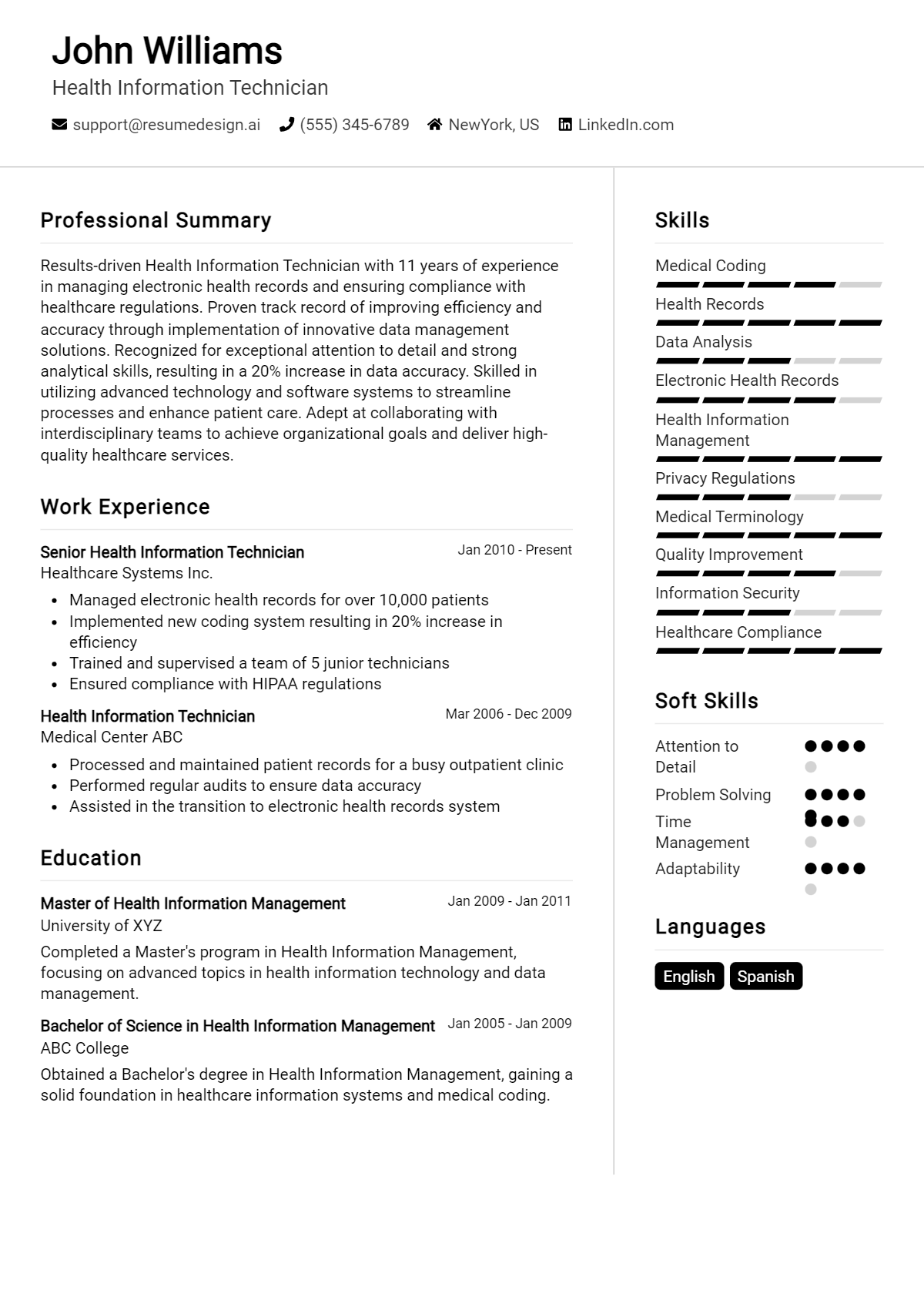
When preparing for a job interview as a Health Information Technician, it's essential to anticipate the types of questions you may encounter. This role requires a unique blend of technical skills, attention to detail, and knowledge of healthcare regulations, making it crucial to showcase your expertise and enthusiasm for the field. Understanding the most common interview questions can help you present yourself as a qualified candidate who is ready to contribute to the healthcare team effectively.
Here is a list of common job interview questions for Health Information Technicians, along with examples of the best answers. These questions cover your work history and experience, what you have to offer the employer, and your goals for the future. By preparing thoughtful responses, you can demonstrate your proficiency in managing health data, your commitment to maintaining patient confidentiality, and your ability to adapt to the evolving landscape of healthcare technology.
1. Can you describe your experience with health information systems?
I have extensive experience with electronic health record (EHR) systems, particularly with Epic and Cerner. In my previous role, I ensured accurate data entry and maintained compliance with HIPAA regulations, which improved patient data accessibility and streamlined operations.
Example:
I worked for three years using Epic EHR, where I entered patient data and trained staff on best practices, enhancing our department's efficiency and compliance.
2. How do you ensure the accuracy of health information?
I prioritize accuracy by implementing double-check systems and regular audits of patient records. Additionally, I stay updated on coding guidelines and regulations to ensure compliance and minimize errors, which is essential in maintaining high-quality health information.
Example:
I conduct quarterly audits of medical records, identifying discrepancies and training staff on data entry protocols to ensure accuracy.
3. What steps do you take to ensure patient confidentiality?
I adhere strictly to HIPAA regulations and organizational policies. This includes implementing secure access controls, training staff on confidentiality protocols, and regularly reviewing data access logs to prevent unauthorized access.
Example:
I conduct training sessions on HIPAA compliance annually, ensuring all staff understand the importance of patient confidentiality and secure handling of health information.
4. How do you handle discrepancies in patient records?
When discrepancies arise, I first verify the information through proper channels. I then communicate with relevant departments to correct the data while documenting the process to ensure transparency and compliance with regulations.
Example:
I once found a birthdate error in a patient's record; I confirmed with the physician and corrected it promptly, ensuring that all parties were informed of the update.
5. Can you explain your familiarity with medical coding?
I am well-versed in ICD-10 and CPT coding systems, having completed a certification course. In my previous role, I coded diagnoses and procedures accurately, which improved reimbursement processes and ensured compliance with billing regulations.
Example:
I have consistently coded procedures with over 95% accuracy, contributing to reduced claim denials and improved departmental efficiency.
6. Describe your experience with data management and analysis.
I have experience managing large datasets, utilizing software like Excel and Access for data analysis. I regularly analyzed patient data trends to inform clinical decision-making and improve service delivery in my previous role.
Example:
I developed a quarterly report on patient demographics that helped identify trends and adjust services accordingly, enhancing patient care.
7. How do you stay current with healthcare regulations?
I stay current by subscribing to industry newsletters, attending workshops, and participating in webinars. I also engage in professional organizations, which provide valuable updates on changing regulations and emerging trends in health information management.
Example:
I attended a recent seminar on HIPAA updates, which provided insights into new compliance requirements, ensuring I remain knowledgeable in my field.
8. What role do you believe health information technicians play in patient care?
Health information technicians play a crucial role in patient care by ensuring accurate and timely access to health records. This information is vital for clinical decision-making, improving patient outcomes, and enhancing the overall quality of care delivered.
Example:
By maintaining accurate records, I ensure healthcare providers have the necessary information to make informed decisions, ultimately improving patient safety and care quality.
17. How do you ensure the accuracy of health information in patient records?
I conduct regular audits and cross-check data against source documents to ensure accuracy. I utilize software tools that flag inconsistencies and maintain clear communication with healthcare providers to clarify any discrepancies for precise information management.
Example:
I perform periodic audits and validate patient data with medical staff, using software to catch errors early. This proactive approach helps maintain the integrity of health records and supports quality patient care.
18. Can you describe your experience with electronic health record (EHR) systems?
I have extensive experience using EHR systems, including Epic and Cerner. I have managed data entry, resolved discrepancies, and trained staff on best practices, ensuring compliance with regulations while optimizing workflow efficiency in the healthcare setting.
Example:
I’ve worked with EHR systems like Epic for over three years, focusing on data accuracy and user training. My efforts have streamlined processes and improved our team’s ability to access and update patient information effectively.
19. How do you handle confidential patient information?
I adhere strictly to HIPAA guidelines and organizational policies regarding patient confidentiality. I ensure that sensitive information is only accessible to authorized personnel and use secure methods for sharing and storing data to protect patient privacy.
Example:
I always follow HIPAA regulations by restricting access to confidential information and utilizing secure communication channels. This commitment ensures patient privacy is maintained at all times.
20. Describe a time when you identified a problem with health information management.
I once noticed a significant discrepancy in medication records during a routine audit. I investigated the issue, collaborated with the nursing staff, and implemented a new verification process that reduced errors and improved patient safety.
Example:
During an audit, I found inconsistencies in medication entries. I addressed this by creating a new verification protocol, which led to a 30% decrease in errors and enhanced patient safety significantly.
21. What strategies do you use to stay updated on healthcare regulations?
I regularly attend webinars, subscribe to industry newsletters, and participate in professional organizations. This ongoing education helps me stay informed about changes in regulations and best practices, which I then share with my colleagues.
Example:
I keep up with healthcare regulations by attending professional workshops and subscribing to relevant journals. This proactive approach ensures I remain informed and compliant with evolving standards.
22. How do you prioritize tasks when managing multiple responsibilities?
I prioritize my tasks by assessing urgency and importance, using a task management system to track deadlines. I focus on high-impact activities first while remaining flexible to adjust as new priorities arise in a dynamic healthcare environment.
Example:
I categorize tasks based on urgency and impact, allowing me to focus on critical areas first. This organized approach helps me manage workloads effectively and meet deadlines consistently.
23. What role does teamwork play in your position as a Health Information Technician?
Teamwork is essential in my role; collaboration with healthcare professionals ensures accurate and timely information management. I actively participate in team meetings and offer support to colleagues, fostering an environment of open communication and shared goals.
Example:
I believe teamwork is crucial; I regularly collaborate with nurses and physicians to ensure accurate data management. This collaboration enhances patient care and streamlines our processes significantly.
24. How do you address discrepancies in medical coding?
When I encounter discrepancies in medical coding, I conduct a thorough review of the documentation in collaboration with coding specialists. I ensure to resolve any issues promptly to maintain accurate billing and compliance with healthcare regulations.
Example:
Upon finding a coding discrepancy, I immediately review the related documentation with coding specialists. This collaborative approach resolves issues efficiently, ensuring compliance and accurate billing.
25. How do you ensure the accuracy of health information during data entry?
I double-check entries against source documents and utilize software validation tools. Regular audits help identify discrepancies, ensuring data integrity. Staying updated with coding guidelines also aids in maintaining accuracy.
Example:
I review patient records meticulously, cross-referencing data with original documents. I also participate in audits to identify errors, helping enhance the overall accuracy of our health information management system.
26. What steps do you take to maintain patient confidentiality?
I adhere strictly to HIPAA regulations, ensuring records are securely stored and accessed only by authorized personnel. I also promote a culture of confidentiality among colleagues through training and awareness programs.
Example:
I consistently follow HIPAA guidelines, utilizing password protection and encryption for electronic records. I also lead training sessions to educate staff on best practices for maintaining patient confidentiality.
27. Can you describe your experience with electronic health records (EHR) systems?
I have extensive experience using EHR systems like Epic and Cerner, focusing on data entry, retrieval, and maintenance. My role has involved training others and troubleshooting issues to enhance system efficiency.
Example:
In my previous role, I managed patient data entry in Epic, ensuring accurate updates. I also trained new employees on system functionalities, improving our team's overall efficiency and compliance with data management protocols.
28. How do you handle discrepancies in patient records?
I investigate discrepancies by cross-referencing data with source documents. If needed, I consult with medical staff to clarify information, ensuring accurate records while documenting any changes made for compliance and audit purposes.
Example:
When discrepancies arise, I first verify the data against original documents. If I find inconsistencies, I communicate with relevant staff to resolve the issue promptly, documenting all changes for future reference.
29. What role do you think coding plays in health information management?
Coding is crucial for accurate billing and reporting. It ensures that healthcare services are correctly documented and categorized, which affects reimbursement rates and quality assessments, impacting overall healthcare quality.
Example:
Accurate coding directly influences financial outcomes and compliance. It enables healthcare providers to receive appropriate reimbursement and facilitates the collection of valuable data for quality improvement initiatives.
30. How do you stay current with changes in health information regulations?
I regularly attend workshops and webinars, subscribe to industry newsletters, and participate in professional organizations. This helps me stay informed about updates to regulations and best practices in health information management.
Example:
I actively engage in continuing education through seminars and online courses. I also follow regulatory updates from organizations like the AHIMA to ensure compliance with the latest health information standards.
31. Describe a time you improved a process in health information management.
I identified inefficiencies in our data entry process and proposed a new workflow. Implementing standardized templates reduced errors and processing time, benefiting our department's overall productivity and accuracy.
Example:
I streamlined our data entry by developing a checklist for common errors. This initiative reduced processing time by 30%, enabling my team to focus on more complex tasks while maintaining accuracy.
32. What challenges do you foresee in health information management in the next few years?
I anticipate challenges related to data security, especially with increasing cyber threats. Additionally, adapting to new technologies and regulatory changes will require continuous training and vigilance to maintain compliance and data integrity.
Example:
With the rise of telehealth, ensuring secure data transmission will be critical. Additionally, staying compliant with evolving regulations will necessitate ongoing education and adaptability within our health information management practices.
33. Can you describe your experience with electronic health record (EHR) systems?
I have worked extensively with EHR systems, particularly Epic and Cerner, for over three years. My role involved data entry, ensuring data accuracy, and training new staff on system navigation. This experience has made me proficient in managing patient records efficiently.
Example:
I have over three years of experience using Epic and Cerner EHR systems. I handled data entry, ensured compliance, and trained staff, which enhanced my proficiency in managing patient records accurately and efficiently.
34. How do you ensure patient confidentiality in your work?
I strictly adhere to HIPAA regulations and organizational policies. I limit access to sensitive information to authorized personnel only and conduct regular audits to ensure compliance. Additionally, I educate colleagues on best practices for maintaining confidentiality.
Example:
I follow HIPAA guidelines meticulously, ensuring that only authorized personnel access sensitive patient information. I also conduct training sessions to reinforce confidentiality practices among staff.
35. Describe a time when you had to deal with a difficult situation regarding health records.
Once, I encountered a discrepancy in a patient’s records that could have affected their treatment. I promptly investigated the issue, collaborated with the healthcare team to correct it, and communicated transparently with the patient, ensuring their trust and safety.
Example:
I faced a records discrepancy that could impact treatment. I investigated, collaborated with the care team for correction, and communicated openly with the patient, ensuring their trust and safety were maintained.
36. What steps do you take to stay current with health information technology trends?
I regularly attend webinars and conferences, subscribe to relevant journals, and participate in professional organizations. These activities help me keep up with advancements, regulatory changes, and best practices in health information technology.
Example:
I stay current by attending industry webinars, subscribing to health IT journals, and actively participating in professional organizations to learn about trends and regulatory changes.
37. How do you handle data entry errors when noticed post-entry?
Upon discovering an error, I immediately assess the situation, correct the entry, and document the change. I then analyze how the error occurred to prevent future occurrences and inform my supervisor if necessary.
Example:
I correct data entry errors promptly, document the changes, and conduct a root cause analysis to prevent future mistakes. I also notify my supervisor if the error is significant.
38. Can you explain how you prioritize your tasks in a busy environment?
I prioritize tasks using a combination of urgency and importance. I create daily checklists, focusing on time-sensitive activities first while ensuring that ongoing projects receive attention. Communication with my team helps manage expectations and deadlines.
Example:
I prioritize tasks by urgency and importance, creating daily checklists. I focus on time-sensitive activities first while maintaining progress on ongoing projects through effective communication with my team.
39. What is your experience with coding and billing processes?
I have hands-on experience with medical coding, particularly ICD-10 and CPT codes, and understand the billing process. I ensure accurate coding to maximize reimbursement and compliance while minimizing claim denials through thorough reviews.
Example:
I have hands-on experience with ICD-10 and CPT coding, ensuring accurate coding for maximum reimbursement and compliance. I conduct thorough reviews to minimize claim denials.
40. How do you handle feedback or criticism regarding your work?
I view feedback as an opportunity for growth. I listen carefully, ask clarifying questions if needed, and apply constructive criticism to improve my performance. I regularly seek feedback to ensure I’m meeting expectations.
Example:
I see feedback as growth potential. I listen, ask questions for clarity, and apply constructive criticism to enhance my performance. I also proactively seek feedback to ensure I meet expectations.
41. How do you ensure the accuracy of health records?
I ensure accuracy by regularly verifying data against source documents, conducting audits, and utilizing electronic health record systems. I also stay updated on compliance regulations to minimize errors and maintain data integrity.
Example:
I cross-reference patient records with lab results and visit notes weekly, ensuring all entries are complete and accurate. Additionally, I participate in quarterly audits, which help identify potential discrepancies and areas for improvement.
42. Can you describe your experience with electronic health record (EHR) systems?
I have extensive experience using EHR systems, including data entry, managing patient records, and training staff on system usage. My familiarity with various EHR platforms enables me to improve workflows and ensure data accuracy.
Example:
In my previous role, I was responsible for transitioning our practice to a new EHR system. I conducted training sessions for staff and ensured all patient data was accurately migrated, which improved our overall efficiency.
43. How do you handle patient confidentiality?
I prioritize patient confidentiality by adhering to HIPAA regulations and implementing secure data handling practices. I ensure that only authorized personnel access sensitive information and regularly participate in training on data privacy protocols.
Example:
I follow strict guidelines for sharing patient information, using secure methods for communication and storage. During my last audit, I successfully demonstrated compliance with confidentiality protocols, reinforcing the importance of protecting patient data.
44. What is your approach to managing medical coding?
I manage medical coding by staying updated on coding guidelines and using reliable coding software. I regularly review documentation to ensure accurate code assignment, which helps in maximizing reimbursement and minimizing claim denials.
Example:
In my previous position, I conducted regular coding audits to ensure compliance with current guidelines. This proactive approach not only improved our coding accuracy but also increased our revenue cycle efficiency significantly.
45. How do you keep up with changes in healthcare regulations?
I stay informed on healthcare regulations by subscribing to industry newsletters, attending webinars, and participating in professional organizations. Continuous education helps me adapt to changes quickly and ensures compliance within my role as a health information technician.
Example:
I attend quarterly training sessions and regularly read updates from the CDC and CMS. This commitment to learning allows me to implement changes in our processes effectively and keep our team informed.
46. Describe a challenging situation you faced in your role and how you resolved it.
I encountered a significant data entry error that impacted patient billing. I promptly investigated and corrected the discrepancies, communicated transparently with affected patients, and implemented new double-check protocols to prevent future occurrences.
Example:
After discovering the error, I worked overtime to correct the data and contacted each patient to explain the situation. I also organized a team meeting to develop a new review process, which greatly reduced similar issues afterward.
How Do I Prepare For A Health Information Technician Job Interview?
Preparing for a job interview is crucial for making a positive impression on the hiring manager. A well-prepared candidate demonstrates professionalism and a genuine interest in the position, which can set you apart from other applicants. Here are some key preparation tips to help you succeed in your Health Information Technician interview:
- Research the company and its values to understand its mission and culture.
- Practice answering common interview questions related to health information management.
- Prepare examples that demonstrate your skills and experience relevant to the Health Information Technician role.
- Familiarize yourself with industry regulations and standards, such as HIPAA.
- Dress professionally to convey your seriousness about the position.
- Bring copies of your resume and any relevant certifications to the interview.
- Prepare thoughtful questions to ask the interviewer about the company and the role.
Frequently Asked Questions (FAQ) for Health Information Technician Job Interview
Preparing for an interview as a Health Information Technician is crucial for success. Understanding the common questions you might face can help you present yourself confidently and effectively. Below are some frequently asked questions along with practical advice for tackling them during your interview.
What should I bring to a Health Information Technician interview?
When preparing for your interview, it’s important to bring several essential items. First, have multiple copies of your resume to share with the interviewers. Additionally, bring a list of references and any certifications related to health information management. Having a notebook and pen for taking notes can also be helpful. Lastly, consider bringing a portfolio showcasing relevant projects or work experience, as this can help demonstrate your skills and qualifications effectively.
How should I prepare for technical questions in a Health Information Technician interview?
To prepare for technical questions, you should review key concepts and terminology related to health information management and technology. Familiarize yourself with coding systems like ICD-10 and CPT, as well as electronic health record (EHR) systems. Practice answering common technical questions with a friend or in front of a mirror to increase your confidence. Additionally, consider researching the specific software and technologies used by the organization you are interviewing with to tailor your responses accordingly.
How can I best present my skills if I have little experience?
If you have limited experience, focus on highlighting transferable skills and relevant coursework. Emphasize your attention to detail, organizational skills, and ability to work with data, as these are crucial in the role of a Health Information Technician. Discuss any internships, volunteer work, or projects that relate to health information management, and express your eagerness to learn and grow in the field. Showing enthusiasm and a willingness to adapt can leave a positive impression on the interviewers.
What should I wear to a Health Information Technician interview?
Dressing appropriately for your interview is vital, as it demonstrates professionalism. Aim for business casual attire, such as dress slacks or a skirt paired with a collared shirt or blouse. Avoid overly casual clothing like jeans or t-shirts. If you're uncertain about the dress code, it’s always safer to err on the side of being slightly overdressed. Your appearance should communicate that you take the opportunity seriously and are eager to make a good impression.
How should I follow up after the interview?
Following up after your interview is an important step that can set you apart from other candidates. Within 24 hours, send a thank-you email to express your appreciation for the opportunity to interview. In your message, briefly reiterate your interest in the position and mention a specific topic from the interview that resonated with you. This not only shows your enthusiasm but also reinforces your qualifications for the role. A thoughtful follow-up can keep you fresh in the interviewer's mind as they make their decision.
Conclusion
In summary, this interview guide for Health Information Technicians has highlighted the essential components of preparing for your interview. We discussed the significance of thorough preparation, consistent practice, and the demonstration of relevant skills that align with the demands of the role. Understanding both technical and behavioral questions is crucial, as it can significantly enhance your chances of success during the interview process.
We encourage you to take full advantage of the tips and examples provided in this guide. With diligent preparation, you can approach your interviews with confidence and make a strong impression on potential employers.
For further assistance, check out these helpful resources: resume templates, resume builder, interview preparation tips, and cover letter templates.