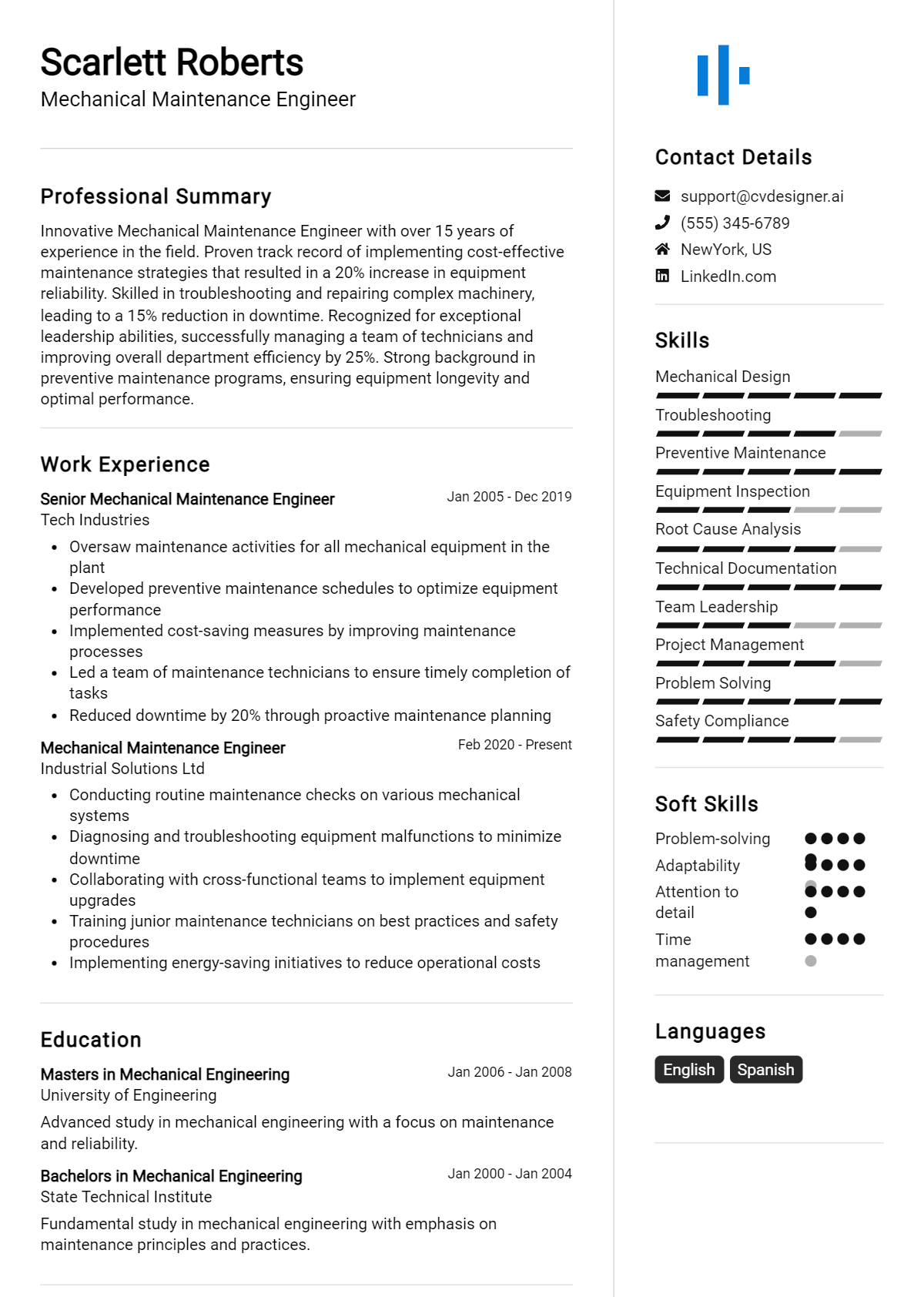
When preparing for a job interview as a Mechanical Maintenance Engineer, it's essential to anticipate the types of questions that may arise. Interviews for this role often focus on your technical skills, problem-solving abilities, and hands-on experience in maintaining and troubleshooting mechanical systems. Understanding what employers are looking for can help you present yourself as the ideal candidate.
Here is a list of common job interview questions for Mechanical Maintenance Engineers, along with examples of the best answers. These questions will cover your work history and experience, the technical expertise you bring to the table, your ability to work within a team, and your goals for future development in the engineering field. Being well-prepared with thoughtful responses will demonstrate your qualifications and enthusiasm for the role.
1. Can you describe your experience with preventive maintenance?
I have extensive experience in preventive maintenance, implementing schedules to reduce equipment downtime. I routinely analyze performance data and adjust maintenance plans accordingly, ensuring machinery operates at peak efficiency. This proactive approach has resulted in a 15% reduction in unexpected failures over the past year.
Example:
In my previous role, I developed a preventive maintenance schedule for critical machinery, which decreased breakdown incidents by 20%. Regular inspections and timely part replacements were key strategies I employed.
2. How do you troubleshoot mechanical issues?
My troubleshooting process involves systematic diagnosis: I start with visual inspections, followed by analyzing operational data. I utilize tools like vibration analysis and thermal imaging to pinpoint issues. This method helps in quickly identifying root causes, thus reducing repair time significantly.
Example:
When faced with a recurring vibration issue, I conducted a thorough inspection and discovered misalignment in the motor. After realigning it, the problem was resolved, and equipment performance improved markedly.
3. What safety protocols do you follow during maintenance?
I strictly adhere to safety protocols, including lockout/tagout procedures, using appropriate PPE, and ensuring the work area is hazard-free. I also conduct safety briefings with my team before starting any maintenance task, fostering a culture of safety and awareness at all times.
Example:
Before any maintenance, I ensure all machines are locked out and tagged. I also conduct daily safety checks and brief my team on potential hazards specific to the task at hand.
4. Describe a challenging mechanical issue you resolved.
A major challenge was a recurring pump failure due to cavitation. I researched the system, adjusted the pump speed, and installed a pressure relief valve, which eliminated the issue. This not only improved efficiency but also saved significant repair costs in the long run.
Example:
I faced a persistent pump cavitation problem. After diagnosing, I modified the pump speed and added a relief valve. This solution enhanced performance and reduced maintenance costs significantly.
5. How do you keep up with the latest technologies in mechanical maintenance?
I stay updated by attending industry workshops, subscribing to relevant journals, and participating in online forums. Networking with other professionals also provides insights into innovative practices and technologies that can enhance maintenance processes in my role.
Example:
I regularly attend webinars and workshops on the latest technologies. I'm also a member of several professional groups, which allows me to exchange knowledge with peers in the industry.
6. Can you explain the importance of documentation in maintenance?
Documentation is vital for tracking maintenance activities, ensuring compliance, and facilitating knowledge transfer. It helps identify patterns, assess equipment performance, and predict future maintenance needs. Thorough records also support audits and enhance overall operational efficiency.
Example:
I maintain detailed logs of all maintenance activities. This practice helps in identifying trends over time, which allows us to anticipate and address potential issues before they escalate.
7. What role does teamwork play in your maintenance tasks?
Teamwork is crucial in maintenance tasks as it promotes collaboration and knowledge sharing. I often coordinate with operators, engineers, and technicians to ensure comprehensive solutions. This collaborative approach enhances efficiency and fosters a supportive work environment, ultimately leading to better maintenance outcomes.
Example:
I believe teamwork is key to success. I regularly consult with operators about equipment performance and gather insights to improve our maintenance strategies, ensuring everyone is aligned on goals.
8. How do you prioritize tasks during a busy maintenance schedule?
I prioritize tasks based on equipment criticality, potential safety risks, and operational impact. I use a structured approach, assessing which issues could cause the most downtime or hazards, allowing me to allocate resources effectively and maintain operational continuity.
Example:
During busy periods, I focus on high-impact tasks first, such as addressing safety concerns and critical machinery failures, ensuring that we minimize downtime and maintain safety standards.
9. Can you explain a time when you had to troubleshoot a complex mechanical issue?
In my previous role, I faced a recurring issue with a conveyor system. I systematically analyzed the components, identified a misalignment in the drive motor, and resolved it by adjusting the positioning. This improved efficiency and reduced downtime significantly.
Example:
I once solved a persistent vibration issue in a pump by inspecting the bearings and discovering they were worn. Replacing them eliminated the vibration, enhancing the system's reliability and performance.
10. How do you prioritize maintenance tasks when faced with multiple issues?
I assess the potential impact of each issue on operations, prioritizing those that could lead to safety hazards or significant downtime. I then create a structured plan to address high-priority tasks first, ensuring efficient use of resources and minimizing disruption.
Example:
When multiple machines failed, I prioritized based on production impact, addressing the most critical machine first, which restored production flow quickly, allowing the team to work on the others systematically.
11. Describe your experience with predictive maintenance techniques.
I have implemented predictive maintenance strategies using vibration analysis and thermography. This proactive approach has allowed us to anticipate failures and schedule maintenance before issues arise, resulting in reduced downtime and lower maintenance costs.
Example:
By regularly monitoring vibrations in our motors, I was able to detect anomalies early and replace parts before they failed, which saved the company significant costs in emergency repairs.
12. How do you ensure compliance with safety regulations during maintenance?
I adhere strictly to safety protocols, conducting risk assessments before maintenance tasks. I also ensure all team members are trained on safety practices and that we use proper personal protective equipment, fostering a culture of safety in the workplace.
Example:
Before starting a maintenance task, I conduct a safety briefing with my team to review risks and necessary precautions, ensuring everyone is aware and compliant with regulations.
13. What tools and software do you utilize for maintenance management?
I regularly use CMMS software for scheduling and tracking maintenance tasks, along with diagnostic tools like multimeters and oscilloscopes. These tools enable me to efficiently manage resources and maintain accurate records of equipment performance.
Example:
I utilized a CMMS to schedule preventive maintenance, which streamlined our operations and improved our ability to track equipment performance and maintenance history effectively.
14. How do you handle equipment failure during critical production periods?
In critical periods, I immediately assess the failure, often employing a temporary fix to minimize downtime. I communicate with the team to inform them of the situation and then schedule a thorough repair after operations stabilize to ensure long-term reliability.
Example:
When a key machine failed during peak production, I quickly implemented a temporary bypass, allowing operations to continue while we planned a detailed repair for after hours.
15. Can you describe a successful project you led related to equipment upgrades?
I led a project to upgrade our CNC machines, replacing outdated components with modern technology. This resulted in a 20% increase in production speed and improved product quality, demonstrating the success of the project and its positive impact on operations.
Example:
I spearheaded the upgrade of our CNC systems, integrating advanced software and hardware that boosted productivity by 20% and significantly reduced setup times.
16. How do you stay current with advancements in mechanical maintenance technology?
I regularly participate in industry workshops, webinars, and training courses. Additionally, I subscribe to relevant journals and follow online forums to stay updated on the latest technologies and best practices in mechanical maintenance.
Example:
I attend annual conferences and subscribe to industry publications, which helps me stay informed about new maintenance technologies and techniques that can enhance our operations.
17. Can you describe a time when you had to troubleshoot a complex mechanical issue?
In one instance, a conveyor system was malfunctioning. I systematically analyzed each component, identified a misaligned pulley, and recalibrated it. This restored functionality, minimized downtime, and improved overall efficiency. My analytical skills were crucial in diagnosing the issue quickly.
Example:
I once faced a recurring failure in a hydraulic system. By inspecting valves and sensors, I found a faulty pressure gauge. Replacing it resolved the issue, and I implemented regular checks to prevent future problems.
18. How do you prioritize maintenance tasks in a busy work environment?
I prioritize tasks based on equipment criticality and safety impact. I assess the urgency of repairs, considering production schedules. Communicating with the operations team helps me ensure that essential machinery receives prompt attention, reducing the risk of unplanned downtime.
Example:
When prioritizing tasks, I focus on equipment that affects production efficiency first, then schedule less critical maintenance during downtime. This strategy minimizes disruptions while maintaining safety standards.
19. What safety protocols do you follow in mechanical maintenance?
I strictly adhere to OSHA regulations, conducting risk assessments before starting maintenance. I ensure the use of personal protective equipment (PPE), lockout/tagout procedures, and proper tool handling. Safety training and team communication are essential to minimize hazards in the workplace.
Example:
I always perform a risk assessment, wear appropriate PPE, and ensure equipment is locked out during maintenance. Regular training sessions help keep the team updated on safety protocols.
20. How do you keep your mechanical skills and knowledge up to date?
I attend workshops and webinars, subscribe to industry publications, and participate in online forums. Networking with other engineers also provides insights into new technologies and best practices. Continuous learning is vital for staying competitive in the mechanical maintenance field.
Example:
I regularly attend industry conferences and engage in online courses to learn about new technologies. This commitment helps me stay informed about trends and advancements in mechanical maintenance.
21. Describe a situation where you had to work as part of a team on a maintenance project.
During a plant overhaul, I collaborated with a diverse team of engineers and technicians. We divided tasks based on expertise and communicated regularly to address issues. This teamwork resulted in completing the project ahead of schedule, highlighting the importance of collaboration in maintenance.
Example:
While overhauling a production line, I worked with electricians and engineers. Our combined efforts streamlined the process, leading to an early completion and improved operational efficiency.
22. How do you handle unexpected equipment failures?
I remain calm and quickly assess the situation to identify the failure's cause. I communicate with the team to implement immediate corrective actions while documenting the incident for future reference. This proactive approach minimizes downtime and improves our response to similar issues.
Example:
When a pump failed unexpectedly, I gathered data, diagnosed the issue, and coordinated repairs. My swift action reduced downtime and ensured production resumed promptly.
23. What experience do you have with predictive maintenance techniques?
I have implemented predictive maintenance using vibration analysis and thermography. By monitoring equipment condition, I can anticipate failures before they occur, allowing for scheduled maintenance. This approach has significantly reduced unplanned downtime and improved overall equipment reliability.
Example:
In my previous role, I employed vibration analysis on motors. This proactive strategy enabled us to replace bearings before failure, enhancing overall operational efficiency.
24. Can you explain the importance of documentation in maintenance engineering?
Documentation is crucial for tracking maintenance history, identifying recurring issues, and ensuring compliance with regulations. It helps maintain a knowledge base for troubleshooting and facilitates communication among team members. Accurate records support informed decision-making for future maintenance strategies.
Example:
Maintaining detailed logs of repairs and maintenance schedules allows us to spot trends and implement preventive measures. This documentation is vital for continuous improvement.
25. Can you describe a time when you had to troubleshoot a complex mechanical issue?
In my previous role, I encountered a recurring pump failure. I systematically analyzed the system, checking for misalignment and wear. After identifying a faulty seal, I replaced it, improving performance and preventing future breakdowns. My analytical skills helped resolve the issue efficiently.
Example:
I faced a complex gearbox failure. I inspected the components, identified a worn bearing, and replaced it. This not only resolved the issue but also extended the gearbox's lifespan, showcasing my problem-solving abilities in mechanical maintenance.
26. What preventive maintenance strategies do you utilize to minimize equipment downtime?
I implement a proactive preventive maintenance program, incorporating regular inspections, condition monitoring, and scheduled replacements of critical components. This strategy reduces unexpected failures and extends equipment life, ultimately enhancing productivity and safety in the workplace.
Example:
I prioritize preventive maintenance by scheduling regular inspections and using condition monitoring techniques. This approach has significantly reduced equipment failures and downtime, ensuring smooth operations and increased efficiency within the team.
27. How do you stay updated with the latest technologies and advancements in mechanical engineering?
I regularly attend industry conferences, participate in webinars, and subscribe to relevant engineering journals. Additionally, I engage with professional networks and forums to share knowledge and stay informed about emerging technologies that can enhance maintenance practices.
Example:
I stay current by attending workshops and following engineering publications. Networking with other professionals also provides insights into new technologies, which I can apply to improve maintenance processes in my role.
28. Describe your experience with hydraulic and pneumatic systems.
I have extensive experience working with hydraulic and pneumatic systems, including troubleshooting, maintenance, and repairs. I am skilled in interpreting schematics and utilizing diagnostic tools to identify issues, ensuring optimal performance and safety in operations.
Example:
In my previous job, I maintained hydraulic presses and pneumatic conveyors. I regularly performed diagnostics, replaced faulty components, and ensured proper fluid levels, which kept operations running smoothly and efficiently.
29. How do you approach safety in mechanical maintenance?
Safety is my top priority. I adhere to safety protocols, conduct risk assessments before tasks, and ensure proper use of personal protective equipment (PPE). I also encourage team training to foster a culture of safety awareness among coworkers.
Example:
I prioritize safety by following established protocols and conducting regular safety briefings with my team. This proactive approach has significantly reduced workplace accidents and fostered a safety-first mindset among all staff members.
30. Can you give an example of a successful project you led in mechanical maintenance?
I led a project to overhaul our facility's aging conveyor system. By coordinating with cross-functional teams, we replaced critical components, implemented real-time monitoring, and improved efficiency by 30%. This project enhanced productivity significantly and reduced maintenance costs.
Example:
I managed a project to upgrade our HVAC systems, resulting in a 25% energy savings. Through effective planning and collaboration, we completed the project on time, demonstrating my leadership and project management skills.
31. What software or tools do you use for maintenance management?
I utilize Computerized Maintenance Management Systems (CMMS) like SAP PM and Maximo for tracking work orders, scheduling maintenance, and managing inventory. These tools enhance efficiency and ensure compliance with maintenance schedules, ultimately improving overall equipment performance.
Example:
I have experience using CMMS software such as Maximo for scheduling maintenance tasks and tracking asset performance. This has streamlined our processes and significantly improved response times to equipment issues.
32. How do you handle conflicting priorities in a maintenance environment?
I assess the urgency and impact of each task, prioritizing based on safety, operational needs, and deadlines. Effective communication with team members helps ensure everyone is aligned, allowing us to address high-priority issues while managing other tasks efficiently.
Example:
When faced with conflicting priorities, I evaluate tasks based on urgency and impact. This method allows me to effectively manage workload and ensure critical maintenance tasks are completed without compromising safety or quality.
33. Can you explain your approach to performing root cause analysis on equipment failures?
I utilize a systematic approach, starting with gathering data on the failure, followed by identifying potential causes through tools like the 5 Whys or Fishbone Diagram. This ensures that I address the underlying issue, preventing future occurrences.
Example:
When a pump failed, I analyzed operational data, identified a clogged filter as the root cause, and proposed regular maintenance checks to prevent recurrence.
34. Describe a time when you had to troubleshoot a complex mechanical issue.
I once faced a recurring issue with a conveyor system. I mapped out the entire mechanical setup, consulted with colleagues, and discovered a misaligned pulley. Realigning it resolved the problem, improving efficiency significantly.
Example:
During a production line halt, I diagnosed a faulty motor by checking voltage and found misalignment. After realignment, the system functioned flawlessly.
35. How do you prioritize maintenance tasks when faced with multiple urgent issues?
I assess the impact of each issue on production and safety. I prioritize tasks that directly affect operational efficiency and pose safety risks, ensuring that critical equipment is addressed first to minimize downtime.
Example:
In a recent scenario, I prioritized a hydraulic leak over routine checks, ensuring safety and maintaining production flow.
36. What methods do you use to ensure compliance with safety regulations during maintenance?
I stay updated on safety regulations and conduct regular training. Before maintenance, I perform risk assessments and ensure personal protective equipment is used, fostering a culture of safety within the team.
Example:
I implemented weekly safety briefings, which reduced incidents and ensured compliance with OSHA standards during maintenance operations.
37. Can you discuss your experience with predictive maintenance technologies?
I have worked with vibration analysis and thermal imaging technologies to predict equipment failures. These tools help me monitor the health of machinery, allowing for timely interventions that reduce downtime and maintenance costs.
Example:
Using thermal imaging, I identified overheating bearings, which led to timely replacements and improved equipment longevity.
38. How do you handle conflicts within your maintenance team?
I focus on open communication and mediation. I encourage team members to express their concerns and facilitate discussions to find common ground, ensuring that we collectively focus on our goals and the importance of teamwork.
Example:
When two team members disagreed on a procedure, I held a meeting to listen to both sides, leading to a collaborative resolution.
39. What experience do you have with CAD software in your maintenance role?
I use CAD software to design and modify mechanical components and create detailed maintenance plans. This skill helps in visualizing complex systems and coordinating with design and engineering teams for effective maintenance strategies.
Example:
I created a CAD model for a pump assembly, which improved our maintenance documentation and streamlined the repair process.
40. Describe how you stay updated with the latest mechanical maintenance technologies.
I regularly attend workshops and training sessions, subscribe to industry journals, and participate in online forums. Networking with professionals allows me to exchange knowledge and stay informed about emerging technologies and best practices.
Example:
By attending an annual maintenance expo, I learned about new diagnostic tools that I later integrated into our maintenance practices.
41. How do you prioritize maintenance tasks when faced with multiple issues at once?
I assess the impact of each issue on operations and safety. I prioritize tasks that could halt production or pose safety risks, ensuring minimal downtime. Communication with the team helps align priorities and resources effectively.
Example:
In a previous role, I prioritized a critical pump failure over minor leaks because it affected production. I quickly mobilized resources to fix the pump, ensuring operations resumed smoothly.
42. Can you describe a time when you improved a maintenance process?
I identified that our lubrication schedule was inefficient, leading to equipment wear. I implemented a predictive maintenance program using condition monitoring tools, which reduced unplanned downtime by 30% and extended equipment lifespan significantly.
Example:
By integrating condition monitoring, I reduced our lubrication task frequency while ensuring optimal performance, which saved time and resources.
43. What safety protocols do you follow during maintenance work?
I adhere to safety protocols such as Lockout/Tagout procedures, wearing appropriate PPE, and conducting risk assessments before starting work. Regular safety training keeps me updated on best practices for preventing accidents.
Example:
During maintenance, I ensure all equipment is locked out, wear gloves and goggles, and review safety checklists to mitigate risks effectively.
44. How do you handle unexpected equipment failures?
I stay calm and assess the situation quickly, determining the cause and immediate impacts. I communicate with the team to implement temporary solutions and prioritize repairs based on urgency and resources available.
Example:
When a conveyor belt unexpectedly failed, I organized a temporary workaround, then led a swift repair to minimize production disruption while documenting the incident for future reference.
45. How do you keep up with advancements in mechanical maintenance technology?
I subscribe to industry journals, attend conferences, and participate in online courses. Networking with peers also provides insights into new technologies and practices that can enhance our maintenance processes.
Example:
I recently completed a course on IoT applications in maintenance, which has allowed me to implement more efficient tracking and monitoring solutions in our facility.
46. Describe a situation where you had to train a colleague on a maintenance task.
I once trained a new technician on hydraulic system maintenance. I created a step-by-step guide and conducted hands-on sessions. This approach not only enhanced their skills but also improved team efficiency in tackling hydraulic issues.
Example:
During training, I emphasized safety and explained the system's intricacies, which helped the technician feel confident in performing maintenance independently.
How Do I Prepare For A Mechanical Maintenance Engineer Job Interview?
Preparing for a job interview is crucial in making a positive impression on the hiring manager. A well-prepared candidate not only demonstrates their qualifications but also shows enthusiasm and professionalism, which can set them apart from other applicants. Here are some key preparation tips to help you excel in your interview for a Mechanical Maintenance Engineer position:
- Research the company and its values to understand their mission and how you can contribute.
- Review the job description thoroughly to align your skills and experiences with the requirements of the role.
- Practice answering common interview questions related to mechanical maintenance and engineering principles.
- Prepare examples that demonstrate your skills and experience, particularly in troubleshooting and problem-solving scenarios.
- Familiarize yourself with the tools and technologies commonly used in mechanical maintenance to discuss them confidently.
- Dress professionally and arrive on time to show your commitment and respect for the interview process.
- Prepare thoughtful questions to ask the interviewer that reflect your interest in the role and the company.
Frequently Asked Questions (FAQ) for Mechanical Maintenance Engineer Job Interview
Preparing for a job interview can be a daunting task, especially for specialized roles like a Mechanical Maintenance Engineer. Understanding the common questions asked during interviews can help you feel more confident and articulate your knowledge effectively. Here are some frequently asked questions that candidates may encounter during their interviews.
What should I bring to a Mechanical Maintenance Engineer interview?
When attending a Mechanical Maintenance Engineer interview, it’s crucial to come prepared. Bring several copies of your resume, a list of references, and any certifications or licenses relevant to the position. Additionally, consider bringing a notepad or tablet for taking notes, as well as any documents that showcase your past projects or accomplishments. This will not only help you stay organized but also demonstrate your professionalism and preparedness to the interviewer.
How should I prepare for technical questions in a Mechanical Maintenance Engineer interview?
To effectively prepare for technical questions, review the core principles of mechanical engineering and maintenance practices relevant to the industry. Brush up on topics such as troubleshooting techniques, mechanical systems, and predictive maintenance strategies. It may also be beneficial to practice with common technical interview questions or case studies. Engaging in mock interviews with peers or mentors can help you articulate your thought process and boost your confidence in handling technical inquiries.
How can I best present my skills if I have little experience?
If you have limited experience, focus on showcasing your education, internships, and any relevant projects. Highlight transferable skills, such as problem-solving, teamwork, and communication, that can demonstrate your capability in a maintenance role. Be honest about your experience while expressing a strong willingness to learn and adapt. Providing examples of how you've successfully tackled challenges in your studies or previous work can also help illustrate your potential to succeed in the role.
What should I wear to a Mechanical Maintenance Engineer interview?
Dressing appropriately for an interview is important, as it reflects your professionalism. For a Mechanical Maintenance Engineer position, business casual attire is often suitable. This may include slacks or khakis paired with a collared shirt or blouse. Avoid overly casual clothing, such as jeans or sneakers, unless you know the company culture permits it. Aim to present a polished appearance that conveys your seriousness about the position while still being comfortable.
How should I follow up after the interview?
Following up after an interview is a crucial step in the job application process. Send a thank-you email within 24 hours, expressing your appreciation for the opportunity to interview and reiterating your interest in the position. This is also a good time to mention any specific points discussed during the interview that you found particularly engaging. Keeping your message concise and polite can leave a positive impression and reinforce your enthusiasm for the role.
Conclusion
In this interview guide for the Mechanical Maintenance Engineer role, we have covered essential strategies for success, including the significance of thorough preparation, the value of practicing responses, and the importance of showcasing relevant skills. Being well-prepared allows candidates to confidently navigate both technical and behavioral questions, which can significantly enhance their chances of securing the position.
By dedicating time to prepare for a diverse range of questions, candidates can demonstrate their expertise and fit for the role. Remember that both technical knowledge and soft skills are critical in making a lasting impression during the interview process.
We encourage you to take advantage of the tips and examples provided in this guide to approach your interviews with confidence and poise. Your preparation will set you apart from the competition and pave the way for your success.
For further assistance, check out these helpful resources: resume templates, resume builder, interview preparation tips, and cover letter templates.